Inflatables
Inflatable vs Animatronic Yard Decorations
Both are 'Halloween decorations that move'. They fail in completely different ways, and that is how to choose.

Disclosure: we earn a commission from qualifying purchases made through links on this page, at no extra cost to you. It does not change what we recommend — here is how we choose.
The short answer
Buy an inflatable if garage space is your constraint and you can deflate before storms. Buy an animatronic if weather is your constraint or nobody is home to take things down. Inflatables win on height per dollar, setup and storage; animatronics win on detail, weather tolerance and running cost.
These are the two ways to get movement into a yard, and people usually pick based on what they saw last year rather than on which one fits their situation. The two formats fail differently, and that is the most useful thing to compare.
Side by side
| Inflatable | Animatronic | |
|---|---|---|
| Height per dollar | High | Low |
| Detail up close | Soft, printed | Sculpted, holds shape |
| Setup | Minutes, one person | Assembly, often two people |
| Power | Blower runs continuously | Brief draw per trigger |
| Wind | Must come down | Anchor and it stays |
| Rain | Coated fabric copes | Electronics are vulnerable |
| Failure mode | Total collapse | One motion stops working |
| Storage | One bag | Rigid sections, a real problem |
| Interactivity | None | Triggered by a sensor or a step pad |
One of each, at two tiers
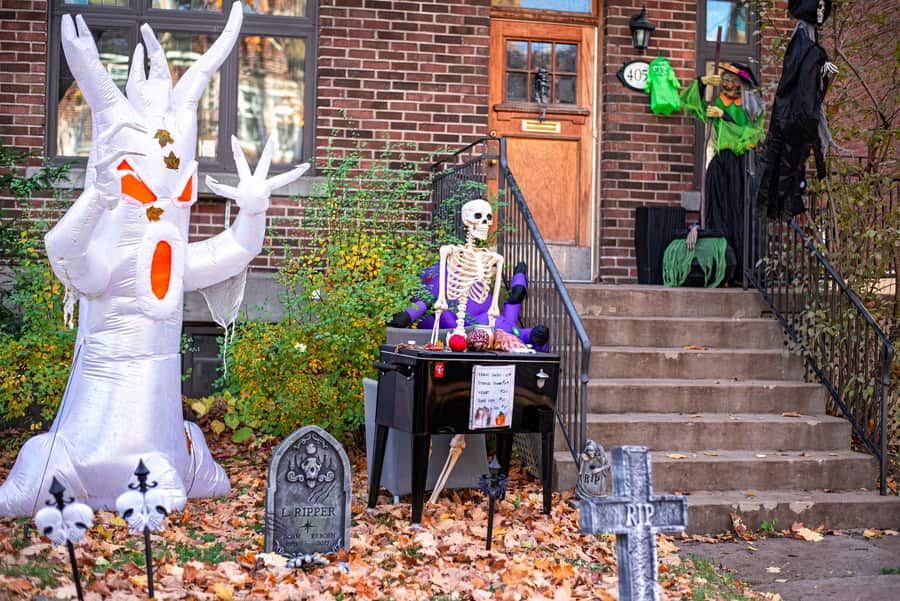
Airblown Inflatable Halloween Character
Gemmy
Gemmy is one of the brands that fits a heavy-duty base fan rather than a token internal one, and the fan is the single biggest predictor of whether an inflatable survives a windy October.
- Fan
- Heavy-duty base fan
- Power
- Plug-in, continuous
- Includes
- Stakes and tethers on most models
- Lighting
- Internal LED
Good
- Heavy-duty base fan rather than a low-voltage internal unit
- Widely stocked, so replacement parts are findable
- Even inflation, which is what stops the fabric flogging in gusts
Less good
- Supplied stakes are short for soft or sandy ground
- Continuous power draw for the whole season
- Character-led range, so styles date
- Wind survivability8.4
- Fan quality8.8
- Night visibility8.0
- Setup effort8.6
- Storage footprint8.8
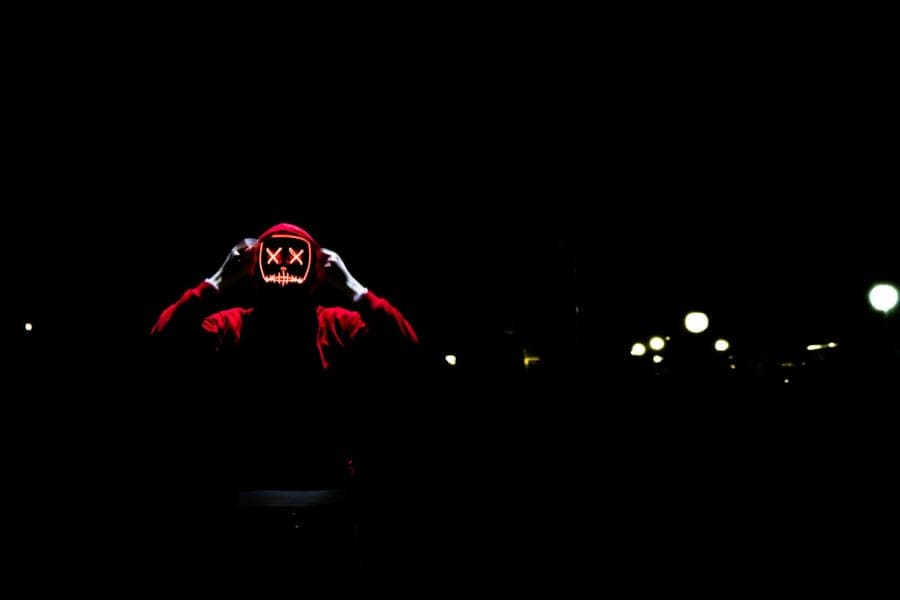
Towering Boogeyman with Child
Spirit Halloween
The scale contrast does the work: a looming adult figure paired with a small one reads as wrong from the sidewalk, before anyone is close enough to see detail.
- Type
- Standing animatronic, two figures
- Activation
- Motion, step pad or infrared, model dependent
- Weather rating
- Light moisture only, not rated for sustained rain
- Power
- Plug-in, standard household outlet
Good
- Scale contrast lands from the street, not just up close
- Reads as a scene rather than a single prop
- Tall enough to be the focal point a whole layout can be built around
Less good
- Flagship-tier pricing for a single piece
- Needs real footprint and a level base to stand safely
- Fabric and foam construction means a cover or a bring-in plan for wet nights
- Street presence9.4
- Build quality8.2
- Weather tolerance6.0
- Setup effort7.2
- Storage footprint6.4

Giant Inflatable Skeleton
Various
Gets you giant height in a package one person can carry and store, at the cost of needing a blower running every minute it is up.
- Height
- Commonly 12 to 20 ft inflated
- Power
- Continuous blower, plug-in
- Storage
- Folds into a single bag
- Weather
- Deflate in high wind
Good
- Stores in a fraction of the space a rigid giant needs
- One person can set it up
- Taller for the money than any rigid equivalent
Less good
- Runs a blower continuously, so it is a permanent power draw
- A seam failure or a blower failure drops the whole thing flat
- Must come down before real wind, not during it
- Street presence9.0
- Build quality6.4
- Weather tolerance5.0
- Setup effort8.8
- Storage footprint9.2

Scary Talking Groundbreaker Clown
Haunted Hill Farm
Groundbreakers are the most forgiving animatronic format for a real yard: no standing balance problem, no wind sail, and they read best from exactly where people walk.
- Type
- Groundbreaker, half figure
- Activation
- Motion sensor with sound
- Weather rating
- Light moisture, and the electronics sit low near wet ground
- Power
- Plug-in
Good
- No balance or tip-over problem, because the base sits on the ground
- Almost no wind profile compared with a standing figure
- Packs flatter than any standing animatronic at the same price
Less good
- Sits in the wettest part of the yard, so drainage matters
- Invisible from the street if your lawn has any slope away from it
- Needs a light aimed at it or it vanishes after dusk
- Street presence6.8
- Build quality8.0
- Weather tolerance6.6
- Setup effort9.2
- Storage footprint8.6
Verdict by use case
Small garage, ordinary weather
Inflatable. Storage is the constraint that quietly ends most people's collecting, and an inflatable folds into a single bag where a rigid giant needs a wall. If your weather is unremarkable and you are home to deflate before a storm, this is the easy answer.
Exposed lot, windy region, or nobody home
Animatronic. An anchored rigid prop stays up in conditions that flatten an inflatable, and it does not need a decision made about it every time the forecast turns. The cost is assembly effort and the storage problem you are accepting.
Close-range viewing: a porch or a path
Animatronic, clearly. Inflatable detail is printed onto soft fabric and it does not hold up at conversational distance. A sculpted figure with triggered movement is a fundamentally better close-range object, and the interactivity only works close up anyway.
Maximum height for the money
Inflatable, and it is not close. There is no frame to engineer, so height is nearly free. A giant inflatable reaches heights no rigid prop at the same price gets near — the giant decorations roundup covers both sides of that.
Running cost: the counterintuitive one
Most people assume an animatronic with motors and lights costs more to run than a bag of fabric with a fan. The opposite is true, and the reason is duty cycle.
An animatronic draws meaningfully only during the few seconds it is actually moving, and it spends the rest of the evening idle. An inflatable blower runs every minute the prop is standing, which is every evening for a month. Over a season, the inflatable is the larger consumer by a wide margin — and several blowers together are what actually push a household circuit toward its limit. The power-draw guide has the arithmetic.
The honest answer for most people
Own both, and use each where it is strong. Inflatables for height and lawn coverage at distance, animatronics on the path and the porch where people get close. The two formats are complementary rather than competing, and a display with both reads better than a display with six of either.
If you are starting from nothing this year, start with one animatronic near the path — it is the piece people remember, because it responds to them.
Frequently asked questions
Are inflatables or animatronics better for Halloween?
Neither, and they fail differently. Inflatables win on height per dollar, setup and storage. Animatronics win on close-range detail, weather tolerance and interactivity. Choose on your constraint: garage space points to inflatables, exposed weather points to animatronics.
Which uses more electricity, an inflatable or an animatronic?
The inflatable, by a wide margin, and the reason is duty cycle. A blower runs every minute the prop is up; an animatronic only draws meaningfully during the few seconds it is moving.
Do animatronics hold up better in rain than inflatables?
Not straightforwardly. Inflatable fabric is coated and copes with light rain well. Animatronic electronics are poorly sealed. Inflatables handle rain better and wind worse; animatronics are the reverse.
What should I buy first for a yard haunt?
One animatronic placed near the path. It is the piece people remember because it responds to them, and close range is where its detail and interactivity actually land.
About the author
Mike M.
Mike M. is the hands-on owner behind Iron Mako Media, which publishes Haunt & Hedge. The site covers the gear that builds a yard haunt, for the person who already decorates and adds one bigger piece a year.
We do not run a test lab and we do not claim to have physically tested products we have not. Read how we choose picks.