Planning
Halloween Yard Decoration Ideas and Layout
Layout is free and it changes a display more than the next prop will. Start at the sidewalk.
Disclosure: we earn a commission from qualifying purchases made through links on this page, at no extra cost to you. It does not change what we recommend — here is how we choose.
The short answer
Start at the sidewalk and look back. Cluster props into two or three scenes rather than spreading them evenly, stagger depth so there is a foreground and a background, light one thing in each cluster and leave the rest dark, and leave genuine empty space between scenes.
Layout is the only upgrade in this whole category that is free, and it changes a display more than the next prop will. Almost every yard that looks busy rather than dramatic has a layout problem rather than a budget problem.
Start at the sidewalk
Walk to where people actually see your yard from — the sidewalk, the opposite side of the street, a slow-moving car. That is the viewpoint that matters, and it is not the viewpoint you plan from when you are standing on the lawn holding a prop.
Do this at night, with the lights on, before you commit to anything. Most layout mistakes are obvious from there and invisible from anywhere else: the prop hidden behind a car, the one that disappears against a dark hedge, the three things in a row that read as a row.
Cluster, do not spread
The instinct is to distribute props evenly so the whole yard is decorated. Even distribution reads as a sales floor — a series of individual objects with no relationship to each other.
Cluster instead. Two or three groups, each of which is a scene: a graveyard cluster, a porch scene, a thing happening at the edge of the driveway. Inside a cluster, props relate to each other and the eye reads them together. Between clusters, leave real empty space — that space is what makes each cluster read as deliberate.
Build depth
A yard is three-dimensional and most displays use it as a flat plane against the house. Stagger props front to back so there is a foreground, a middle and a background, and the display gains depth that a single line never has.
- Foreground: low props near the sidewalk. Groundbreakers, gravestones, low inflatables. These frame the view into the yard.
- Middle: the main scene. Animatronics, the pieces with movement, the things people look at.
- Background: the tall things and the house itself. Giants, projections, the color wash.
- Overhead: the layer everybody forgets. Hanging props use free space that nothing else competes for.
Design the approach
Trick-or-treaters walk a route through your yard, and that route is a sequence you control. It is the one thing a yard display has that a photograph does not.
- Mark the entrance. An arch, a pair of props flanking the path, or simply lighting that starts at the sidewalk. People need to know where to walk.
- Put something close to the path. Close-range props — a groundbreaker, a triggered animatronic — are what get a reaction. A prop across the lawn is scenery.
- Save the trigger for mid-path. A step-pad animatronic halfway along works better than one at the door, because by the door they are expecting something.
- Keep the path clear and lit. Children running in the dark, cords across the route, and an unlit step is how a fun night becomes a bad one.
- Give the door a resolution. The last thing they see should feel like an ending, not an afterthought.
Light the composition, not the objects
Light one thing in each cluster and let the rest sit in darkness. Contrast is what makes props read at night, and the parts you leave dark are what give the lit parts their weight.
Uplight rather than downlight — it exaggerates height and produces the under-lit face that reads as wrong. And hide the fixtures themselves behind planting or props, because a visible light source is a light source rather than an effect. The lighting color guide covers this properly.
What makes a layout work
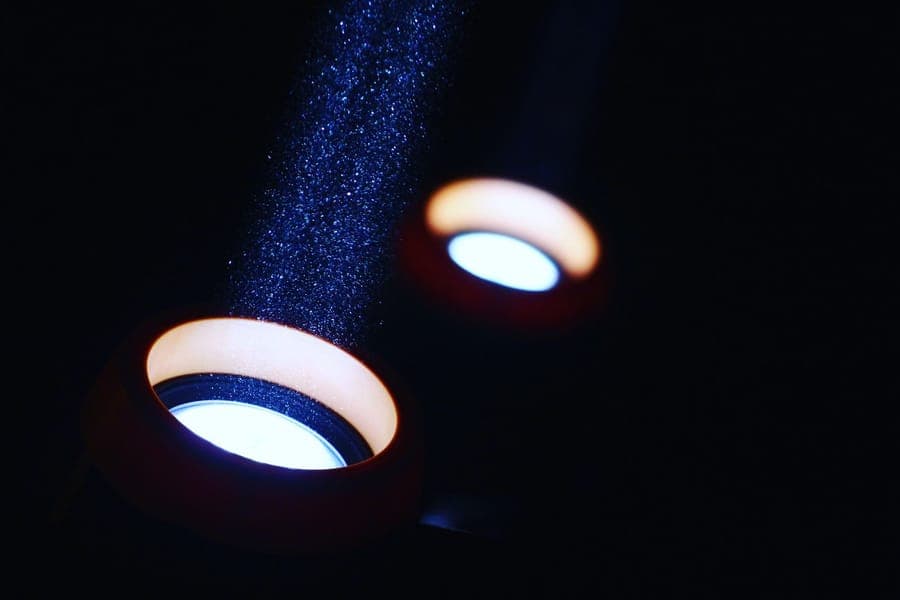
Outdoor Spot Lights (IP65)
Govee
Spots do the job floods cannot: put light on the animatronic and leave the rest of the yard dark, which is what makes a display read as staged instead of lit.
- Beam
- Narrow, uplight or spot
- Rating
- IP65
- Color
- RGBIC plus warm and cold white
- Control
- App
Good
- Narrow beam means contrast, and contrast is what makes props read at night
- Same app ecosystem as the floods, so scenes stay in sync
- Warm and cold white makes them useful the rest of the year
Less good
- Needs aiming, and aiming needs doing again after the first mow
- Low stake height means splashback in heavy rain
- A spot pointed at a neighbor's window is a conversation you do not want
- Brightness8.0
- Color quality9.0
- Weather rating8.2
- Control9.0
- Value8.2
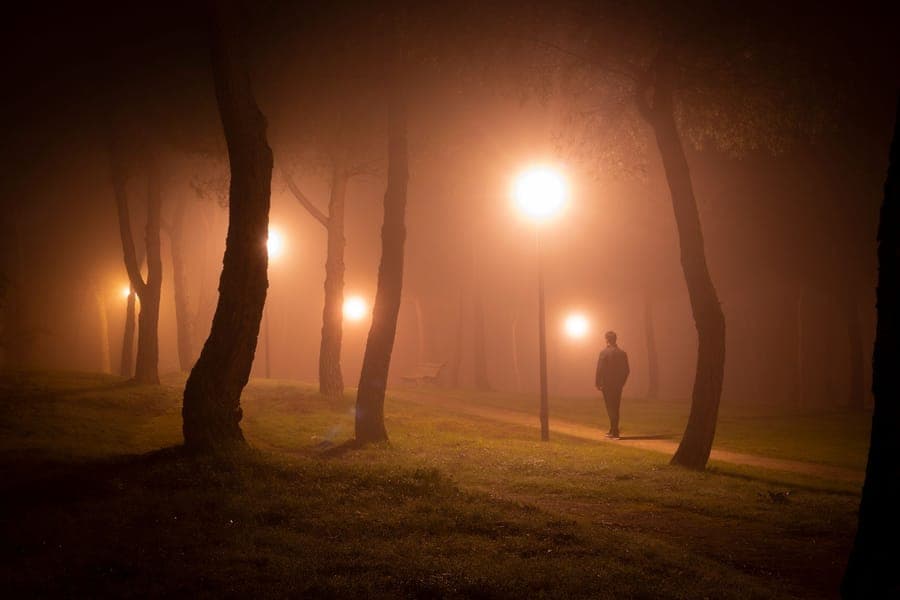
Mister Kool II Low-Lying Fog Machine
ADJ
Makes genuinely low-lying fog from regular ice and water-based fluid, with no dry ice and no CO2 tank, which is why it is the default recommendation for a home yard haunt.
- Cooling
- Regular ice
- Fluid
- Water-based fog juice
- Heat-up
- About 3 minutes
- Consumables
- Ice and fluid, no dry ice
Good
- Ice cooling means no dry-ice sourcing problem on October 31
- Short heat-up, so it is ready when the first visitors arrive
- Fog genuinely hugs the ground rather than rising
Less good
- You are buying and melting ice all evening
- Output is modest next to a dry-ice machine
- Needs a level spot, because a tilted unit dumps meltwater
- Fog density7.8
- Stays low9.0
- Run time7.0
- Setup effort8.4
- Consumable cost7.2
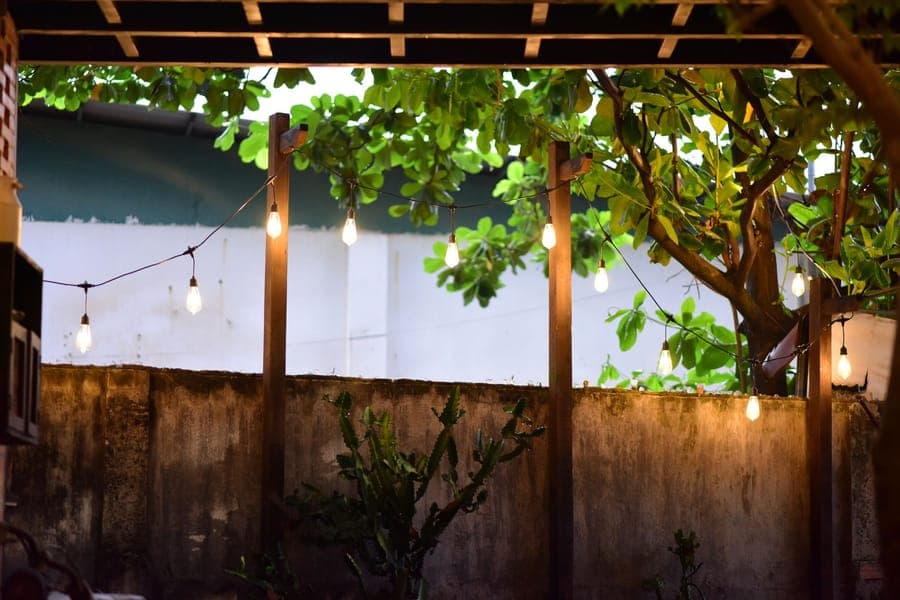
Outdoor Halloween String Lights
Various
String lights do not scare anyone, and that is not their job. They draw the boundary that makes everything inside it look deliberate.
- Type
- Outdoor-rated string lighting
- Length
- Measure the run before buying
- Power
- Plug-in or solar
- Connection
- End-to-end connectable on most sets
Good
- Defines the edge of the display, which stops it looking scattered
- Cheap per foot of coverage
- Connectable sets let you run one cord instead of four
Less good
- One dead section on a cheap set can kill the whole run
- Tangles in storage unless you wind them on something
- Too much of it turns a haunt into a Christmas display
- Brightness5.6
- Color quality7.0
- Weather rating7.2
- Control6.0
- Value9.0
Cord Stakes and Light Clips
Various
The unglamorous purchase that makes a display look professional. Cords pinned along a bed edge disappear; cords lying across a lawn do not.
- Type
- Ground stakes and clip hooks
- Use
- Pin cord along bed edges and fence lines
- Quantity
- Buy more than you think, one every few feet
- Season
- Reusable
Good
- Hides cord runs without burying anything
- Stops the mower and the leaf blower finding the cord
- Costs almost nothing per foot of tidy
Less good
- Plastic stakes snap in hard or frozen ground
- Not a substitute for a ramp where cord crosses a path
- You will lose half of them in the grass every year
- Safety value7.0
- Weather rating7.4
- Ease of use9.4
- Reliability7.0
- Value9.4
Use fog to define space
Fog is a layout tool as much as an atmosphere one. It hides the edges of a display, obscures the boundary between what you built and what is just your lawn, and makes a small cluster feel like part of something larger.
Place the machine upwind of your main cluster and let the air carry the fog through it. Fog machine placement covers that, and the fog hub covers getting the fog to behave.
Practical constraints to plan around
- Power. Cluster layout helps here too — one cord to a multi-outlet stake in the middle of a cluster beats four cords across a lawn. See the power hub.
- Wind. Put tall props in the lee of the house or a fence, not at building corners where airflow accelerates.
- Sight lines from the street. Parked cars, hedges and mature trees hide more than people expect.
- The route itself. Anything on the path has to be safe in the dark with children running.
- Your own front door. Somebody has to answer it all evening.
If you want a theme to organize the clusters around rather than just arranging what you own, yard haunt themes covers that.
Frequently asked questions
How do you lay out a Halloween yard display?
Start from the sidewalk at night, cluster props into two or three scenes rather than spreading them evenly, stagger depth so there is a foreground and background, light one thing per cluster, and leave real empty space between them.
How do I make my Halloween yard look scarier?
Less light, not more. Light one thing per scene and leave the rest dark, uplight rather than downlight, add fog to hide the edges, and put a triggered prop close to the path where people walk.
Where should I put my Halloween decorations in the yard?
Low props in the foreground near the sidewalk, the main animated pieces in the middle where people pass, tall props and projection at the back against the house. Use overhead space too — it is free and almost nobody uses it.
How much empty space should a Halloween display have?
More than feels comfortable. Empty space between clusters is what makes each cluster read as deliberate. A yard filled edge to edge reads as clutter, however good the individual props are.
What makes a Halloween display look amateur?
Even spacing, even lighting and no depth. Those three together turn a set of good props into a row of objects, and all three are free to fix.
About the author
Mike M.
Mike M. is the hands-on owner behind Iron Mako Media, which publishes Haunt & Hedge. The site covers the gear that builds a yard haunt, for the person who already decorates and adds one bigger piece a year.
We do not run a test lab and we do not claim to have physically tested products we have not. Read how we choose picks.