Inflatables
Base Fan vs Internal Blower on Halloween Inflatables
The specification that decides wind survivability, and the one listings describe least clearly.
Disclosure: we earn a commission from qualifying purchases made through links on this page, at no extra cost to you. It does not change what we recommend — here is how we choose.
The short answer
A heavy-duty base fan sits at the bottom of the inflatable and moves enough air to keep the fabric taut under gusts. A small internal blower only moves enough to stand the figure up in still air. Taut fabric cannot flog, and flogging fabric is what opens seams — which is why fan type predicts wind survivability better than price or size.
This is the most useful comparison on the inflatables hub, and it is one almost nobody writes because it is not a matchup between two brands. It is a matchup between two engineering choices that determine whether the thing you bought is still standing in November.
What each one is
| Heavy-duty base fan | Small internal blower | |
|---|---|---|
| Position | In the base, drawing from outside | Inside the body |
| Airflow | High, maintains positive pressure | Low, just enough to stand up |
| Behavior in gusts | Fabric stays taut | Windward side collapses and flaps |
| Noise | Audible | Quiet |
| Power draw | Higher | Lower |
| Replaceable | Usually, if you match the spec | Often integrated |
| Typical brands | Gemmy, Holidayana, some Air Characters | Most entry-tier listings |
Why it decides survivability
Wind rarely tears an inflatable directly. The sequence is: wind pushes the fabric in faster than the fan can replace the air, the windward side loses pressure, the fabric starts to flap, and the flapping works a seam back and forth until it opens. Fabric movement is the destructive mechanism, not wind pressure itself.
A base fan intervenes at the first step. It replaces air fast enough that the fabric never loses tension, so it never starts flapping, so the seam never gets worked. That is why two inflatables of identical size and fabric can behave completely differently in the same gust.
It also explains why anchoring alone does not save a cheap inflatable. Perfect anchoring stops the prop leaving your yard; it does nothing to stop the fabric flogging itself apart in place.
Examples of each
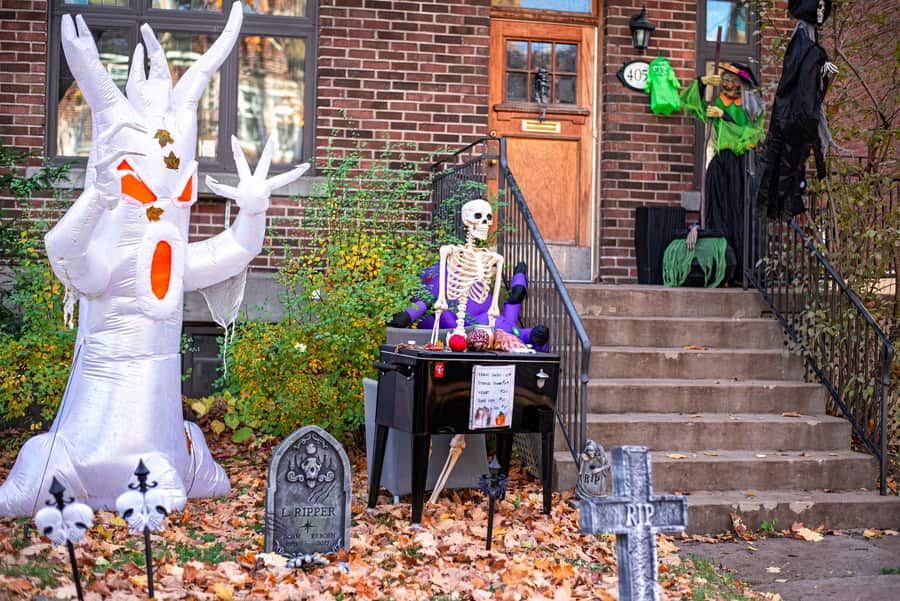
Airblown Inflatable Halloween Character
Gemmy
Gemmy is one of the brands that fits a heavy-duty base fan rather than a token internal one, and the fan is the single biggest predictor of whether an inflatable survives a windy October.
- Fan
- Heavy-duty base fan
- Power
- Plug-in, continuous
- Includes
- Stakes and tethers on most models
- Lighting
- Internal LED
Good
- Heavy-duty base fan rather than a low-voltage internal unit
- Widely stocked, so replacement parts are findable
- Even inflation, which is what stops the fabric flogging in gusts
Less good
- Supplied stakes are short for soft or sandy ground
- Continuous power draw for the whole season
- Character-led range, so styles date
- Wind survivability8.4
- Fan quality8.8
- Night visibility8.0
- Setup effort8.6
- Storage footprint8.8

Halloween Inflatable with Heavy-Duty Base Fan
Holidayana
Holidayana is the third brand that consistently fits a real base fan. If you buy on one specification in this category, buy on fan type.
- Fan
- Heavy-duty base fan
- Power
- Plug-in, continuous
- Tethers
- Included
- Lighting
- Internal LED
Good
- Base-fan construction rather than a small internal blower
- Holds shape in gusts instead of flapping
- Sold through Amazon, so it is available when big-box stock is gone
Less good
- Base fans are louder than internal ones if it sits near a bedroom window
- Stake quality is the usual weak point, so replace them
- Less brand recognition than Gemmy for resale or parts
- Wind survivability8.2
- Fan quality8.6
- Night visibility7.8
- Setup effort8.6
- Storage footprint8.8

Inflatable Jack-o'-Lantern Trio
JOYIN
Short, round and close to the ground: the cheapest way to fill empty lawn without adding another thing the wind can lever over.
- Type
- Multi-figure, low profile
- Power
- Plug-in
- Height
- Low, typically under 6 ft
- Lighting
- Internal LED
Good
- Low and round, which is the best shape in this category for wind
- Covers a wide area of empty lawn cheaply
- Family friendly on a street with small trick-or-treaters
Less good
- Entry-tier fabric, so expect a couple of seasons rather than ten
- Not a focal point, and it should be bought as filler
- Multiple figures means multiple blowers and multiple cords
- Wind survivability8.6
- Fan quality6.4
- Night visibility7.4
- Setup effort8.8
- Storage footprint8.6
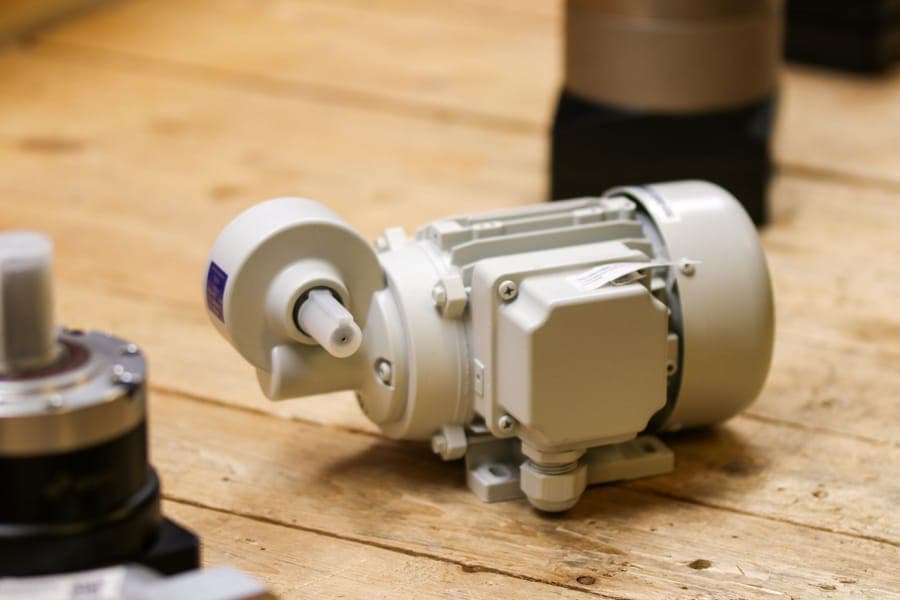
Replacement Inflatable Blower Fan
Various
The other half of inflatable failures. Match the voltage and the airflow rating on the original unit before you buy, because they are not interchangeable.
- Type
- Replacement blower motor
- Match on
- Voltage, airflow rating, mount diameter
- Power
- Plug-in via the supplied adapter
- Fit
- Model specific, so verify before buying
Good
- Saves an otherwise sound inflatable
- Cheaper than replacing the whole decoration
- Upgrading to a stronger fan improves wind behavior on a sagging unit
Less good
- Fitment is genuinely fiddly, because voltage and mount size both have to match
- Not universal despite how listings describe them
- A blown fan is sometimes a symptom of a wiring fault rather than the cause
- Fix rate8.0
- Repair durability8.4
- Ease of use6.4
- Value8.8
- Shelf life8.6
How to tell before you buy
Listings often will not say outright. These are the tells:
- Look at the product photo of the base. A base fan is a visible cylindrical housing at the bottom of the figure, usually with a grille. If the base looks like plain fabric, it is an internal blower.
- Check the phrasing. 'Heavy-duty fan', 'base fan' or a stated airflow figure indicates a real fan. 'Built-in blower', 'self-inflating' and silence on the subject usually indicate an internal unit.
- Check the power adapter rating. Base fans need more power. A very low-rated adapter is a small blower.
- Check the brand. Gemmy, Holidayana and Air Characters consistently fit base fans. That is the shortest version of this whole page.
- Check whether a replacement fan is sold. A manufacturer that sells replacement blowers is usually one with a discrete, serviceable fan.
Which should you buy?
Buy the base fan if
- Your lot is exposed, a corner plot, or in a windy region.
- The inflatable is tall — the taller it is, the more fan type matters.
- You want it to last more than a couple of seasons.
- You will not always be home to deflate before weather.
An internal blower is fine if
- The inflatable is short and round, where geometry is already doing the work.
- Your yard is sheltered by a house, fence or hedge line.
- It is a filler prop rather than the centerpiece.
- Noise matters — internal blowers are noticeably quieter near a bedroom window.
If your fan dies mid-season
A dead blower is the second most common inflatable failure after a tear, and it is often repairable. Replacements exist, but fitment is genuinely fiddly: voltage, airflow rating and mount diameter all have to match, despite how universal the listings sound. Upgrading to a stronger fan on an inflatable that has always sagged is a legitimate fix and sometimes improves its wind behavior meaningfully.
Before replacing anything, work the diagnostic sequence — a lot of apparent fan failures are a tripped GFCI or a tear the fan cannot keep up with. Inflatable troubleshooting has the order to check in.
Frequently asked questions
What is the difference between a base fan and an internal blower?
A base fan sits in the bottom of the inflatable and moves enough air to hold the fabric taut under gusts. An internal blower sits in the body and moves only enough to stand the figure up in still air, so the fabric loses tension and flaps when wind hits it.
How do I tell which fan an inflatable has before buying?
Look at the base in the product photos — a base fan is a visible cylindrical housing, usually grilled. Wording like 'heavy-duty fan' or a stated airflow figure indicates one; silence on the subject usually means an internal blower. Gemmy and Holidayana consistently fit base fans.
Can I replace an internal blower with a base fan?
Generally no, because the inflatable's air chamber and mounting are designed around the fan it shipped with. You can often replace a failed fan with a stronger equivalent, provided voltage, airflow rating and mount diameter match.
Are base fans noisy?
Noticeably more than internal blowers, because they move more air. It rarely matters in a front yard, and it can matter a lot if the inflatable sits under a bedroom window for a month.
Sources
About the author
Mike M.
Mike M. is the hands-on owner behind Iron Mako Media, which publishes Haunt & Hedge. The site covers the gear that builds a yard haunt, for the person who already decorates and adds one bigger piece a year.
We do not run a test lab and we do not claim to have physically tested products we have not. Read how we choose picks.