Storage & Off-Season
Storage Bin vs Tree Bag
Rigid protects, fabric adapts. The right answer is per prop, not per household.
Disclosure: we earn a commission from qualifying purchases made through links on this page, at no extra cost to you. It does not change what we recommend — here is how we choose.
The short answer
Use a rigid tote for anything with motors, circuit boards or a frame, because crush protection is what those need. Use a fabric bag for long awkward shapes and soft goods, because flexibility is what those need. Most households want both, sorted by prop rather than by preference.
This is presented as a preference question and it is really a per-prop question. The two formats protect against different things, and putting the wrong prop in the wrong one is how decorations die in a garage.
Side by side
| Rigid tote | Fabric bag | |
|---|---|---|
| Crush protection | Good — the point of it | None |
| Stacking | Yes, with a load-bearing lid | No, never |
| Shape flexibility | Poor — fixed rectangle | Good — adapts to awkward shapes |
| Long items | No | Yes, the main use case |
| Pest and dust exclusion | Good, better with latches | Moderate |
| Moving it | Carry, or slide on concrete | Carry, or roll if it has wheels |
| Empty storage | Takes space even empty | Folds flat |
| Cost per volume | Higher | Lower |
Both formats
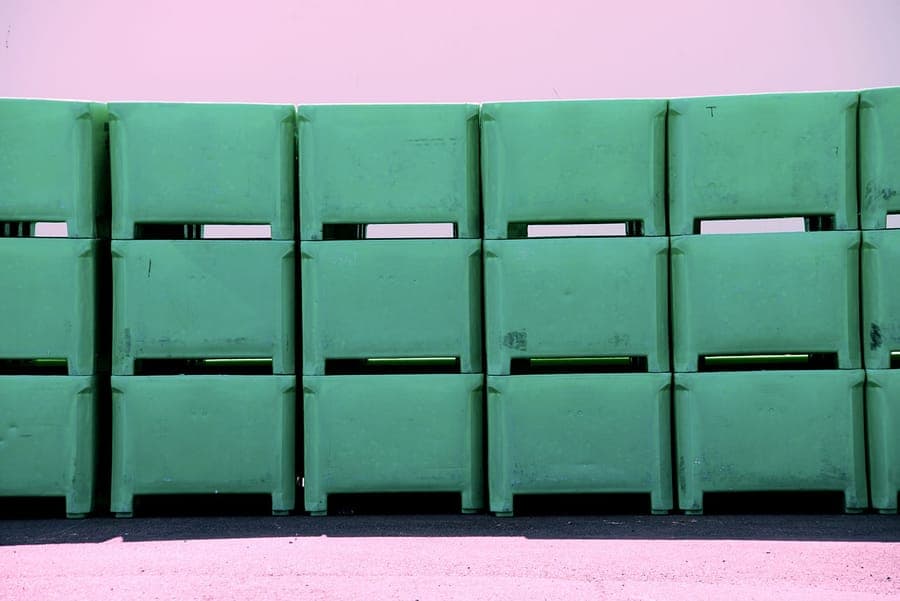
27 Gal Heavy-Duty Storage Tote
Various
Thicker walls and a lid that takes weight. The right box for animatronics, because the thing you store on top of them is the thing that breaks them.
- Capacity
- 27 gal
- Walls
- Heavy gauge, rated for stacking load
- Lid
- Load bearing on most models
- Use
- Rigid props, animatronics, tools
Good
- Lid takes the weight of whatever gets stacked on it
- Deep enough for a folded standing animatronic
- Survives being dragged across a concrete floor
Less good
- Heavy before you put anything in it
- Too deep to lift comfortably when full
- Costs several times what a basic tote does
- Stackability9.4
- Seal quality7.4
- Capacity9.0
- Durability9.4
- Value7.0
Upright Tree Storage Bag with Wheels
Various
Built for a Christmas tree, which is the same problem: something tall, awkward and heavy that has to move across a garage floor once a year.
- Type
- Upright wheeled storage bag
- Height
- Tall, so check against your ceiling
- Wheels
- Castors on the base
- Access
- Full-length zipper
Good
- Wheels turn a two-person carry into a one-person roll
- Upright storage uses floor area instead of wall length
- Full-length zip means no wrestling things in end first
Less good
- Tall and top heavy when loaded, so it can tip
- Castors on a rough concrete floor are marginal
- Not weatherproof, so it needs a dry space
- Fit8.0
- Protection6.6
- Handling9.2
- Durability7.4
- Value7.8
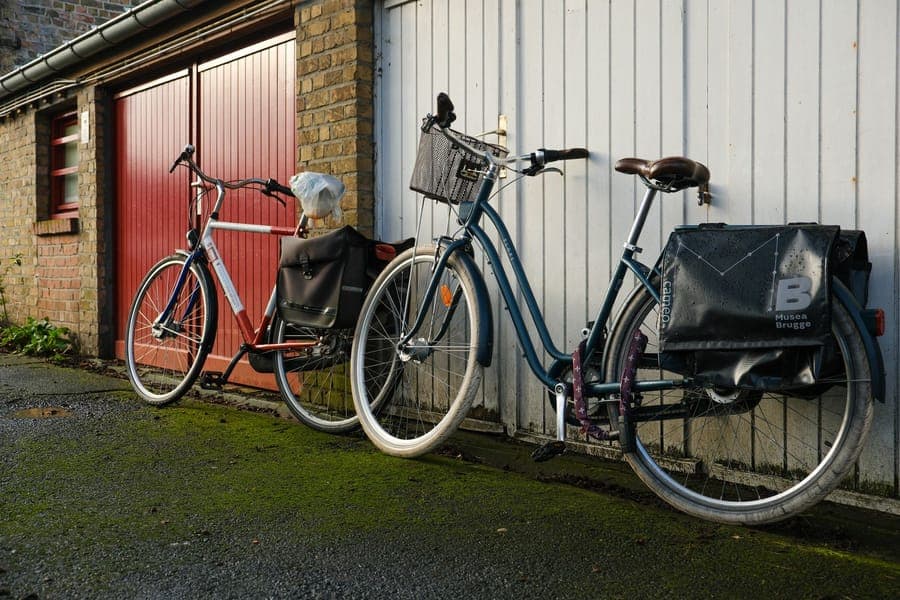
Extra-Large Storage Bag for a 12 ft Skeleton
Various
The box a twelve-foot skeleton arrives in will not survive a second trip to the attic. A long zippered bag is the replacement, and it wants about 40 inches of clear floor.
- Type
- Zippered fabric storage bag
- Length needed
- Size to the longest disassembled section
- Handles
- Reinforced, because this will be heavy
- Storage
- Stands upright or lies flat
Good
- Fits the actual disassembled shape rather than a cardboard rectangle
- Fabric bags flex around awkward limbs where a box does not
- Handles make a two-person carry possible
Less good
- No crush protection, so do not stack anything on it
- Cheap zippers fail under load, so check the zipper before the fabric
- The head still needs its own padded box
- Fit9.0
- Protection6.2
- Handling8.4
- Durability7.2
- Value8.6

Latching Storage Tote
Sterilite
Latches are what stop a lid lifting when a stack shifts or a loft gets hot, and a lifted lid in a loft is how dust and pests get into a year of decorations.
- Closure
- Latching lid
- Capacity
- 64 qt on the common Halloween variant
- Use
- Loft, attic, high stacks
- Stacking
- Yes
Good
- Latches hold the lid down through heat cycling and stack shift
- Better dust and pest exclusion than a snap lid
- Still stacks
Less good
- Latches are the first thing to crack in a cold garage
- Costs more per gallon than a plain tote
- Not airtight, so this is not a humidity solution
- Stackability8.6
- Seal quality8.0
- Capacity8.0
- Durability7.8
- Value8.2
Which prop goes in which
Rigid tote, always
- Animatronics. Motors, boards and linkages. The thing you stack on top is what breaks them.
- Anything with a servo or an LCD module. Electronics do not want flexing.
- Hands, extremities and small fragile props. In a small padded box inside the tote.
- Lighting and cords. Not for crush protection but because a tote keeps a wound reel from unspooling into a tangle.
Fabric bag, always
- Twelve-foot skeleton frame sections. Nothing rigid comes in that length, and the bag adapts around awkward limbs.
- Inflatables, when compressed. Though a lidded bin is better if you want the blower and stakes kept with it.
- Fabric props, drapes and costume elements. Soft goods want breathability more than protection.
- Anything tall and awkward that would otherwise need a custom box.
Genuinely a close call
Groundbreakers flat-pack well and have some electronics, so either works — a tote if they are going under a stack, a bag if they are going on a shelf. Inflatables split on whether you prioritize space (vacuum bag) or keeping the kit together (lidded bin) — vacuum bag versus rigid tote works through that one properly.
The rule that decides it
Ask what would damage this prop in a garage over ten months. If the answer is *something heavy on top of it*, that is a tote. If the answer is *nothing much, but it does not fit in a box*, that is a bag.
Corollary: never stack on a bag. It has no crush protection and it looks stackable when it is full, which is exactly how frame sections end up bent.
What both need
- Everything bone dry first. The container does not matter if the contents went in damp. This is the whole ballgame.
- Off the concrete floor. Concrete wicks moisture and garages flood — shelving or an overhead rack.
- A moisture absorber, upright, in anything sealed.
- A label on the side, not the lid. Lids get swapped.
- One prop's hardware kept with that prop. Blowers with their inflatable, stakes with their skeleton.
How to store Halloween decorations covers the whole job by prop class, and the storage bins roundup covers the specific containers.
Frequently asked questions
Should I use bins or bags for Halloween storage?
Both, sorted by prop. Rigid totes for anything with motors, boards or a frame, because crush protection is what they need. Fabric bags for long awkward shapes and soft goods, because flexibility is what those need.
Can you stack storage bags?
No. Fabric bags have no crush protection, and a full bag looks stackable when it is not. Stacking on a bag is how frame sections bend and extremities break.
Are tree bags good for Halloween decorations?
For long awkward items, yes — a giant skeleton's frame sections are the obvious case, and the wheeled upright versions make moving them far easier. They are the wrong choice for anything fragile.
What should never go in a fabric storage bag?
Anything with motors, circuit boards or fragile extremities, and anything that will have something stacked on it. Those want a rigid tote with a load-bearing lid.
About the author
Mike M.
Mike M. is the hands-on owner behind Iron Mako Media, which publishes Haunt & Hedge. The site covers the gear that builds a yard haunt, for the person who already decorates and adds one bigger piece a year.
We do not run a test lab and we do not claim to have physically tested products we have not. Read how we choose picks.