Inflatables
The Best Wind-Resistant Halloween Inflatables
Wind is the number one way an inflatable display ends early. This is what survives it, and what makes anything survive it.
Disclosure: we earn a commission from qualifying purchases made through links on this page, at no extra cost to you. It does not change what we recommend — here is how we choose.
The short answer
Wind survivability comes from three things in this order: shape geometry (wide and low beats tall), fan type (a heavy-duty base fan keeps fabric taut so it cannot flog), and anchoring (corkscrew ground anchors, every point, plus guy lines). The nine-foot Joiedomi UFO is our top pick because its geometry does the work before anything else has to.
Weather survivability is the biggest gap in this category's published advice, and it is not close. We checked the ranking content for inflatables and found exactly one competitor that has ever physically tested for wind — Reviewed, in October 2023. Everyone else writes about how the characters look.
So this page is organized around the actual failure sequence rather than a product list, because knowing why they fail is what lets you evaluate any inflatable, including ones we have not covered.
Quick picks
Ranked on the criteria below. Tap a row to jump to the full write-up.
| # | Product | Best for | Score | Price |
|---|---|---|---|---|
| 1 |  9 ft Inflatable UFO with LED Glow A nine-foot saucer is a wide, low shape rather than a tall one, which is exactly the geometry that survives wind better than a standing figure. | Something that is not a ghost | 8.0 | |
| 2 | 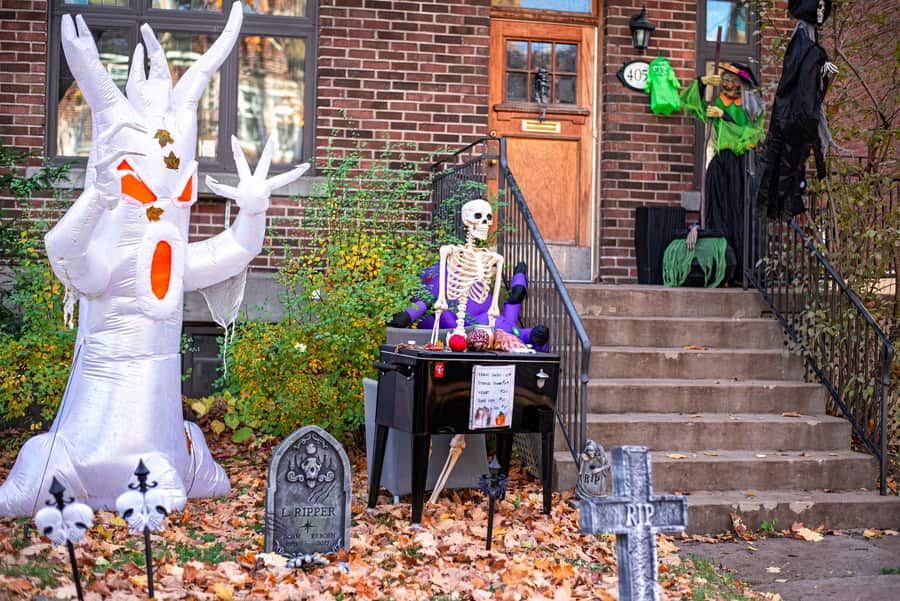 Airblown Inflatable Halloween Character Gemmy is one of the brands that fits a heavy-duty base fan rather than a token internal one, and the fan is the single biggest predictor of whether an inflatable survives a windy October. | The wind-tolerant default | 8.4 | |
| 3 |  Halloween Inflatable with Heavy-Duty Base Fan Holidayana is the third brand that consistently fits a real base fan. | Fan-first buying | 8.2 | |
| 4 | 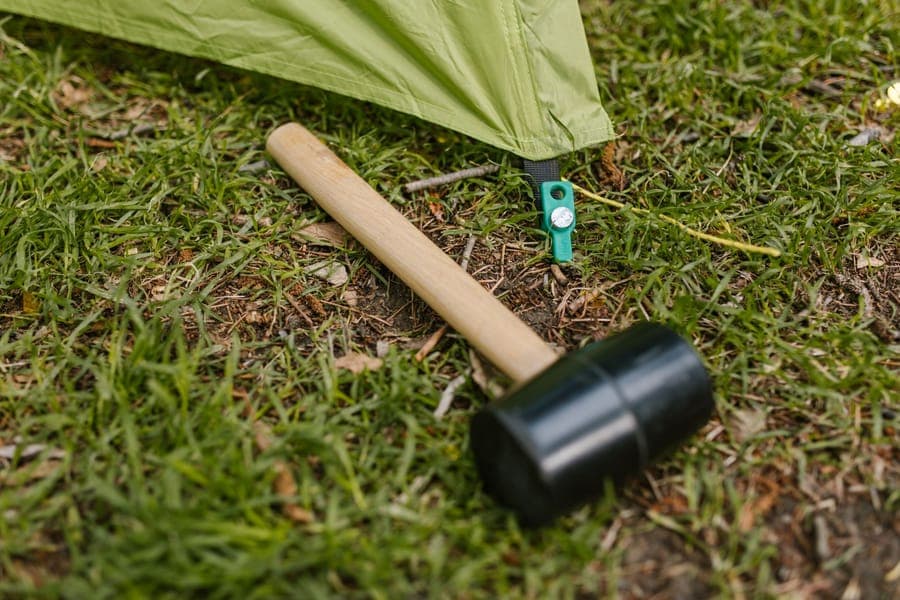 Corkscrew Ground Anchors The single highest-value upgrade in this whole category. | Replacing the supplied stakes | 8.6 | |
| 5 | 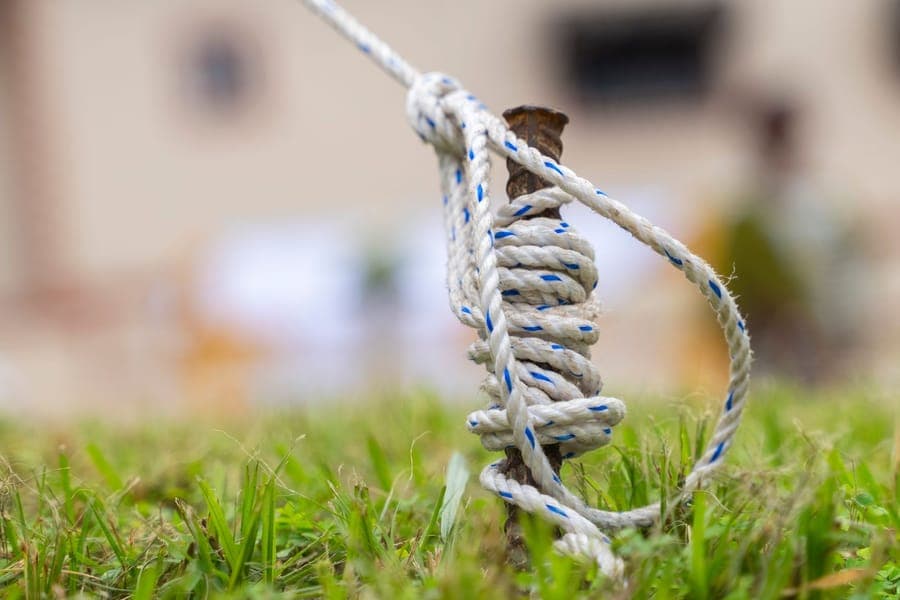 Inflatable Tie-Down Strap and Stake Kit Buy the kit so every anchor point has a strap, because the failure is almost never the strap you fitted. | Complete anchor sets | 8.0 | |
| 6 | 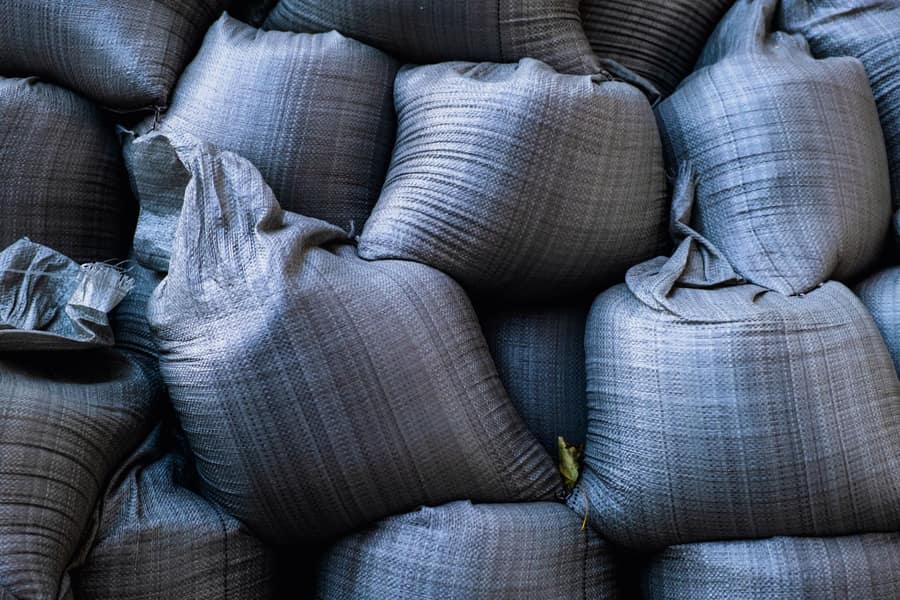 Sandbag Anchor Weights The answer on any surface you cannot drive a stake into. | Concrete and pavers | 8.2 |
Scores are our own editorial rubric for best wind resistant halloween inflatables. They are not customer ratings, and we do not publish star ratings or review counts for products.
How an inflatable actually fails in wind
- Pressure drops on the windward side. Wind pushes the fabric in faster than the fan can replace the air.
- The fabric starts to flog. It flaps rather than holding shape, and every flap works the seam.
- A seam opens, or the anchor lets go. Whichever is weaker. On a well-anchored inflatable it is the seam; on a well-made one it is the anchor.
- Total collapse, or departure. A deflated inflatable on the lawn is recoverable; one that pulled its stakes is in the street.
Every intervention below targets one of those four steps, and the earlier in the sequence you intervene, the more it helps.
Step 1 and 2: buy the right shape and fan
Shape decides how much wind load there is at all. A tall standing figure is a sail on a short base and a side gust has enormous leverage against it. A wide, low shape spreads the same wind pressure over a base wide enough to resist it, which is why a nine-foot saucer is dramatically more survivable than a nine-foot figure.
Fan type decides whether the fabric can flog. A heavy-duty base fan moves enough air to keep positive pressure under gusting conditions; a small internal blower does not. This is the specification listings describe least clearly and the one that matters most — base fan versus internal blower covers how to identify it before you buy.
Step 3: anchor it so the stakes are not the weak point
The stakes in the box are thin, short and straight. In dry compacted soil they hold. In the saturated ground you actually have in late October, they slide out under steady load — and that is the failure people describe as *the wind took it*, when what actually happened is the ground let go.
- Use corkscrew ground anchors at every anchor point the inflatable provides. The spiral makes the soil shear around the whole anchor rather than slide along a smooth shaft.
- Use every point, not the front two. The corners you skip are the corners that fail. This is the single most common anchoring mistake.
- Add guy lines to the upper body on any tall figure. Base anchoring stops sliding; upper tethers stop the figure being levered over.
- On concrete or pavers, double up sandbags and tether to the bags rather than resting the frame on them.
- Re-tension after the first heavy rain. Wet ground lets anchors creep, and this one check prevents most mid-season failures.
The picks and the hardware
9 ft Inflatable UFO with LED Glow
Joiedomi
A nine-foot saucer is a wide, low shape rather than a tall one, which is exactly the geometry that survives wind better than a standing figure.
- Height
- 9 ft
- Shape
- Wide, low profile
- Lighting
- Blue LED glow
- Power
- Plug-in
Good
- Wide-and-low geometry catches far less wind than a tall figure
- Distinctive on a street where everything else is a ghost or a pumpkin
- Strong glow carries down the block
Less good
- Needs more lawn width than a standing inflatable
- Not obviously Halloween, which some people want and some do not
- More anchor points to get right because of the footprint
- Wind survivability8.2
- Fan quality7.6
- Night visibility8.8
- Setup effort8.0
- Storage footprint8.4
Airblown Inflatable Halloween Character
Gemmy
Gemmy is one of the brands that fits a heavy-duty base fan rather than a token internal one, and the fan is the single biggest predictor of whether an inflatable survives a windy October.
- Fan
- Heavy-duty base fan
- Power
- Plug-in, continuous
- Includes
- Stakes and tethers on most models
- Lighting
- Internal LED
Good
- Heavy-duty base fan rather than a low-voltage internal unit
- Widely stocked, so replacement parts are findable
- Even inflation, which is what stops the fabric flogging in gusts
Less good
- Supplied stakes are short for soft or sandy ground
- Continuous power draw for the whole season
- Character-led range, so styles date
- Wind survivability8.4
- Fan quality8.8
- Night visibility8.0
- Setup effort8.6
- Storage footprint8.8
Halloween Inflatable with Heavy-Duty Base Fan
Holidayana
Holidayana is the third brand that consistently fits a real base fan. If you buy on one specification in this category, buy on fan type.
- Fan
- Heavy-duty base fan
- Power
- Plug-in, continuous
- Tethers
- Included
- Lighting
- Internal LED
Good
- Base-fan construction rather than a small internal blower
- Holds shape in gusts instead of flapping
- Sold through Amazon, so it is available when big-box stock is gone
Less good
- Base fans are louder than internal ones if it sits near a bedroom window
- Stake quality is the usual weak point, so replace them
- Less brand recognition than Gemmy for resale or parts
- Wind survivability8.2
- Fan quality8.6
- Night visibility7.8
- Setup effort8.6
- Storage footprint8.8
Corkscrew Ground Anchors
Various
The single highest-value upgrade in this whole category: the thin U-stakes in the box pull straight out of wet ground, and a corkscrew does not.
- Type
- Spiral or corkscrew ground anchor
- Common length
- 10 to 15 in
- Best ground
- Turf and soil, not gravel or hardstanding
- Installation
- Hand turned, no driving
Good
- Holds in saturated soil where a straight stake lifts
- Screws in by hand, so no mallet and no bent stakes
- Reusable season after season
Less good
- Useless on concrete, pavers or frozen ground, where you need weights instead
- Takes longer to install than driving a U-stake
- Leaves a visible plug hole in a manicured lawn
- Holding power9.2
- Ground versatility6.4
- Durability8.8
- Setup effort8.0
- Value9.0
Inflatable Tie-Down Strap and Stake Kit
Various
Buy the kit so every anchor point has a strap, because the failure is almost never the strap you fitted. It is the two corners you skipped.
- Contents
- Straps, stakes, tensioners
- Anchor points
- Four minimum per inflatable
- Adjustment
- Cam or ratchet tensioner
- Reusable
- Yes
Good
- Enough hardware to do every corner rather than the front two
- Tensioners let you retighten after the fabric settles
- Works with inflatables, arches and lightweight rigid props
Less good
- Over-tensioning deforms the inflatable and stresses the seams
- Kit stakes are often the same thin stock as the ones you are replacing
- Straps are a trip hazard across a path unless you flag them
- Holding power8.0
- Ground versatility7.0
- Durability7.6
- Setup effort8.2
- Value8.6
Sandbag Anchor Weights
Various
The answer on any surface you cannot drive a stake into. Double up per anchor point on a driveway, because a bag that slides is a bag that did nothing.
- Type
- Sand or water-fill anchor bag
- Surface
- Concrete, pavers, decking, rooftop
- Attachment
- Grommet or loop to a tether
- Storage
- Empties flat
Good
- Works where no stake will go
- Empties flat for storage instead of taking a tote
- Stackable per anchor point for larger displays
Less good
- Needs doubling up on larger inflatables or in real wind
- Sand has to come from somewhere and go somewhere
- Water fill is useless once it freezes
- Holding power7.8
- Ground versatility9.4
- Durability8.0
- Setup effort7.4
- Value8.4
Step 4: know when to take it down
No inflatable, no fan and no anchor system makes a fabric structure safe in a real storm. It is not a permanent structure and it was never sold as one. Deflating before forecast high wind takes two minutes and is the difference between owning it next year and finding it in a hedge.
If nobody is home to make that call, this is an argument for a smart plug: cutting power deflates the inflatable, which is a far better outcome than leaving it inflated through a storm. Timers and smart plugs covers the scheduling side.
What about wind-resistant rigid decorations?
The phrase *wind-resistant Halloween decorations* covers rigid props too, and the principles transfer: low beats tall, wide beats narrow, and anchoring into soil beats weighting on concrete. The wide ground-breaking skeletons are the clearest example — sixty-two inches high and over nine feet wide is a shape wind cannot get leverage on. The giant decorations roundup covers those.
The same anchoring hardware works for both, which is one reason we recommend buying anchors in quantity rather than per prop.
Frequently asked questions
How do I keep Halloween decorations from blowing away?
Replace the supplied stakes with corkscrew ground anchors, use every anchor point rather than the front two, add guy lines to the upper body on tall props, re-tension after the first heavy rain, and deflate or lower before forecast high wind.
What makes an inflatable wind resistant?
Shape first — wide and low spreads the load where tall and narrow gives wind leverage. Then fan type, because a heavy-duty base fan keeps the fabric taut and taut fabric cannot flog. Anchoring is third, and it only helps if the first two are not already failing.
Should I deflate my inflatable in high wind?
Yes. It is a fabric structure, not a permanent one, and no anchoring system makes it storm-safe. Cutting power takes seconds and a deflated inflatable on the lawn is recoverable in a way one in the street is not.
How many stakes does a Halloween inflatable need?
Every anchor point the manufacturer provided, which is usually four to six, plus guy lines on anything tall. The corners people skip are the ones that fail, because load redistributes to whatever is still attached.
Can I anchor an inflatable on concrete?
Not with stakes. Use doubled sandbags at every anchor point and tether to the bags rather than resting the base on them. Accept that this is a fair-weather placement — weighted bases slide before they tip, and they do both in real wind.
Sources
About the author
Mike M.
Mike M. is the hands-on owner behind Iron Mako Media, which publishes Haunt & Hedge. The site covers the gear that builds a yard haunt, for the person who already decorates and adds one bigger piece a year.
We do not run a test lab and we do not claim to have physically tested products we have not. Read how we choose picks.