Power, Timers & Setup
How Much Electricity Do Halloween Decorations Use?
A watts-per-prop-type table, the circuit arithmetic, and how to find out what your own display actually draws.
Disclosure: we earn a commission from qualifying purchases made through links on this page, at no extra cost to you. It does not change what we recommend — here is how we choose.
The short answer
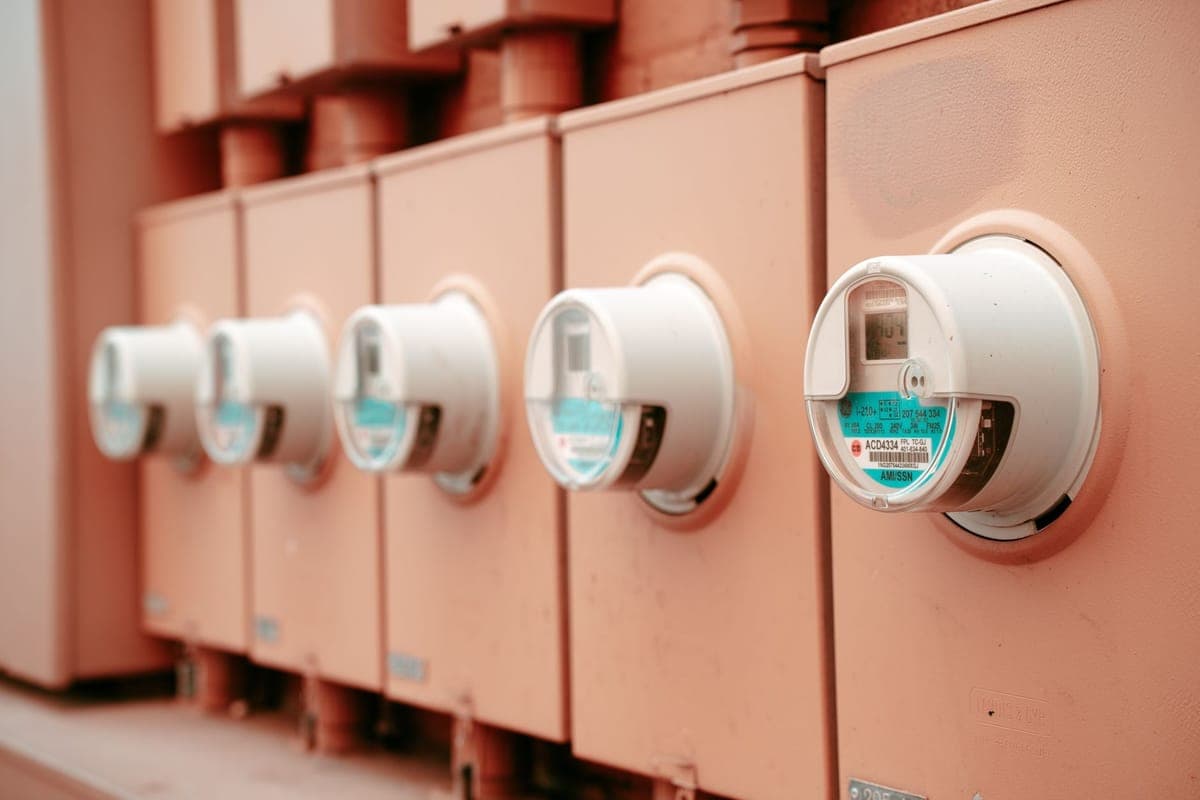
Most of a Halloween display's electricity goes to whatever runs continuously — inflatable blowers and fog machines. LED lighting is negligible; animatronics only draw meaningfully during the seconds they move. A typical 15-amp household circuit carries about 1,800 watts, and the practical continuous limit is lower.
This is the page we could not find anywhere when we went looking, which is why it exists. Nobody publishes a watts-per-prop-type reference for Halloween displays, and it is the number you need before you plug the fifth thing into the same outlet.
Typical draw by prop type
| Prop type | Typical draw | Duty cycle | Season impact |
|---|---|---|---|
| LED string lights (per set) | Low — single-digit to low tens of watts | Continuous | Negligible |
| LED flood or spot | Low tens of watts | Continuous | Small |
| Inflatable blower (small) | Tens of watts | Continuous | Moderate |
| Inflatable blower (large, base fan) | Higher tens of watts | Continuous | Moderate to high |
| Animatronic (idle) | Very low | Continuous | Negligible |
| Animatronic (in motion) | Tens of watts | Seconds per trigger | Negligible |
| Projector | Tens of watts | Continuous | Moderate |
| Fog machine (heating) | Hundreds to over a thousand watts | Intermittent, high peaks | Highest peak in the display |
| Incandescent string lights | Much higher than LED | Continuous | High — replace these |
These are indicative ranges to plan with, not specifications for any particular product. The actual figure for your prop is on its rating plate or in its manual, and that is the number to use.
The circuit arithmetic
A standard household branch circuit is typically 15 amps at 120 volts, which is about 1,800 watts. Continuous loads are conventionally limited to 80 percent of a circuit's rating, which puts the practical working ceiling closer to 1,440 watts — and that circuit may already be feeding things inside the house.
- List every prop that will be on the same circuit.
- Write down each one's watts from its rating plate, or measure it.
- Add them up, using the fog machine's heating draw rather than its average, because that peak is what trips a breaker.
- Compare against roughly 1,440 watts for a 15-amp circuit, then subtract anything already on that circuit indoors.
- Split across two circuits if you are close. Different outdoor outlets are often on different circuits — check before assuming.
The fog machine is the item that catches people. Its heating element draws far more than anything else in a typical yard, and it draws it in bursts, so a display that sits comfortably under the limit on average can still trip when the machine kicks in.
Measure instead of guessing
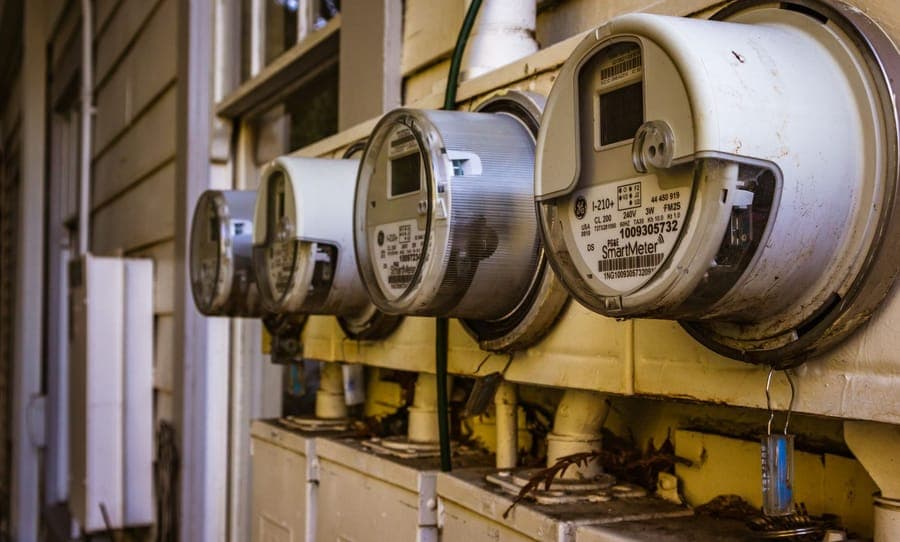
Every figure above is a range, and your props are specific. A plug-in energy meter tells you exactly what each one draws in about thirty seconds, and it is cheap enough that there is no good reason to plan a display on estimates.
Measure indoors at a bench before deploying, note the figure on a label on the prop or its storage bin, and you will never have to do it again. The cumulative kWh reading also tells you what a month of running actually costs, which is usually less than people fear for LED-based displays and more than they expect for blower-heavy ones.
What helps
Electricity Usage Monitor
P3 International
Every watts figure on this site is a specification or a measurement. This is how you get your own measurement, for your own props, in about thirty seconds each.
- Type
- Plug-in energy meter
- Reads
- Watts, amps, volts, kWh
- Use
- Measure each prop before you plan the circuit
- Indoor or outdoor
- Indoor unit, so measure inside then deploy
Good
- Turns a guess about circuit load into a number
- Cheap, and useful year round on anything that plugs in
- Cumulative kWh reading shows what a month of running actually costs
Less good
- Indoor device, so you measure at a bench rather than out on the lawn
- One prop at a time
- Display is hard to read in an awkward outlet position
- Accuracy8.8
- Ease of use9.2
- Planning value9.4
- Off-season use9.6
- Value9.2
Outdoor Smart Wi-Fi Plug, 6-Outlet Power Stake
BN-LINK
Six weatherproof outlets on a stake, with scheduling. This is the part that turns a pile of extension cords into a display that switches itself on at dusk.
- Outlets
- 6, weatherproof
- Form
- Ground stake with a short lead
- Control
- Wi-Fi app scheduling
- Placement
- Central to the display, off the ground
Good
- One cord from the house instead of six
- Scheduling means the display runs whether or not you are home
- Weatherproof outlet covers rather than open sockets
Less good
- Wi-Fi at the far end of a yard is often the real limitation
- Total load across six outlets still has to stay inside the circuit
- App account required, which some people will not want
- Weather rating8.6
- Outlet count9.4
- Scheduling9.2
- Setup effort8.4
- Value8.6
12-Gauge Outdoor Extension Cord
Various
Gauge is the number that matters and it runs the counterintuitive way: lower is thicker. For a long run feeding blowers and a fog machine, 12-gauge is the one to buy.
- Gauge
- 12 AWG, the thickest common household size
- Use
- Long runs, high total load
- Rating
- Outdoor rated, look for a W in the jacket code
- Trade-off
- Heavy and stiff
Good
- Least voltage drop over a long run
- Handles a fog machine plus blowers without getting warm
- Thick jacket survives being walked on and mowed near
Less good
- Heavy and stiff, which makes it a pain to route and to coil
- Costs noticeably more per foot
- Overkill for a single string of LEDs
- Current capacity9.6
- Weather rating8.8
- Run length9.4
- Handling5.8
- Value7.2
What a month actually costs
The honest answer is that it depends on your rate and your mix, and we are not going to invent a number. What we can tell you is the shape of it:
- LED lighting is close to free across a month, even a lot of it.
- Inflatable blowers dominate most displays' consumption, because they run every minute the prop is up.
- Fog machines are high-peak but intermittent, so they matter more for circuit load than for the monthly bill unless you run one constantly.
- Animatronics barely register, because idle draw is tiny and motion is brief.
- A timer cuts the total substantially by removing daytime hours — which is the cheapest saving available.
Multiply your own measured watts by your own hours and your own rate. That is a number you can trust, and it takes two minutes with a meter.
Reducing the load
- Put everything on a timer. Fewer hours is the biggest single reduction, and it costs nothing after the purchase.
- Replace incandescent string lights with LED. The difference is large and permanent.
- Use battery or solar for perimeter props so they add nothing to the circuit — see solar versus plug-in.
- Run the fog machine in bursts, which reduces both consumption and peak load, and looks better anyway.
- Split across two circuits rather than running one at its limit all evening.
And get the cord gauge right for the load, because a long thin cord feeding a heavy draw is both a fire risk and the reason your lights dim when the fog machine fires. The extension cord roundup covers sizing, and electrical safety covers when to stop and call someone.
Frequently asked questions
How much electricity do Halloween decorations use?
Most of it goes to whatever runs continuously — inflatable blowers and fog machines. LED lighting is close to negligible, and animatronics only draw meaningfully during the seconds they are moving.
How many Halloween decorations can I plug into one outlet?
Outlet count is not the limit; total watts is. A 15-amp circuit carries about 1,800 watts, with a practical continuous ceiling nearer 1,440 — and that circuit may already be feeding things indoors.
Do Halloween inflatables use a lot of electricity?
Individually they are modest, but they run every minute the prop is up for a whole month, which makes them the largest consumer in most displays. Putting them on a timer is the single biggest saving available.
How much does a fog machine draw?
Its heating element is typically the largest single draw in a yard display, in the hundreds to over a thousand watts, and it comes in bursts. That peak is what trips breakers even when average load looks fine.
How do I measure what my Halloween props use?
A plug-in energy meter reads watts, amps and cumulative kWh in about thirty seconds per prop. Measure indoors at a bench, label the figure on the prop or its storage bin, and you never have to guess again.
About the author
Mike M.
Mike M. is the hands-on owner behind Iron Mako Media, which publishes Haunt & Hedge. The site covers the gear that builds a yard haunt, for the person who already decorates and adds one bigger piece a year.
We do not run a test lab and we do not claim to have physically tested products we have not. Read how we choose picks.