Power, Timers & Setup
Smart Plug vs Mechanical Timer
Both switch a display on at dusk. They fail in opposite ways, and that is how to choose.
Disclosure: we earn a commission from qualifying purchases made through links on this page, at no extra cost to you. It does not change what we recommend — here is how we choose.
The short answer
A smart plug tracks sunset automatically, which matters across October when evenings shift substantially, and lets you switch the display from anywhere. A mechanical timer has no app, no account and no network to fail, but runs on fixed clock times and loses its setting after a power cut.
This looks like a price tier and it is not. The two approaches fail in opposite ways, and which failure you would rather have is the actual decision.
Side by side
| Smart plug | Mechanical timer | |
|---|---|---|
| Scheduling | Sunset-relative, adjusts automatically | Fixed clock times |
| Setup | App, account, network join | Turn a dial, push pins |
| Remote control | Yes, from anywhere | No |
| Feedback | Tells you whether it is on | None — you look at the yard |
| Range limit | Wi-Fi coverage at the far end of a yard | None |
| Power-cut behavior | Resumes schedule | Loses its setting |
| Firmware risk | Real, and always at a bad moment | None |
| Outlets | Often multiple, weatherproof | Usually one or two |
| Cost | Higher | Lower |
Both approaches
Outdoor Smart Wi-Fi Plug, 6-Outlet Power Stake
BN-LINK
Six weatherproof outlets on a stake, with scheduling. This is the part that turns a pile of extension cords into a display that switches itself on at dusk.
- Outlets
- 6, weatherproof
- Form
- Ground stake with a short lead
- Control
- Wi-Fi app scheduling
- Placement
- Central to the display, off the ground
Good
- One cord from the house instead of six
- Scheduling means the display runs whether or not you are home
- Weatherproof outlet covers rather than open sockets
Less good
- Wi-Fi at the far end of a yard is often the real limitation
- Total load across six outlets still has to stay inside the circuit
- App account required, which some people will not want
- Weather rating8.6
- Outlet count9.4
- Scheduling9.2
- Setup effort8.4
- Value8.6
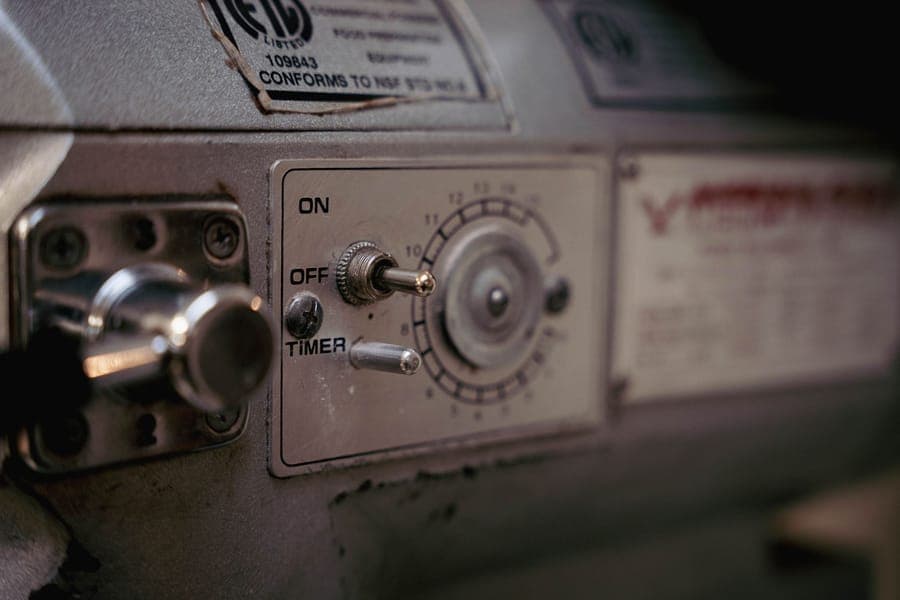
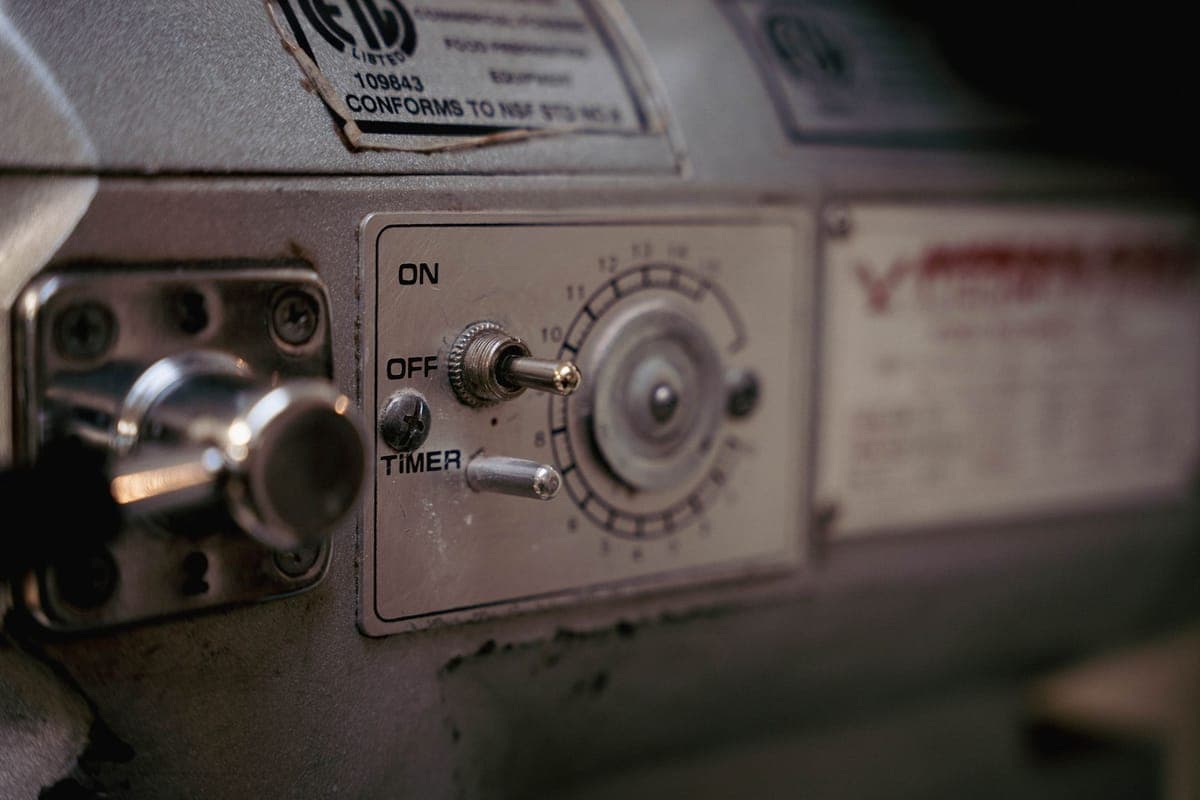
Outdoor Mechanical Timer with Weatherproof Cover
Various
A dial timer has no app, no account and no firmware update the week of Halloween. For a lot of displays that is the right trade.
- Type
- Mechanical dial timer
- Housing
- Weatherproof cover
- Control
- On/off pins, typically 30-minute increments
- Network
- None required
Good
- No Wi-Fi, no app, nothing to fail remotely
- Obvious at a glance whether it is set correctly
- Cheap and long lived
Less good
- Fixed clock times, so it drifts against actual sunset through October
- Loses its setting after a power cut
- Coarse increments compared with a smart plug
- Weather rating8.0
- Outlet count5.0
- Scheduling6.6
- Setup effort9.4
- Value9.2
25 ft Outdoor Extension Cord with Light Timer
Kasonic
Cord, multiple weatherproof outlets and a timer in one ETL-listed unit, which removes two of the three things that usually go wrong out there.
- Length
- 25 ft
- Outlets
- Multiple, weatherproof
- Timer
- Built in
- Listing
- ETL listed
Good
- One product instead of a cord plus a timer plus an adapter
- ETL listing, which a lot of seasonal-aisle cords do not carry
- Weatherproof outlet covers built in
Less good
- Twenty-five feet is short for a deep front yard
- A built-in timer means a timer failure is a cord failure
- Fixed outlet spacing does not suit every layout
- Weather rating8.4
- Outlet count8.0
- Scheduling7.6
- Setup effort9.0
- Value8.8
Electricity Usage Monitor
P3 International
Every watts figure on this site is a specification or a measurement. This is how you get your own measurement, for your own props, in about thirty seconds each.
- Type
- Plug-in energy meter
- Reads
- Watts, amps, volts, kWh
- Use
- Measure each prop before you plan the circuit
- Indoor or outdoor
- Indoor unit, so measure inside then deploy
Good
- Turns a guess about circuit load into a number
- Cheap, and useful year round on anything that plugs in
- Cumulative kWh reading shows what a month of running actually costs
Less good
- Indoor device, so you measure at a bench rather than out on the lawn
- One prop at a time
- Display is hard to read in an awkward outlet position
- Accuracy8.8
- Ease of use9.2
- Planning value9.4
- Off-season use9.6
- Value9.2
The case for the smart plug
Sunset drift. Sunset moves substantially across October. A fixed clock time set in the first week has the display coming on in daylight by the last week, or coming on late at the start. Sunset-relative scheduling handles that without anybody thinking about it, and on a display that runs a full month it is the strongest single argument here.
Remote control. Genuinely useful on the night: turning the display on early for a group, or off when weather arrives and you are not home. Cutting power to an inflatable remotely means it deflates rather than riding out a gale.
Feedback. Knowing the display is actually on, from inside the house or from elsewhere, removes the walk outside to check.
The case for the mechanical timer
Nothing to fail remotely. No account, no app update, no cloud service having a bad evening on October 31. The failure modes of a dial timer are all local and all obvious.
No range limit. This is the practical catch that catches people. Wi-Fi at the far end of a yard, through an exterior wall, is often marginal — and a smart plug that cannot reach the network is a plug that is permanently on or permanently off. Test coverage where the plug will actually live before buying one.
Obvious state. You can see at a glance whether a dial timer is set correctly. An app that says the schedule is active while the plug is offline does not tell you that.
Verdict by use case
A month-long display, near the house
Smart plug. Sunset tracking across October is worth real money, the Wi-Fi will reach, and the remote control is genuinely useful on wet nights.
A display at the far end of a large yard
Mechanical, or a dusk-to-dawn photocell. Range is the limiting factor and no amount of scheduling sophistication helps a plug that cannot reach the network.
You do not want another app or account
Mechanical, without apology. It is a legitimate preference and the product does the job. Add a photocell version and you get most of the sunset tracking without any network at all.
One weekend, not a month
Mechanical. Sunset drift over three days is nothing, and the setup time on a smart plug is a bigger share of the effort than the benefit justifies.
The option that splits the difference
A dusk-to-dawn photocell switches on actual light levels rather than a clock, needs no network, and has no account. It is not as flexible as a schedule — you get on at dark, off at light, or a countdown from dark — but it tracks the season automatically, which is the main thing a mechanical timer cannot do.
Several outdoor cord-and-timer products include one, which is often the neatest answer for a yard display. The timers roundup covers the specific products.
Whichever you buy
- Outlet count is not the limit — total load is. Six outlets makes it easy to exceed what a circuit should carry. Measure or look up your props first with the power-draw guide.
- Keep it off the ground. Stake formats exist because standing water is what kills outdoor controllers.
- Seal the joint feeding it, and keep the house-end outlet GFCI protected.
- Do not schedule a fog machine unattended. It is a heating element.
Frequently asked questions
Is a smart plug better than a timer for Halloween lights?
For a month-long display near the house, usually — sunset-relative scheduling tracks the shifting evenings and remote control is useful on the night. For the far end of a large yard, a mechanical timer or photocell wins because Wi-Fi range is the real limit.
Do outdoor smart plugs work in cold weather?
Ones rated for outdoor use generally do. The more common cold-weather problem is Wi-Fi reach through an exterior wall to the far end of a yard, which is a range issue rather than a temperature one.
What happens to a mechanical timer after a power cut?
It loses its position, so the dial is offset by however long the power was out and the display switches on at the wrong time. Smart plugs resume their schedule once they reconnect.
Is a dusk-to-dawn sensor better than a timer?
For a yard display, often yes. It follows actual light levels so it tracks the season automatically, and it needs no network and no app. You lose the ability to set arbitrary on and off times.
About the author
Mike M.
Mike M. is the hands-on owner behind Iron Mako Media, which publishes Haunt & Hedge. The site covers the gear that builds a yard haunt, for the person who already decorates and adds one bigger piece a year.
We do not run a test lab and we do not claim to have physically tested products we have not. Read how we choose picks.