Inflatables
How Long Do Halloween Inflatables Last?
Two to five seasons, and the variable is almost entirely how you pack it away rather than what you paid.
Disclosure: we earn a commission from qualifying purchases made through links on this page, at no extra cost to you. It does not change what we recommend — here is how we choose.
The short answer
Two to five seasons is the realistic range. Fabric denier and fan quality set the ceiling; what decides where you land inside it is storage. An inflatable packed completely dry, out of direct sun when displayed, with its blower kept clear, will comfortably double the life of the identical one packed damp.
People ask this expecting an answer about brands. The honest answer is that within a given quality tier, the difference between a two-season inflatable and a five-season one is almost entirely behavioral.
What sets the ceiling
- Fabric denier. Heavier fabric resists tearing and holds color longer. It is the specification sellers are quietest about and the one that genuinely limits lifespan.
- Fan type. A base fan keeps fabric taut so it cannot flog, and flogging is the main mechanical wear mode — see base fan versus internal blower.
- Seam construction. Stitched and taped outlasts stitched alone, though you will rarely find this stated.
- Print quality. Fade is a cosmetic failure but it is the one that makes people replace a structurally fine prop.
What actually kills them early
| Cause | What happens | Preventable? |
|---|---|---|
| Packed damp | Mold through the fabric over ten months | Entirely |
| Seam tear in wind | Fabric flogs, seam opens | Mostly — fan and anchoring |
| UV fade | Print washes out, fabric embrittles | Partly — placement |
| Blower failure | Prop will not stand | Often repairable |
| Pest damage in storage | Chewed fabric, nested-in folds | Entirely — sealed containers |
| Ground abrasion | Base wears through where it rubs | Partly — a groundsheet |
Notice that the top cause and the bottom two are all storage problems, and all three are free to prevent.
The free habit that doubles lifespan
Dry it completely before it goes away. Not dry to the touch. Actually dry, which for coated fabric means spread out for a day or two somewhere with moving air.
An inflatable is a large sealed volume of fabric. Moisture in a fold has nowhere to go and ten months to work. What you unpack next September is mold through the print, a smell you cannot remove, and fabric that has lost strength where the mold grew. There is no container expensive enough to prevent this and no cleaning that fully reverses it.
The practical version: take it down on a dry day if you possibly can, run the blower for a while with the prop up to dry the inside, then spread it out in a garage with the door open. Two days is not excessive.
Storing it properly after that
- Fold loosely rather than tightly. Hard creases in the same place every year eventually crack the coating.
- Use a sealed container or a vacuum bag. Sealed keeps pests out. Vacuum bags are the biggest space win available, with the same hard condition: bone dry first.
- Add a moisture absorber if the garage or loft is damp. Keep it upright, because the collected liquid is corrosive.
- Keep the blower, stakes and tethers with the prop. One bin per inflatable turns next September from a scavenger hunt into a ten-minute job.
- Get it off the concrete floor. Concrete wicks moisture, and garages flood.
What helps it last
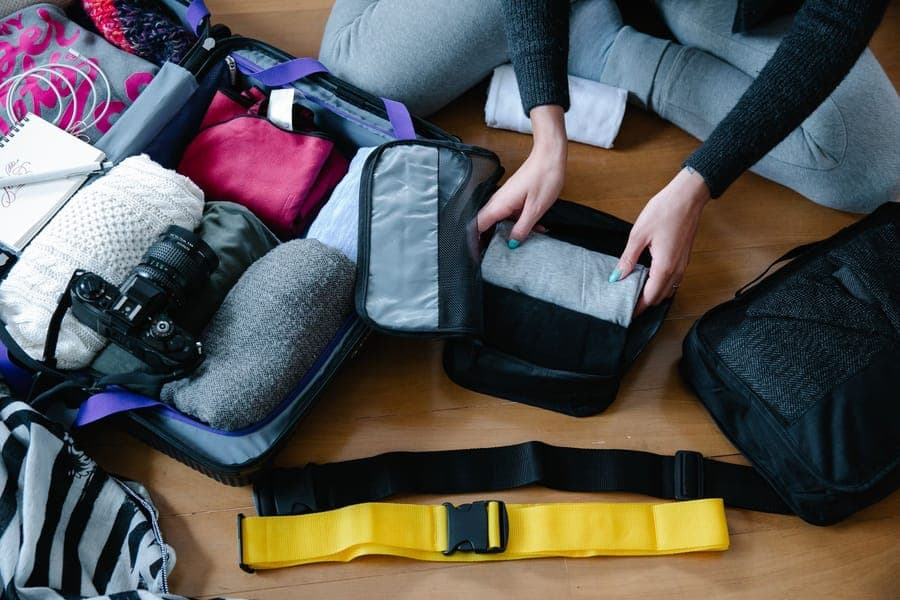
Jumbo Vacuum Storage Bags
Various
Compressing an inflatable is the single biggest space win in the garage, with one condition that is not optional: it has to be bone dry first.
- Type
- Vacuum compression bag
- Requires
- A vacuum cleaner hose
- Critical
- Contents must be completely dry
- Reusable
- Yes, until the valve fails
Good
- Cuts an inflatable's stored volume dramatically
- Seals out dust, pests and damp air
- Cheap relative to the shelf space it frees
Less good
- Sealing anything damp grows mold you will not find until next October
- Long-term compression can crease coated fabric permanently
- Valves fail and bags re-inflate over months
- Space saving9.6
- Protection7.8
- Ease of use7.4
- Durability6.4
- Value8.8
Container Moisture Absorbers
Various
The cheapest insurance on a year of storage. Props do not usually go in wet, they go in slightly damp, and then sit sealed for ten months.
- Type
- Calcium chloride moisture absorber
- Use
- One per tote in a damp space
- Life
- Replace annually
- Caution
- The collected liquid is corrosive, so keep it upright
Good
- Pennies against the value of what is in the tote
- Handles the residual damp you cannot see when you pack
- Also works in a skeleton storage bag
Less good
- Must sit upright or the collected brine leaks onto the contents
- Needs replacing every year to do anything
- Not a fix for actually wet props, which you have to dry first
- Protection8.6
- Ease of use9.0
- Durability5.0
- Coverage7.4
- Value9.4
Vinyl Patch and Repair Tape Kit
Various
Most inflatable failures are a small tear the blower cannot keep up with, and a patch kit turns a dead prop back into a working one in ten minutes.
- Contents
- Adhesive patches and repair tape
- Works on
- Coated polyester and vinyl
- Cure
- Needs a dry, clean surface
- Storage
- Keep one in the Halloween tote
Good
- Turns a whole-prop write-off into a ten-minute repair
- Small enough to live permanently in the storage tote
- Patching a seam early stops it running further
Less good
- Needs the fabric genuinely dry, which in October is the hard part
- Cosmetically visible on light-colored fabric
- Will not fix a blower or a wiring fault, which is the other half of the failures
- Fix rate8.6
- Repair durability7.8
- Ease of use8.8
- Value9.4
- Shelf life8.0
Placement affects lifespan too
Direct sun is the slow killer of print and fabric. An inflatable that sits in full afternoon sun for six weeks will fade noticeably faster than one in partial shade, and fading is what makes people replace structurally sound props. Partial shade also means less UV embrittlement of the coating.
Keep the blower intake clear of leaves and grass clippings — a restricted intake makes the fan work harder and run hotter, and heat is what kills blowers. And if the base rubs on a rough surface, a scrap of groundsheet under it stops the abrasion that wears a hole in exactly the spot you cannot patch easily.
When a tear does happen, patch it early. A small tear the blower can still keep up with becomes a large one within a night or two, and a patch kit is the difference. Troubleshooting covers diagnosing whether the fault is fabric or fan.
Frequently asked questions
How many years do Halloween inflatables last?
Two to five seasons typically. Fabric weight and fan quality set the ceiling, but storage decides where you land — an inflatable packed completely dry will roughly double the life of one packed damp.
Why did my Halloween inflatable go moldy?
It was packed with moisture still in the fabric. A large sealed volume of damp coated fabric has ten months in the dark to grow mold through the print, and there is no container that prevents it and no cleaning that fully reverses it.
Can you wash a Halloween inflatable?
Spot clean with mild soap and water, then dry completely before storing. Do not machine wash — it stresses seams and can damage the coating that makes the fabric weather resistant in the first place.
Does sun damage Halloween inflatables?
Yes, and it is the slow one. UV fades the print and embrittles the coating, and fading is what makes people replace props that are otherwise structurally fine. Partial shade meaningfully extends useful life.
Is it worth buying an expensive inflatable?
Up to a point. Heavier fabric and a proper base fan genuinely raise the ceiling on lifespan. Past that, what you are buying is size, lighting and character detail, none of which make it last longer.
About the author
Mike M.
Mike M. is the hands-on owner behind Iron Mako Media, which publishes Haunt & Hedge. The site covers the gear that builds a yard haunt, for the person who already decorates and adds one bigger piece a year.
We do not run a test lab and we do not claim to have physically tested products we have not. Read how we choose picks.