Animatronics & Giant Props
How to Make a Halloween Graveyard Scene
Stones scattered on a lawn are stones scattered on a lawn. The fence is what turns them into a cemetery, and almost nobody buys it first.

Disclosure: we earn a commission from qualifying purchases made through links on this page, at no extra cost to you. It does not change what we recommend — here is how we choose.
The short answer
Build a Halloween graveyard in this order: fence the plot first, then place three or four tall stones at uneven spacing, then break the ground plane with staked arms or a groundbreaker, then add low fog last. The boundary is what makes the scene read as a cemetery rather than as decorations on a lawn, and it is the piece most people buy last or not at all.
A graveyard is the best first scene in a yard haunt. It scales to any budget, every component stores flat, and it is the one theme where buying more of the cheapest item genuinely improves the result. What it needs is composition, and composition in a graveyard comes down to three ideas: an edge, some depth, and something at ground level.
Fence the plot before you buy another stone
An edge is what converts objects into a place. Six stones inside a fenced rectangle read as a cemetery from a car going past; twelve stones with no boundary read as a yard with a lot of stones in it. Linkable plastic or metal fence panels with integrated stake legs are the cheapest way to draw that line, they go in without separate hardware, and they stack flat for storage.
- Do not fence the whole lawn. A defined plot to one side is more convincing and much cheaper than an enclosure around everything.
- Leave the gap deliberate. An open corner or a leaning panel reads as a way in, which is what makes people look into the scene.
- Run the fence along a bed edge if you have one. The existing line does half the work and the panels sit in soil rather than turf.
- Metal over plastic if you have wind. Plastic panels crack at the stake leg in the first real gust; metal panels hold their line.
Stone placement is the whole illusion
Real cemeteries are not tidy, and the single biggest giveaway in a home graveyard is even spacing. Stones in a line at equal intervals, all plumb, all facing the street, read as signage. Four stones placed badly look worse than four stones placed well, which means this step is free.
- Vary the height. Tall stones at the back, shorter ones toward the front. A graveyard of identical stones has no depth at all.
- Vary the spacing. Cluster two close together and leave a gap. Nothing in a real plot is evenly spaced.
- Turn them off square. A few degrees of rotation away from the street on two or three stones is enough.
- Lean them backward. Three to five degrees, which looks settled and is also far more stable — see securing Halloween tombstones.
- Put the tallest stone off-center. A centered focal point reads as a display; an off-center one reads as a place.
What to build the scene from
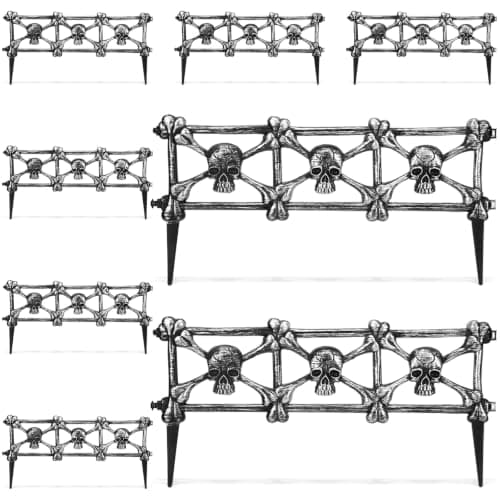
Graveyard Fence Panels, 8 Pack
Various
A boundary is what turns a handful of stones into a cemetery. Linkable plastic panels with integrated stake legs are the cheapest way to draw one.
- Type
- Interlocking plastic fence panels, 8 per set
- Panel size
- 22.4 x 11.4 in (listed)
- Staking
- Integrated stake legs, no separate hardware
- Power
- None
Good
- Interlocking panels mean one set makes a continuous run rather than eight separate signs
- Integrated legs push straight into turf — nothing to lose between seasons
- Gives a graveyard an edge, which is the thing that reads as deliberate rather than scattered
Less good
- Eight panels at 22 inches is roughly fifteen feet of run — most front yards need two sets
- Thin plastic; a lawnmower, a dog or a determined trick-or-treater will crack a panel
- Low height means it disappears completely in grass that has not been cut
- Street presence7.2
- Build quality6.2
- Weather tolerance7.0
- Setup effort9.0
- Storage footprint8.6
#ad How we are funded - price as of November 4, 2026

26" Extra Large Tombstones, 5 Pcs
JOYIN
Height is the single thing that decides whether a stone registers from a moving car, and this set is listed at 26 inches rather than the usual 17.
- Type
- Flat printed gravestone signs, 5 per set
- Height
- 26 in per stone (listed)
- Staking
- Metal stakes supplied
- Weather
- Listed as waterproof
Good
- Nine inches taller than the standard foam set, which is the difference between street-visible and not
- Listed as waterproof, so a wet week does not soften them the way foam swells
- Flat panels stack into nothing, which matters more than it sounds in a garage
Less good
- The listing states flat, not foam — there is no carved depth, so they look printed up close
- Flat panels catch wind like a sail; these need the stakes driven deep and angled
- Printed detail fades faster in direct sun than molded foam does
- Street presence8.4
- Build quality6.8
- Weather tolerance8.0
- Setup effort8.6
- Storage footprint9.4
#ad How we are funded - price as of November 4, 2026

Zombie Bloody Hand and Arm Yard Stakes
AOBOR
The cheapest thing on this page and the one that does the most for a flat yard: staked arms break the ground plane so the graveyard has depth instead of a row of signs.
- Type
- Staked arm and hand props, sets vary by seller
- Install
- Stake pushed into soil at the wrist
- Power
- None
- Weather
- Plastic and cloth; rinse and dry before storage
Good
- Breaks the flat plane of a lawn, which is what makes a graveyard look dug rather than placed
- No power, no cord run, no circuit arithmetic — they can go anywhere in the yard
- Low enough to sit in front of a fence line without hiding it
Less good
- Sold by many interchangeable sellers, so build quality between listings is inconsistent
- Cloth sleeves hold water and stay wet for days after rain
- Reads as clutter if you scatter them; they only work grouped at one or two graves
- Street presence5.8
- Build quality6.0
- Weather tolerance6.4
- Setup effort9.4
- Storage footprint9.2
#ad How we are funded - price as of November 4, 2026
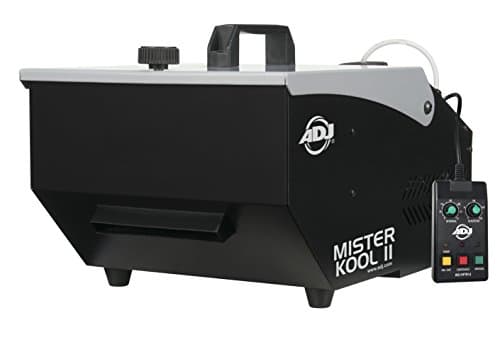
Mister Kool II Low-Lying Fog Machine
ADJ
Makes genuinely low-lying fog from regular ice and water-based fluid, with no dry ice and no CO2 tank, which is why it is the default recommendation for a home yard haunt.
- Cooling
- Regular ice
- Fluid
- Water-based fog juice
- Heat-up
- About 3 minutes
- Consumables
- Ice and fluid, no dry ice
Good
- Ice cooling means no dry-ice sourcing problem on October 31
- Short heat-up, so it is ready when the first visitors arrive
- Fog genuinely hugs the ground rather than rising
Less good
- You are buying and melting ice all evening
- Output is modest next to a dry-ice machine
- Needs a level spot, because a tilted unit dumps meltwater
- Fog density7.8
- Stays low9.0
- Run time7.0
- Setup effort8.4
- Consumable cost7.2
#ad How we are funded - price as of November 4, 2026
Break the ground plane
A flat lawn with vertical objects on it is the thing that still reads as decoration no matter how good the stones are, because everything occupies exactly one plane. Anything that comes out of the ground fixes this instantly: staked arms and hands between the stones, a groundbreaker half-figure emerging from a mulch bed, a shovel leaning against a mound.
Staked arms are the cheapest item in the whole scene and they do the most per dollar of anything on this page. Scatter them unevenly, keep them low, and resist lining them up. A groundbreaker animatronic is the upgrade version — no balance problem, almost no wind profile, and it reads from exactly where people are walking. Animatronics under $100 covers that tier.
Fog last, and keep it in the plot
Low fog is what makes a graveyard photograph, and it is the component people buy first and get least from. The reason is that a standard fog machine sends its output out hot, and hot vapor rises — so the fog leaves the ground, drifts across the yard and disappears. For ground creep between stones you need chilled output, either from a low-lying machine or from a chiller fitted to a machine you already own.
| Problem | Why it happens | Fix |
|---|---|---|
| Fog rises and vanishes | Standard fogger output is hot | Chilled machine or a chiller |
| Fog crosses the whole yard | Fogging from the wrong side | Fog from the downwind edge of the plot |
| Fog gone in a minute | Any breeze at all clears ground fog | Burst on arrival, not continuously |
| Tank empty by eight | Running the machine flat out | Timer or remote, short bursts |
| No fog at ankle height | Nozzle too high off the ground | Sit the output at or below stone base level |
Place the machine inside the fence, behind the tallest stone, with the nozzle at ground level pointing into the plot. The fence itself acts as a low windbreak, which is a second reason to build the boundary first. Making fog stay low and where to put a fog machine cover the detail, and low-lying fog machines covers the hardware.
Light it low and from the side
Light a graveyard from within and below. One or two spike spots inside the fence, aimed low across the stones, pick out the carved depth on the faces and throw long shadows back across the plot. A flood from the house does the opposite: it lights the stones and the lawn equally, which flattens everything and reveals how short the grass is.
Keep the color restrained — one cool wash plus one warm accent beats four colors fighting. And if there is fog in the plot, remember that fog is what light becomes visible in: a single narrow beam through ground fog is the shot everybody wants. The Halloween lighting color guide and outdoor spotlights cover the fixtures.
Running it safely and packing it away
A graveyard puts stakes, cords and a fog machine in the part of the yard people walk through in the dark. Run cords along the fence line rather than across the grass, use a ramp anywhere a cord crosses a path, and keep every joint out of wet turf — yard haunt electrical safety and hiding extension cords in a yard cover both. At the end of the season, foam stones go into a rigid tote rather than a bag, because a cracked foam stone cannot be repaired invisibly. Storing Halloween decorations has the rest.
Frequently asked questions
How do you make a Halloween graveyard scene?
Fence the plot first, then place three or four stones of varying height at uneven spacing and slight backward lean, then break the ground plane with staked arms or a groundbreaker, then add low fog last. The boundary is what turns the stones into a cemetery.
How many tombstones do you need for a graveyard?
Four to six is enough for a convincing plot if they vary in height and spacing and sit inside a boundary. Twelve identical stones in even rows look like signage. Spend the extra money on a fence and a groundbreaker rather than on more stones.
How do you keep fog inside a Halloween graveyard?
Use a chilled or low-lying machine so the output is not hot, sit the nozzle at ground level behind the tallest stone, and fog from the downwind edge of the plot. Run it in short bursts as people arrive rather than continuously, because any breeze clears ground fog in under a minute.
Should a Halloween graveyard have a fence?
Yes, and it should be the first thing you buy. An edge is what makes a group of stones read as a place rather than as objects on a lawn, and linkable panels with integrated stake legs are the cheapest component in the whole scene.
How do you light a graveyard scene?
From inside the plot and from below. One or two spike spotlights aimed low across the stones pick out the carved faces and throw shadows back through the scene. A flood from the house flattens everything and lights the lawn as brightly as the stones.
About the author
Mike M.
Mike M. is the hands-on owner behind Iron Mako Media, which publishes Haunt & Hedge. The site covers the gear that builds a yard haunt, for the person who already decorates and adds one bigger piece a year.
Every pick here is chosen from manufacturer specifications, manuals, safety standards and verified buyer data. Read how we choose picks.