Animatronics & Giant Props
How Halloween Animatronics Work
Four parts, one of which fails first. Knowing which is how you buy better and fix faster.
Disclosure: we earn a commission from qualifying purchases made through links on this page, at no extra cost to you. It does not change what we recommend — here is how we choose.
The short answer
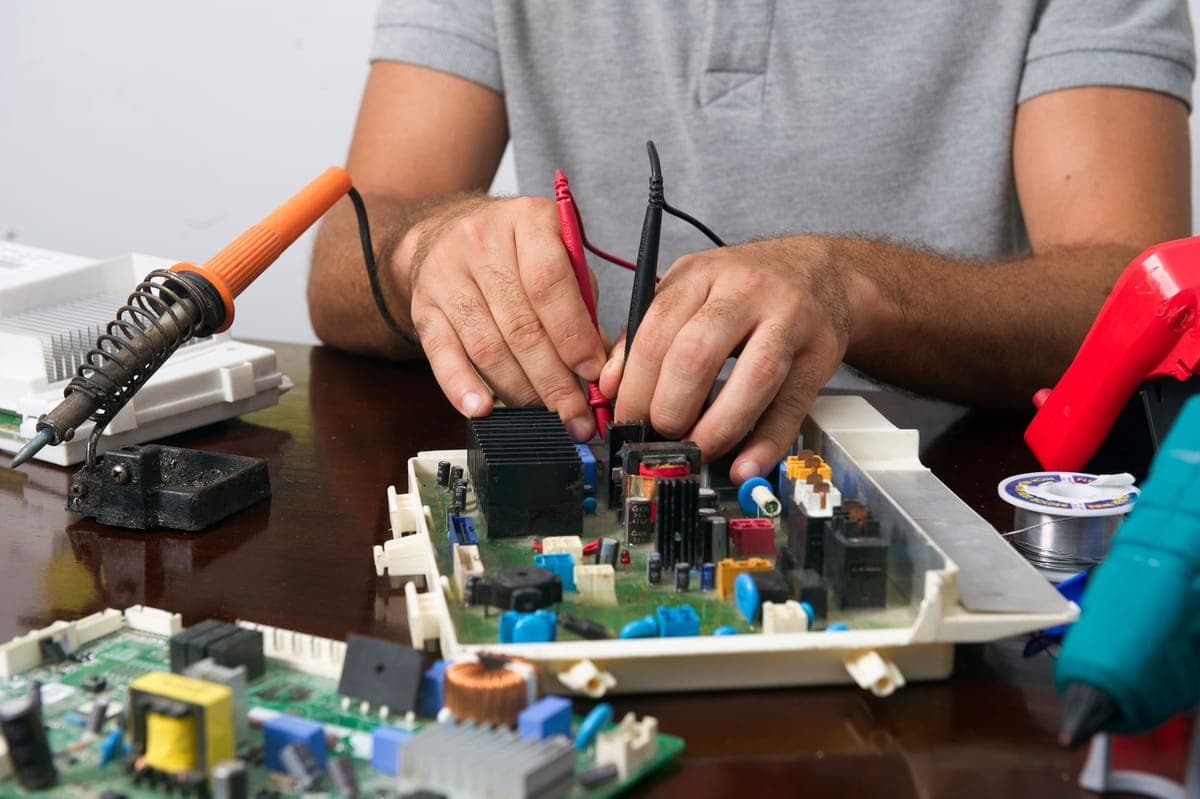
A Halloween animatronic is four parts: a trigger that detects someone, a controller that decides what happens, one or more small motors that move the figure, and a speaker. The motion you see is usually a single motor driving a linkage, not independent limbs, which is why the movement repeats exactly the same way every time.
There is less inside an animatronic than the price suggests, and that is genuinely useful to know. It tells you what is likely to fail, what a higher price actually buys, and why two props that look similar behave completely differently.
The four parts
1. The trigger
Three common types. Infrared motion sensors detect a heat-carrying body moving across their field. Passive step pads close a switch when someone stands on them. Sound activation fires on a noise threshold. Many props offer two or three modes on a selector switch.
Trigger choice changes the experience more than anything else on this list. Infrared on a busy street fires at cars, pedestrians and blowing leaves, so the prop runs continuously and surprises nobody. A step pad fires when someone is actually on your path, which is the effect you bought.
2. The controller
A small board that runs a fixed sequence: wait for trigger, run motor for N seconds, play sound file, return to rest, ignore further triggers for a cooldown period. On flagship props this board also drives an LCD eye display and, on app-controlled giants, a Bluetooth radio.
The sequence being fixed is why the movement is identical every time. It is also why a prop that fires constantly is wearing the same handful of components repeatedly.
3. The motor and linkage
Usually one small geared DC motor driving a mechanical linkage — a crank, a lever or a cam — that converts rotation into the lurch, sway or lunge you see. Flagship props use multiple servos for independently controlled head and jaw movement, which is what people mean when they say a prop looks more alive.
This is the part that dies. The gearbox is the weak point on cheap props, and the linkage pivot is the weak point on everything else. Both fail from repetition, which is another argument for a step pad over a motion sensor.
4. The speaker and audio
A small speaker driven from the controller with a short sound file. Audio quality in this category is uniformly poor, and small speakers do not carry outdoors. If sound matters to your display, it is usually better delivered by a separate outdoor speaker than by the prop itself.
What a higher price actually buys
| Component | Entry tier | Flagship tier |
|---|---|---|
| Motor | One small geared DC motor | Multiple servos, independent control |
| Controller | Fixed sequence | Sequences, eye effects, sometimes app control |
| Frame | Wire or light plastic | Rigid internal frame |
| Power | Batteries | Mains adapter |
| Sound | Small speaker, one clip | Louder, sometimes user-recorded |
| Sealing | Minimal | Better, but still not rainproof |
Notice what does not change much: sealing. That is the finding worth taking away, and it is why are Halloween animatronics waterproof exists as its own page.
Diagnosing a prop that has stopped working
- Does anything happen at all? No lights, no sound, no movement means power. Check batteries, the adapter, the outlet and the GFCI before anything else.
- Lights and sound but no movement? The motor or the linkage. Listen: a whine with no movement is a stripped gear or a jammed linkage; silence is a dead motor or a broken lead.
- Movement but no trigger? The sensor. Check the mode switch first — it is easy to knock into an off or steady-on position while setting up.
- Intermittent everything? Corrosion, usually in a battery compartment, usually from a battery left in over winter.
That last one is worth repeating, because it is the most common way a prop dies while doing nothing at all. Pull the batteries in November.
What helps keep one alive

Groundbreaker Zombie Nurse with Flashing Eyes
Haunted Hill Farm
Poseable arms and a flashing-eye trigger, in a figure that matches the rest of the Haunted Hill Farm groundbreaker line if you want a coherent scene.
- Type
- Groundbreaker with poseable arms
- Activation
- Flashing eyes, motion on some variants
- Weather rating
- Light moisture
- Power
- Battery
Good
- Part of a line, so several pieces read as one scene
- Poseable arms take a new shape each season
- No balance problem and almost no wind profile
Less good
- Sits at ground level where water collects
- Battery compartment is the first thing to corrode
- Needs its own light or it disappears after dark
- Street presence6.2
- Build quality7.2
- Weather tolerance5.8
- Setup effort9.2
- Storage footprint8.8

Waterproof Outdoor Cover
Various
The pragmatic answer to a prop that is rated for light moisture and a forecast that is not: cover it overnight, uncover it at dusk.
- Material
- Coated polyester or vinyl
- Fit
- Size to the prop's standing footprint
- Securing
- Drawcord or strap
- Breathability
- Vented covers dry faster
Good
- Extends the life of a light-moisture-rated prop by whole seasons
- Cheaper than replacing one animatronic
- Doubles as the off-season dust cover in the garage
Less good
- Only works if somebody actually puts it on before the rain
- A non-vented cover traps condensation, which is its own problem
- Covers blow away, so they need tying down too
- Protection8.6
- Fit versatility7.4
- Durability8.0
- Ease of use7.6
- Value8.8
Electricity Usage Monitor
P3 International
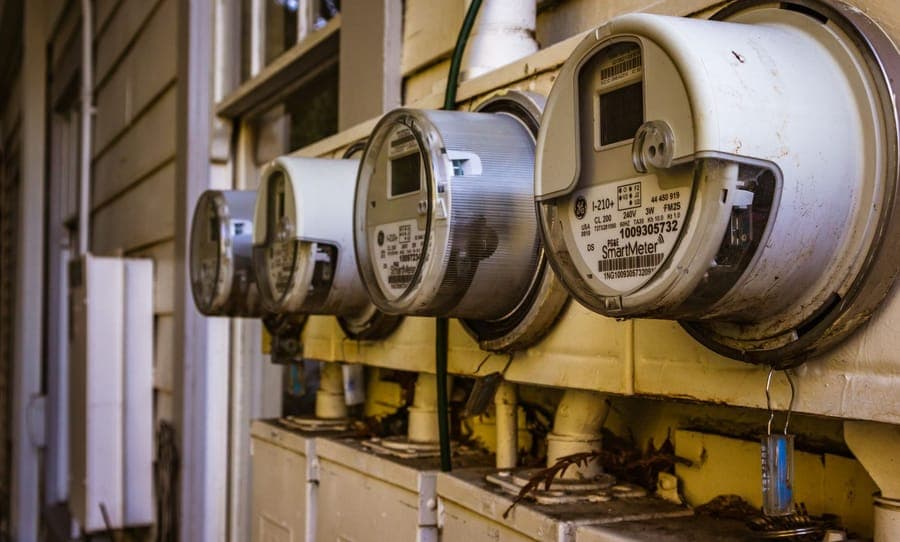
Every watts figure on this site is a specification or a measurement. This is how you get your own measurement, for your own props, in about thirty seconds each.
- Type
- Plug-in energy meter
- Reads
- Watts, amps, volts, kWh
- Use
- Measure each prop before you plan the circuit
- Indoor or outdoor
- Indoor unit, so measure inside then deploy
Good
- Turns a guess about circuit load into a number
- Cheap, and useful year round on anything that plugs in
- Cumulative kWh reading shows what a month of running actually costs
Less good
- Indoor device, so you measure at a bench rather than out on the lawn
- One prop at a time
- Display is hard to read in an awkward outlet position
- Accuracy8.8
- Ease of use9.2
- Planning value9.4
- Off-season use9.6
- Value9.2
Why this matters when you are buying
Once you know the parts, the listings read differently. A prop that specifies its activation modes is telling you it has a real controller. A prop that specifies a rigid internal frame is telling you it will hold shape. A prop that specifies nothing is usually a single motor, a wire frame and a small speaker, and it should be priced accordingly.
That is the basis for how we score props in the animatronics roundup: we weight published specifications heavily, because in this category the absence of a specification is itself information.
Frequently asked questions
How do Halloween animatronics move?
Usually a single small geared motor driving a mechanical linkage that converts rotation into a lurch or sway. Flagship props use multiple servos for independently controlled head and jaw movement, which is why they look more alive.
What triggers a Halloween animatronic?
Infrared motion sensors, step pads, or sound activation — many props offer a choice. On a busy street, a step pad gives a much better effect than infrared, which fires at passing cars and blowing leaves all evening.
Why does my animatronic make a noise but not move?
That usually means the motor is running but the linkage is not — a stripped gear or a jammed mechanism. Silence with no movement points the other way, to a dead motor or a broken lead.
Can you fix a Halloween animatronic?
Often, yes. Battery-compartment corrosion, a knocked mode switch and a jammed linkage are all common and all fixable. A stripped gearbox usually is not worth repairing on an entry-tier prop.
About the author
Mike M.
Mike M. is the hands-on owner behind Iron Mako Media, which publishes Haunt & Hedge. The site covers the gear that builds a yard haunt, for the person who already decorates and adds one bigger piece a year.
We do not run a test lab and we do not claim to have physically tested products we have not. Read how we choose picks.