Animatronics & Giant Props
How to Fix a Halloween Animatronic
It worked last October. It came out of the garage dead. Four faults cause almost all of these, and three of them are a ten-minute repair.

Disclosure: we earn a commission from qualifying purchases made through links on this page, at no extra cost to you. It does not change what we recommend — here is how we choose.
The short answer
Work in this order: power, contacts, wiring, mechanism. A prop that is completely dead is almost always the adapter or corroded battery contacts, both cheap fixes. A prop that twitches or runs weakly is a power supply that cannot deliver current. Only a prop that hums without moving is likely to be mechanical.
The most common Halloween animatronic failure is not a failure at all. The prop is fine; the thing that powered it is lost, corroded or browning out. That is worth knowing before you buy a replacement prop, because the repair is usually under twenty dollars and the prop is not.
This guide works through the four faults in the order they are worth checking, which is also the order from cheapest to most expensive. It covers what each fault looks like, how to confirm it rather than guess, and - importantly - where the line is. Some of these props genuinely are finished, and replacing a gear motor inside a sealed molded housing is not a consumer repair.
Diagnose before you buy anything
Almost every wasted purchase in prop repair comes from skipping this step. Three observations narrow it to one of four faults, and they cost nothing.
| Symptom | Most likely fault | Where to look |
|---|---|---|
| Completely dead, no light, no sound | Power - no supply, or a broken connection to it | Adapter, battery contacts, the switch |
| Lights or sound work, nothing moves | Power that cannot deliver current, or a stalled mechanism | Adapter rating first, then the gearbox |
| Twitches, stutters or runs slowly | Brownout - weak batteries or an underrated adapter | Batteries, then adapter output |
| Works when you move the wire or press the plug | An intermittent connection | Plug, barrel jack, a cut or chafed wire |
| Hums or clicks but does not move | Mechanical - a stalled or stripped gearbox | The mechanism, and this one is often terminal |
| Fires at nothing, or ignores everyone | The motion sensor, not the prop | Sensor lens, aim, and the sensitivity dial |
Fault 1: power, which is most of them
Two separate problems hide under this heading. The first is that the adapter is missing - packed in a different box last November, or never kept at all - and this is the single most common reason a stored prop is dead. The second is that the adapter is present and no longer delivering what it says on the label.
For the missing adapter, the numbers you need are printed on the prop or on the old adapter: the voltage, the current rating, and the polarity symbol. A universal multi-voltage adapter with interchangeable tips covers most of the category in one purchase. Two warnings that matter: set the voltage to match before you plug it in, because too high will destroy the prop, and get the polarity right, since a reversed tip can do the same.
For the adapter that is present but suspect, a multimeter settles it in seconds. Measure DC volts at the tip with the adapter plugged in and nothing connected. If it reads close to its rated voltage, the adapter is fine and the fault is downstream. If it reads low, or wanders, replace it. The same reading explains most stuttering props: a 12V 500mA adapter cannot run a motor that wants 1A, and the symptom of that is a prop that moves weakly rather than one that does nothing.
Fault 2: contacts, which is the rest of them
Open the battery compartment of a prop that has spent a year in a garage and you will frequently find white or green crust on the springs. That is the whole fault. Contact corrosion is what a damp, unheated space does to cheap plated steel, and it is why a prop that worked perfectly last October is dead this one.
- Remove the batteries and look at the springs and the flat contacts. White powder is alkaline leakage; green is corrosion.
- Spray a plastic-safe electronic cleaner on the contacts and work them with a cotton bud. If a spring is crusted solid, scrape it back to metal first.
- Let it dry completely before putting batteries back. These cleaners are flammable and they need to flash off.
- Test the switch next with the multimeter on continuity. A slide switch that has been outdoors is a very common dead point, and it beeps or it does not - no interpretation required.
- Grease the contacts thinly with dielectric grease once it works. This is the step that stops you doing the whole job again next October.
If the compartment itself is beyond saving - springs rusted through, a contact corroded away - a replacement battery holder with its own switch is cheaper than the prop and solves two faults at once. It will not fit inside the molded cavity, so it lives outside the prop in a sealed box, which is a better place for it anyway.
Fault 3: wiring, usually at a known weak point
Cut and chafed wires in yard props fail in predictable places: where the cable leaves the housing and flexes, where it was pinched by a staked foot, and wherever something chewed it. Squirrels and mice both chew low-voltage cable, and a prop stored in a shed is fair game all winter.
Find it by flexing the cable along its length with the prop powered and watching for a flicker, or with the multimeter on continuity if it is fully broken. The repair is a solder-seal heat shrink connector: solder ring and waterproof adhesive sleeve in one piece, so the joint is both electrically sound and sealed. That matters because a crimp-only splice on something that lives outdoors corrodes open within a season.
Two things make this repair fail. One is using a lighter instead of a heat gun, which scorches the sleeve before the solder flows and leaves a joint that looks finished and is not. The other is not testing before you close the housing up. Test the joint, then reassemble.
Fault 4: the mechanism, and when to stop
A prop that hums or clicks and does not move has power getting to a motor that cannot turn. Sometimes that is recoverable: a costume or a cable wrapped around a moving arm, or debris in the gear train. Unplug it, open what opens, and clear the obstruction.
Often it is not. The gear motors in consumer animatronics are frequently potted or glued into a molded housing, the gears are nylon, and no replacement part is sold. At that point the honest answer is that the prop is finished as an animatronic - and it may still be a perfectly good static prop, which is worth remembering before it goes in a skip. A dead animatronic that still looks right is a dread prop, and the scary decorations roundup explains why a figure that just stands there frightens people more than most moving ones do.
For the 12-foot skeleton specifically, the picture is better than the rest of the category: enough people own one that an aftermarket for the parts that break actually exists. 12-foot skeleton replacement parts covers what is available.
The repair bench: what fixes the four faults
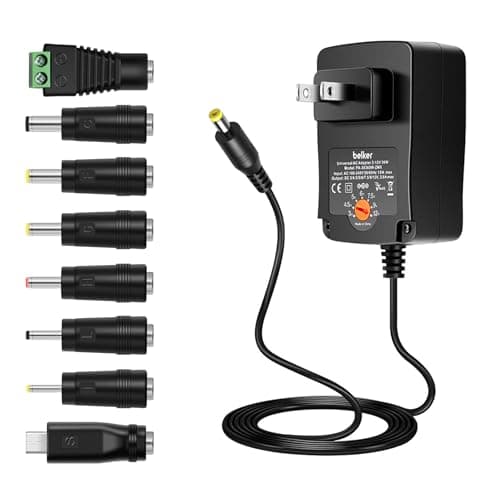
36W Universal AC/DC Adapter, 3V to 12V Selectable, 8 Tips
Belker
More dead animatronics are dead because the adapter went missing in storage than for every mechanical reason combined, and one of these replaces the adapter for most of them.
- Output
- 3V, 4.5V, 5V, 6V, 7.5V, 9V, 12V selectable
- Rated power
- 36W (listed)
- Tips
- 8 interchangeable plug tips
- Polarity
- Reversible tip
Good
- One unit covers the whole voltage range the category uses, so it fixes props you have not bought yet
- 36W is enough headroom for a prop with a motor, where a 12W universal adapter browns out
- Reversible tips mean you can match center-positive or center-negative, which cheap replacements get wrong
Less good
- Set the voltage wrong and you will destroy the prop you are trying to fix - check the label before plugging in
- It is an indoor adapter; it has to live in a weatherproof box if the prop is outside
- Tip fit is close-enough rather than exact on some barrel sizes, and a loose tip is an intermittent fault
- Street presence5.0
- Build quality7.8
- Weather tolerance4.0
- Setup effort8.6
- Storage footprint9.4
#ad How we are funded - price as of November 4, 2026
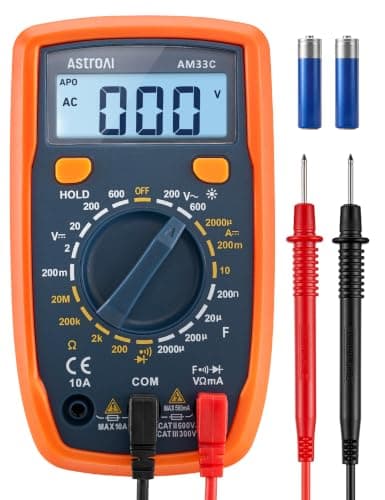
Digital Multimeter with Capacitance, 2000 Counts
AstroAI
Two measurements - is there voltage at the plug, and is there continuity through the switch - separate a five-minute fix from a prop that is genuinely finished.
- Measures
- DC/AC voltage, current, resistance, continuity
- Resolution
- 2000 counts
- Display
- Backlit LCD
- Supplied
- Test leads and battery
Good
- The continuity beep alone finds broken switches, cut wires and corroded contacts without any electronics knowledge
- Cheap enough that it is not a real decision, and it will outlive every prop in the yard
- Nothing about prop repair needs more precision than this - True RMS and 6000 counts are solving a different problem
Less good
- No True RMS at this tier, so an AC reading on anything other than a clean sine wave is approximate
- 2000 counts is low resolution; it is the wrong tool if you also want it for automotive diagnostics
- The supplied leads are thin and the tips are blunt, which makes probing a small connector fiddly
- Street presence5.0
- Build quality7.0
- Weather tolerance4.0
- Setup effort7.4
- Storage footprint9.2
#ad How we are funded - price as of November 4, 2026
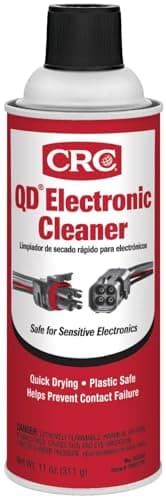
QD Electronic Cleaner, 11 oz, Plastic Safe
CRC
A prop that worked last October and does nothing this October usually has green corrosion on a contact, and this is the whole repair.
- Type
- Quick-drying electronic cleaner
- Size
- 11 wt oz aerosol
- Plastic safe
- Yes (listed)
- Residue
- None - evaporates
Good
- Quick-dry and plastic-safe, which matters because prop housings and switch bodies are all cheap plastics
- Leaves no residue, so you are not creating a dust magnet inside a sensor housing
- Fixes the most common post-storage fault in the category for the price of a coffee
Less good
- Flammable aerosol - it has to be fully dry before you reconnect power, and it must not be used near an open flame
- It cleans contacts; it does nothing for a contact that has corroded away to nothing
- Does not protect against the corrosion coming back, so a damp garage will undo it by next season
- Street presence5.0
- Build quality8.6
- Weather tolerance5.0
- Setup effort9.4
- Storage footprint9.0
#ad How we are funded - price as of November 4, 2026
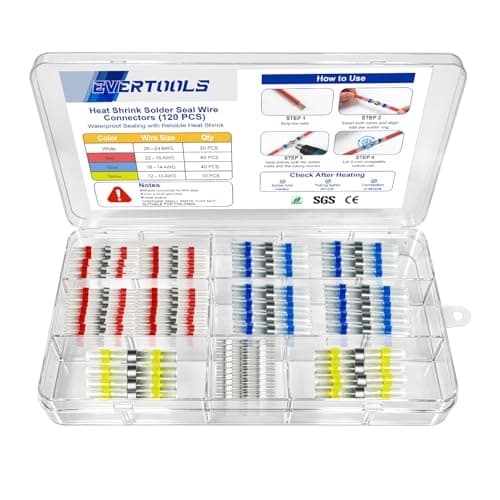
Solder Seal Heat Shrink Butt Connectors, 120 Pcs
EVERTOOLS
Solder and a waterproof seal in one piece of heat shrink, which is the only wire repair worth making on something that lives outdoors.
- Type
- Solder seal heat shrink butt connectors
- Quantity
- 120 pieces, assorted gauges
- Seal
- Adhesive-lined, waterproof when shrunk
- Tool needed
- Heat gun (a lighter is not adequate)
Good
- The solder ring makes a real electrical joint, not a crimp that corrodes open over a wet month
- Adhesive-lined shrink seals the splice, so the repair survives outdoors rather than failing next rain
- Assorted gauges cover everything from a sensor lead to a motor feed
Less good
- You need a heat gun - a lighter scorches the sleeve before the solder flows, and that joint will fail
- Fiddly on very fine sensor wire; the smallest gauge in the kit is still coarse for a ribbon lead
- A bad joint looks identical to a good one from outside, so you have to test it before closing the prop up
- Street presence5.0
- Build quality8.0
- Weather tolerance9.0
- Setup effort6.4
- Storage footprint9.4
#ad How we are funded - price as of November 4, 2026
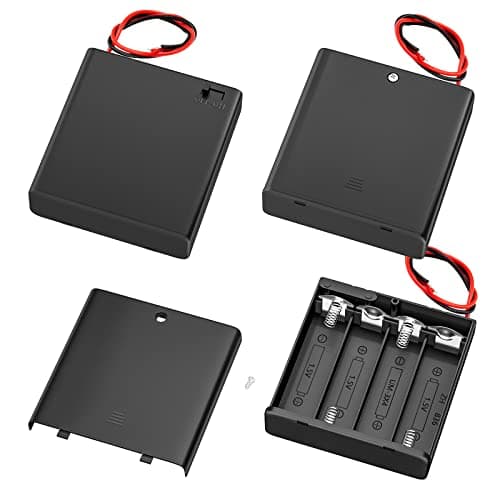
4 x AA Battery Holder with Switch and Cover, 6V
DAIERTEK
When the battery compartment itself is the casualty - springs rusted through, contacts gone - this replaces the whole thing for less than the prop is worth.
- Capacity
- 4 x AA, 6V output
- Switch
- Integrated on/off
- Leads
- Wire leads supplied
- Cover
- Snap-on lid
Good
- Includes the switch, so it replaces a failed switch and a failed battery box in one part
- Wire leads mean you splice rather than solder to a board, which keeps the repair reversible
- You can mount it somewhere drier than where the manufacturer put it, which is the real fix
Less good
- It is bigger than most molded-in compartments, so it usually has to live outside the prop in a sealed box
- Only correct for props that run on 4 x AA - plenty use 3 x AA or a 6V lantern cell
- The lid is a snap fit rather than a screw, and a snap fit is not weatherproof on its own
- Street presence5.0
- Build quality7.0
- Weather tolerance5.4
- Setup effort7.0
- Storage footprint9.4
#ad How we are funded - price as of November 4, 2026
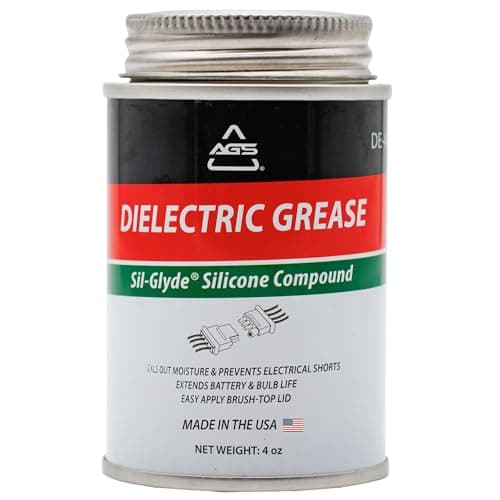
Dielectric Grease for Electrical Connectors, 4 oz
AGS
The five-minute job that stops you doing the contact-cleaner repair again every October, and almost nobody does it.
- Type
- Silicone dielectric grease
- Size
- 4 oz
- Use
- Connectors, battery terminals, bulb bases
- Conductive
- No - it insulates and seals
Good
- Keeps moisture out of a connector for a whole season, which is the actual cause of the fault you just fixed
- Non-conductive and safe on plastic housings, unlike the petroleum greases people reach for instead
- A 4 oz tub is several seasons of every plug in the yard
Less good
- It is an insulator, so a heavy smear on the mating face of a contact can cause the fault it is meant to prevent - a thin film on the seal, not the metal
- Attracts grit if you over-apply it on an exposed terminal
- Does nothing for corrosion that is already there; clean first, then grease
- Street presence5.0
- Build quality8.2
- Weather tolerance9.2
- Setup effort8.8
- Storage footprint9.4
#ad How we are funded - price as of November 4, 2026
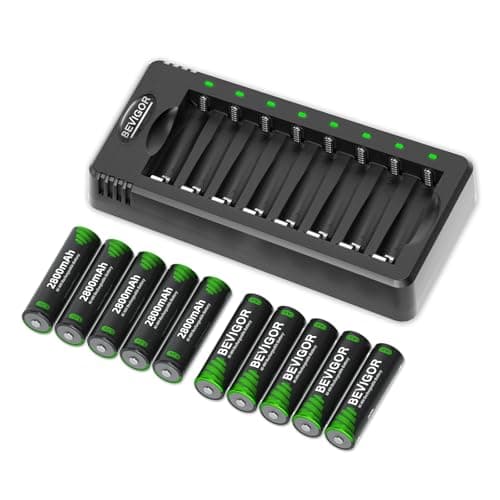
AA Rechargeable Batteries with Charger, 10 Pack
BEVIGOR
Every suit on this page runs on four AAs and a fan that never stops. A charged second set is the difference between a costume and a deflated bag by mid-evening.
- Type
- Low-self-discharge NiMH AA cells with charger
- Count
- Buy eight — four in, four charged
- Use
- Costume fans, battery props, string lights
- Note
- NiMH runs at 1.2 V; fans tolerate it, some LEDs dim
Good
- Solves the one failure every inflatable costume owner reports
- Pays for itself across a season of battery props and lights
- Low-self-discharge cells hold charge from one October to the next
Less good
- 1.2 V instead of 1.5 V means a slightly slower fan than fresh alkalines
- You have to actually charge the spare set before you leave
- A charger is another thing to find in the box next year
- Crowd reaction2.0
- Build quality8.6
- Wearability9.0
- Fan and battery life9.6
- Storage footprint9.8
#ad How we are funded - price as of November 4, 2026
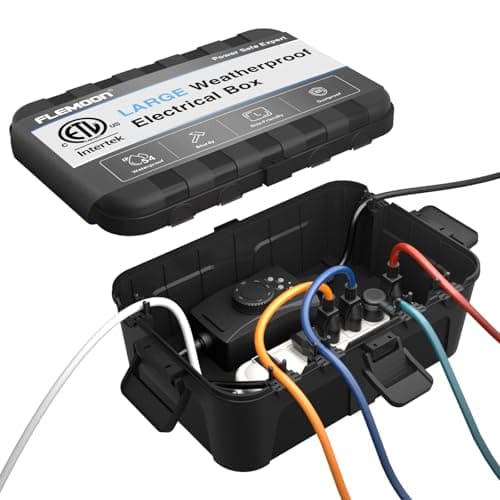
Large Weatherproof Extension Cord Box, IP54
Flemoon
Every cord-to-cord joint sitting in wet grass is a fault waiting to trip a breaker. A sealed connector box is the cheapest fix on this entire site.
- Type
- Sealed cord-joint enclosure
- Fits
- Standard cord couplings
- Rating
- Look for an outdoor or weather-resistant listing
- Reusable
- Yes
Good
- Removes the most common outdoor-display electrical fault
- Keeps the joint off the ground as well as out of the rain
- Reusable every season
Less good
- One box per joint, and displays have a lot of joints
- Bulky compared with tape, which is what most people use instead
- Not a substitute for outdoor-rated cord and a GFCI
- Protection9.0
- Fit versatility8.0
- Durability8.4
- Ease of use8.8
- Value9.2
#ad How we are funded - price as of November 4, 2026
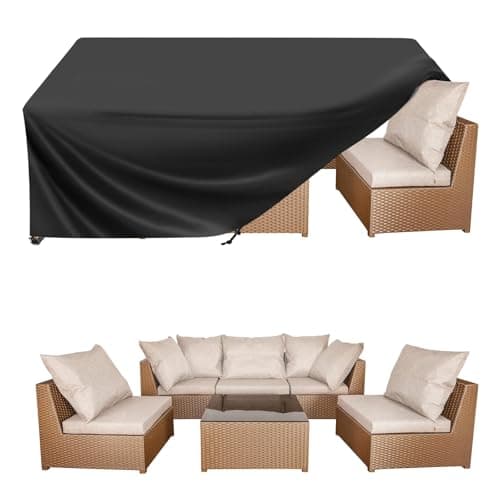
Heavy-Duty Waterproof Outdoor Cover
BALEINE
The pragmatic answer to a prop that is rated for light moisture and a forecast that is not: cover it overnight, uncover it at dusk.
- Material
- Coated polyester or vinyl
- Fit
- Size to the prop's standing footprint
- Securing
- Drawcord or strap
- Breathability
- Vented covers dry faster
Good
- Extends the life of a light-moisture-rated prop by whole seasons
- Cheaper than replacing one animatronic
- Doubles as the off-season dust cover in the garage
Less good
- Only works if somebody actually puts it on before the rain
- A non-vented cover traps condensation, which is its own problem
- Covers blow away, so they need tying down too
- Protection8.6
- Fit versatility7.4
- Durability8.0
- Ease of use7.6
- Value8.8
#ad How we are funded - price as of November 4, 2026
The sensor, which is not the prop
Treat trigger complaints as a separate category, because they usually are not faults. A prop firing at nothing is normally a sensor seeing a branch move, a passing car's headlights, or warm air from a vent. A prop that ignores people is normally aimed past them, or has a lens fogged with dust and spider web.
- Clean the lens first. A passive infrared sensor behind a film of dust and web is half blind, and this is the most common cause of a prop that stopped triggering.
- Check the sensitivity dial if it has one. Many props have a small screw or dial behind a flap that nobody reads about.
- Re-aim it low and short. A sensor aimed at the street triggers on cars; aimed at a few feet of path, it triggers on people.
- Watch for heat sources. A dryer vent, a car radiator cooling on a driveway or a nearby fog machine will all read as motion.
- Give it a dead zone. If two props watch the same patch of path they fire together, which reads as a malfunction even though both are working.
Stopping it happening again
Three of the four faults above are caused by storage rather than use, which means they are preventable. The props that come out working every year belong to people who do the following, and it is not much work.
- Take the batteries out before the prop goes away. This alone prevents the most common repair in the category.
- Make sure it is dry first. A prop packed away damp after a wet Halloween grows mold on the costume and corrosion on the contacts at the same time.
- Tape the adapter to the prop, or bag them together. The adapter is the part that goes missing, and a universal replacement is a fix for a problem you did not need to have.
- Grease the connectors once, thinly, with dielectric grease.
- Keep the adapter out of the weather during the season. Most are indoor-rated, and a weatherproof connector box is the right home for the whole junction.
If the prop lives outside for the month, a cover for the nights it is not running does more for its lifespan than anything else here. Are Halloween animatronics waterproof? is worth reading before you assume yours is, how to protect decorations from rain covers the in-season routine, and how to store large Halloween decorations covers the end-of-season one. If you want to understand what is inside the thing you are fixing, how Halloween animatronics work explains the mechanisms.
What not to do
Two things are worth saying plainly. Do not open or attempt to repair anything that plugs into the wall on the mains side - the adapter is a sealed unit and the correct response to a faulty one is a replacement, not a repair. And do not run a prop whose housing is cracked open to the weather while it is powered; dry it out and seal it first.
Everything on this page is low-voltage work on the prop side of an adapter, which is why it is safe to do at a kitchen table. The moment a job involves household voltage, it is a different kind of job - yard haunt electrical safety covers where that line sits and what belongs to a licensed electrician.
Frequently asked questions
Why did my Halloween animatronic stop working?
In order of likelihood: the power adapter is missing or failing, the battery contacts have corroded in storage, a wire has been cut or chewed, or the mechanism has stalled. The first two account for most of them and both are cheap fixes, which is why it is worth diagnosing before replacing the prop.
How do I know what power adapter my Halloween prop needs?
The voltage, current rating and polarity symbol are printed on the prop or on the original adapter. Match the voltage exactly, meet or exceed the current rating, and match the polarity. A universal multi-voltage adapter with interchangeable tips covers most props in the category.
My animatronic moves slowly or twitches. What is wrong?
That is a brownout, not a mechanical fault. Either the batteries are weak or the adapter cannot deliver the current the motor wants - a 500mA adapter on a motor that needs 1A produces exactly this symptom. Fresh cells or a higher-rated adapter usually fixes it.
How do you clean corroded battery contacts on a Halloween prop?
Remove the batteries, scrape heavy crust back to bare metal, spray a plastic-safe electronic contact cleaner, work it with a cotton bud, and let it dry completely before reinstalling batteries. Finish with a thin film of dielectric grease so the corrosion does not come straight back.
Can you replace the motor in a Halloween animatronic?
Rarely. The gear motors in consumer props are usually glued or potted into a molded housing with nylon gears and no replacement part sold. If the prop hums without moving and nothing is physically obstructing it, it is generally finished as an animatronic - though it often still works as a static prop.
Why does my motion sensor prop trigger when nobody is there?
Passive infrared sensors respond to moving heat, so a branch in the wind, headlights, a dryer vent or a warm car on the driveway will all set one off. Re-aim it low and short at a few feet of path, clean the lens, and turn the sensitivity down if there is a dial.
Sources
- Belker 36W universal 3V-12V AC/DC adapter with 8 tips listing
- CRC 05103 QD Electronic Cleaner, 11 wt oz, plastic safe listing
- EVERTOOLS solder seal heat shrink butt connector kit, 120 pcs listing
- AGS dielectric grease for electrical connectors, 4 oz listing
- DAIERTEK 4 x AA 6V battery holder with switch listing
- Haunted Hill Farm animatronics product support and care information
About the author
Mike M.
Mike M. is the hands-on owner behind Iron Mako Media, which publishes Haunt & Hedge. The site covers the gear that builds a yard haunt, for the person who already decorates and adds one bigger piece a year.
Every pick here is chosen from manufacturer specifications, manuals, safety standards and verified buyer data. Read how we choose picks.