Animatronics & Giant Props
12-Foot Skeleton Replacement Parts
Giants are kept for years, which means things break. Here is what fails, in what order, and what you can do about it.
Disclosure: we earn a commission from qualifying purchases made through links on this page, at no extra cost to you. It does not change what we recommend — here is how we choose.
The short answer
The parts that fail on a giant skeleton, in order: ground stakes, pole-section connectors, the eye assembly or its cable, and the hand and finger pieces. Stakes and tethers are generic and easily replaced with better ones. Eye assemblies and frame sections are manufacturer-specific and depend on the retailer's own parts support.
Replacement parts are an unusual thing to need for a seasonal decoration, and the fact that this is a busy search tells you something good: people keep these props for years. Here is what actually wears out.
The failure order
1. The stakes, every time
First to go and least worth replacing like-for-like. The supplied stakes are thin, short and straight, and they bend when driven into anything firm and pull out of anything soft. Replace them with corkscrew ground anchors and the problem does not come back. This is an upgrade, not a repair.
2. Pole-section connectors
Giants are sectional frames, and the joints take all the load. Failure usually looks like a section that will not seat fully any more, a cracked collar, or a locking pin that has sheared. Some of this comes from assembly — a partly seated joint carries load at an angle and deforms — and some from being stored with weight on top of it.
Whether you can buy a replacement section depends entirely on the retailer's parts support for that model and year. Where you cannot, the practical fixes are a sleeve repair over the damaged joint or replacing a pin with an equivalent-diameter fastener. Neither is elegant and both work.
3. The eye assembly and its cable
The LCD eye module is the signature feature and the most electrically exposed part of the prop, sitting at the top of the figure where nothing shelters it. Failures are usually the cable or the connector rather than the display itself — repeated assembly and disassembly at the head is hard on a thin cable.
Check the connector seating before assuming the module is dead. A head connector that looks home and is not is a common false alarm.
4. Hands, fingers and small extremities
Thin molded parts on a prop that gets carried, dropped and stored under other things. These break in November, in a garage, not in October in a yard. The fix is storage discipline more than it is a part order — see how to store a 12-foot skeleton.
Where to get parts
- The retailer first. Giants are exclusives, and parts support varies by retailer, model and year. Their customer service is the only route to a genuine frame section or eye module.
- Generic hardware second. Stakes, tethers, tensioners, fasteners and cable are all generic, and generic is usually better than the originals.
- Owner communities third. These props have large owner bases, and the common failures have known workarounds. Treat advice there the way you would treat any forum advice.
- A donor unit last. End-of-season and secondhand giants are a real source of frame sections for a model you already own.
The generic parts worth buying
Corkscrew Ground Anchors
Various
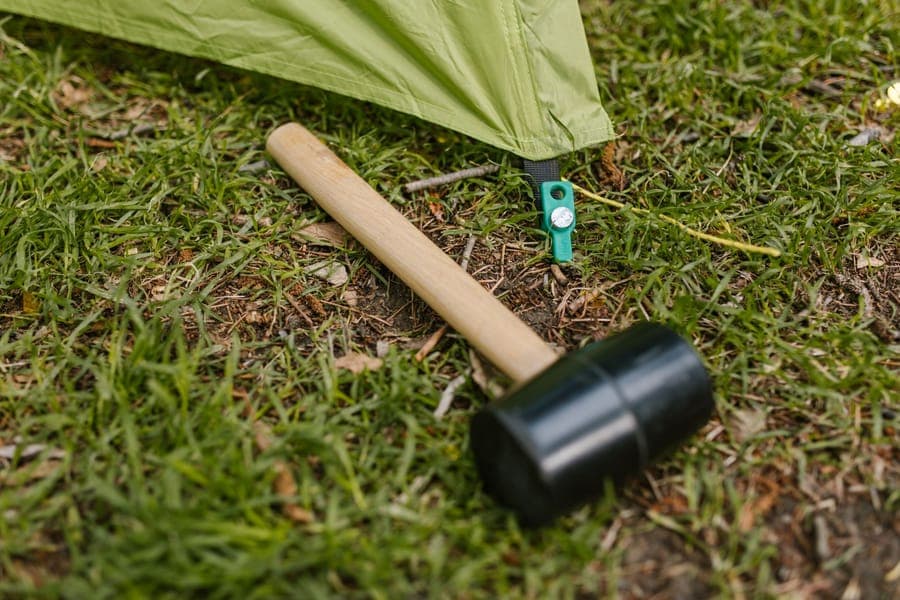
The single highest-value upgrade in this whole category: the thin U-stakes in the box pull straight out of wet ground, and a corkscrew does not.
- Type
- Spiral or corkscrew ground anchor
- Common length
- 10 to 15 in
- Best ground
- Turf and soil, not gravel or hardstanding
- Installation
- Hand turned, no driving
Good
- Holds in saturated soil where a straight stake lifts
- Screws in by hand, so no mallet and no bent stakes
- Reusable season after season
Less good
- Useless on concrete, pavers or frozen ground, where you need weights instead
- Takes longer to install than driving a U-stake
- Leaves a visible plug hole in a manicured lawn
- Holding power9.2
- Ground versatility6.4
- Durability8.8
- Setup effort8.0
- Value9.0
Inflatable Tie-Down Strap and Stake Kit
Various
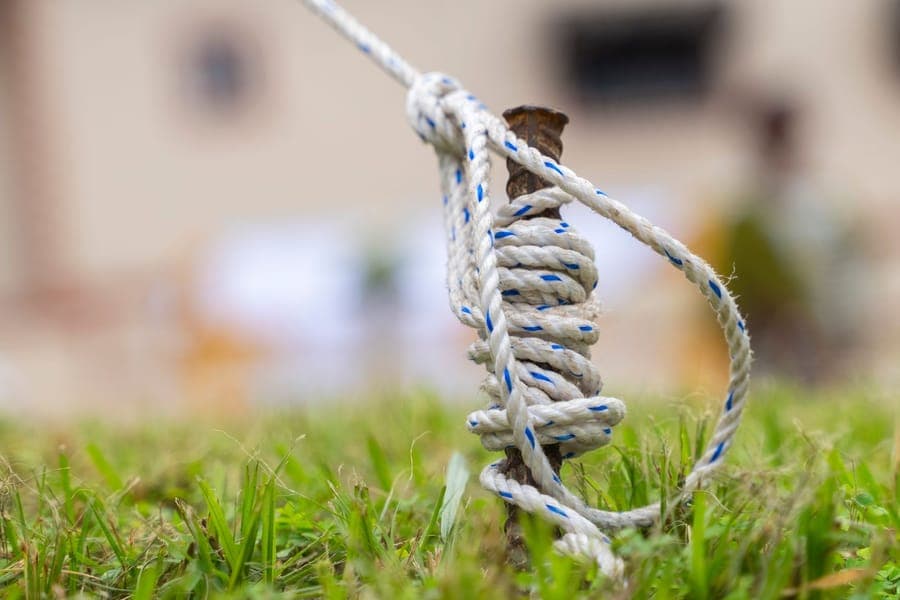
Buy the kit so every anchor point has a strap, because the failure is almost never the strap you fitted. It is the two corners you skipped.
- Contents
- Straps, stakes, tensioners
- Anchor points
- Four minimum per inflatable
- Adjustment
- Cam or ratchet tensioner
- Reusable
- Yes
Good
- Enough hardware to do every corner rather than the front two
- Tensioners let you retighten after the fabric settles
- Works with inflatables, arches and lightweight rigid props
Less good
- Over-tensioning deforms the inflatable and stresses the seams
- Kit stakes are often the same thin stock as the ones you are replacing
- Straps are a trip hazard across a path unless you flag them
- Holding power8.0
- Ground versatility7.0
- Durability7.6
- Setup effort8.2
- Value8.6
27 Gal Heavy-Duty Storage Tote
Various
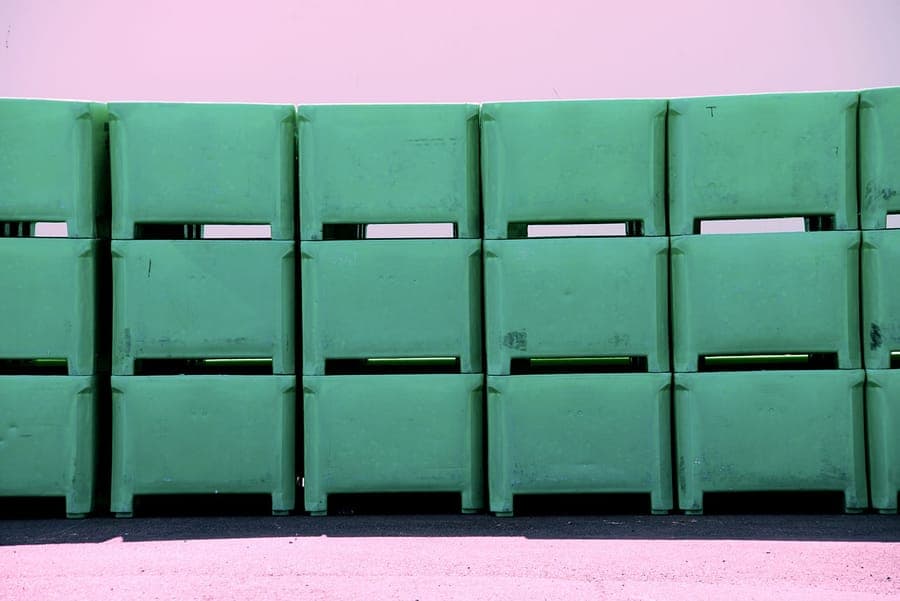
Thicker walls and a lid that takes weight. The right box for animatronics, because the thing you store on top of them is the thing that breaks them.
- Capacity
- 27 gal
- Walls
- Heavy gauge, rated for stacking load
- Lid
- Load bearing on most models
- Use
- Rigid props, animatronics, tools
Good
- Lid takes the weight of whatever gets stacked on it
- Deep enough for a folded standing animatronic
- Survives being dragged across a concrete floor
Less good
- Heavy before you put anything in it
- Too deep to lift comfortably when full
- Costs several times what a basic tote does
- Stackability9.4
- Seal quality7.4
- Capacity9.0
- Durability9.4
- Value7.0
Container Moisture Absorbers
Various
The cheapest insurance on a year of storage. Props do not usually go in wet, they go in slightly damp, and then sit sealed for ten months.
- Type
- Calcium chloride moisture absorber
- Use
- One per tote in a damp space
- Life
- Replace annually
- Caution
- The collected liquid is corrosive, so keep it upright
Good
- Pennies against the value of what is in the tote
- Handles the residual damp you cannot see when you pack
- Also works in a skeleton storage bag
Less good
- Must sit upright or the collected brine leaks onto the contents
- Needs replacing every year to do anything
- Not a fix for actually wet props, which you have to dry first
- Protection8.6
- Ease of use9.0
- Durability5.0
- Coverage7.4
- Value9.4
Preventing the failures instead
Almost all of these are preventable, and the prevention is cheaper than the parts:
- Assemble lying down and seat every joint fully. Most connector damage is an assembly fault, not a wear fault.
- Anchor properly with corkscrews and guy lines. A prop that never falls over never breaks the things that break when it falls over.
- Disconnect the head before moving the body. The eye cable is the fragile part and it is fragile at exactly this moment.
- Store extremities separately and padded. Hands and fingers break under the weight of other sections.
- Keep a moisture absorber in the storage container. Corrosion on the eye connector is a slow ten-month failure.
If you are still choosing a giant and parts support matters to you, that is a legitimate factor in the decision — the alternatives comparison covers which retailers carry which products.
Frequently asked questions
Where can I buy 12-foot skeleton replacement parts?
Frame sections and eye modules come from the retailer that sells that exclusive, and support varies by model and year. Stakes, tethers, fasteners and cable are generic and easily sourced — and generic replacements are usually better than the originals.
What breaks first on a 12-foot skeleton?
The stakes. They are thin, short and straight, they bend in firm ground and pull out of soft ground. Replacing them with corkscrew ground anchors is an upgrade rather than a repair, and it stops the problem recurring.
Can you replace the eyes on a giant skeleton?
Sometimes, depending on the retailer's parts support for that model. Before assuming the module is dead, check the connector seating — a head connector that looks home and is not is a common false alarm after reassembly.
How do I stop the hands breaking on my giant skeleton?
Store them separately and padded. Thin molded extremities almost always break in the garage under the weight of other sections, not out in the yard.
About the author
Mike M.
Mike M. is the hands-on owner behind Iron Mako Media, which publishes Haunt & Hedge. The site covers the gear that builds a yard haunt, for the person who already decorates and adds one bigger piece a year.
We do not run a test lab and we do not claim to have physically tested products we have not. Read how we choose picks.