Animatronics & Giant Props
How to Keep a 12-Foot Skeleton From Falling Over
Twelve feet of rigid frame on soft ground is a sail. Here is the anchoring that actually holds it.
Disclosure: we earn a commission from qualifying purchases made through links on this page, at no extra cost to you. It does not change what we recommend — here is how we choose.
The short answer
Set the base on level, firm ground; replace the supplied stakes with corkscrew ground anchors at every base point; run at least three guy lines from the upper torso to separate anchors at roughly 120 degrees apart; tension them evenly; and re-check after the first heavy rain, because wet ground lets anchors creep.
A twelve-foot skeleton does not fall over gently. It falls onto its own eye assembly, or onto a car, and both of those are the expensive kind of Saturday. Almost every failure comes down to the same two things: the ground was softer than it looked, and there were no guy lines.
Before you assemble: pick the spot properly
- Check overhead. Power service drops, phone lines, low branches. Twelve feet is taller than people estimate, and this is the check nobody does until they are lifting.
- Check the ground. Level, and firm enough to take an anchor. Avoid the low point of a yard, because that is where water collects and where anchors let go first.
- Check sight lines. Walk to the street. A giant behind a mature tree is a giant nobody sees.
- Check drainage. The base sits on the ground for a month. Standing water around it is how the base electronics die.
Assembly order
- Lay out every section on the lawn in order before connecting anything. Sorting parts at head height is how parts get dropped.
- Build from the base up, on the ground, with the figure lying down. Do not assemble vertically.
- Seat every joint fully. A partly seated pole section is the most common structural failure, and it is invisible once the figure is up.
- Fit the head and eyes last, and check the connector before lifting. Reaching the head after it is standing means a ladder.
- Lift with two people, one walking the base and one walking the body up. One person lifting twelve feet is how the frame gets bent.
- Anchor immediately. Not after coffee. A standing unanchored giant is one gust from horizontal.
The anchoring that actually holds
Ground anchors, not the supplied stakes
Supplied stakes are short, thin and straight. They hold in dry compacted soil and they pull straight out of saturated ground, which is exactly the condition an October lawn reaches after a couple of wet days. Corkscrew ground anchors resist pull-out because the soil has to shear around the whole spiral rather than slide along a smooth shaft.
Use one at every base point the frame provides, and turn them in until the eye is at ground level. If you hit rock or root, move the anchor rather than leaving it half-in — a half-seated anchor gives false confidence, which is worse than no anchor.
Guy lines are the part people skip
Base anchoring stops the figure sliding. Guy lines stop it toppling, and toppling is the failure mode. Run at least three lines from a solid point on the upper torso down to separate anchors spaced roughly evenly around the figure — think of a tripod, because that is the geometry that resists a push from any direction.
Tension them evenly and firmly, not tight. Over-tensioned lines pull the frame out of alignment and concentrate load on one joint. Use a tensioner so you can retighten mid-season, because lines stretch and ground settles.
On hard surfaces
If the figure has to stand on a driveway or pavers, anchors are out and weights are in. Double up sandbags at every point, tether to the bags rather than resting the frame on them, and accept that this is a fair-weather-only placement. A weighted base on concrete will slide before it tips, and it will do both eventually in real wind.
The anchoring hardware
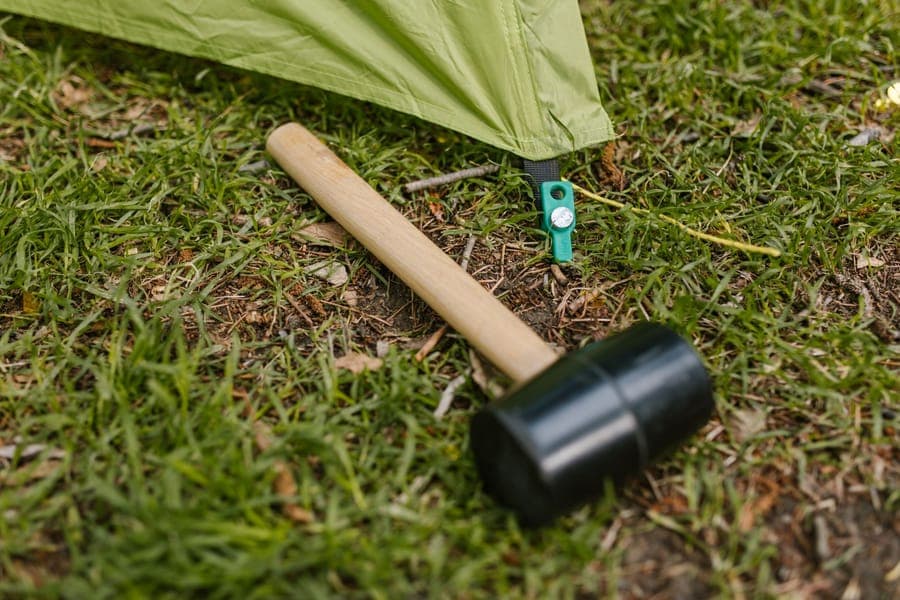
Corkscrew Ground Anchors
Various
The single highest-value upgrade in this whole category: the thin U-stakes in the box pull straight out of wet ground, and a corkscrew does not.
- Type
- Spiral or corkscrew ground anchor
- Common length
- 10 to 15 in
- Best ground
- Turf and soil, not gravel or hardstanding
- Installation
- Hand turned, no driving
Good
- Holds in saturated soil where a straight stake lifts
- Screws in by hand, so no mallet and no bent stakes
- Reusable season after season
Less good
- Useless on concrete, pavers or frozen ground, where you need weights instead
- Takes longer to install than driving a U-stake
- Leaves a visible plug hole in a manicured lawn
- Holding power9.2
- Ground versatility6.4
- Durability8.8
- Setup effort8.0
- Value9.0
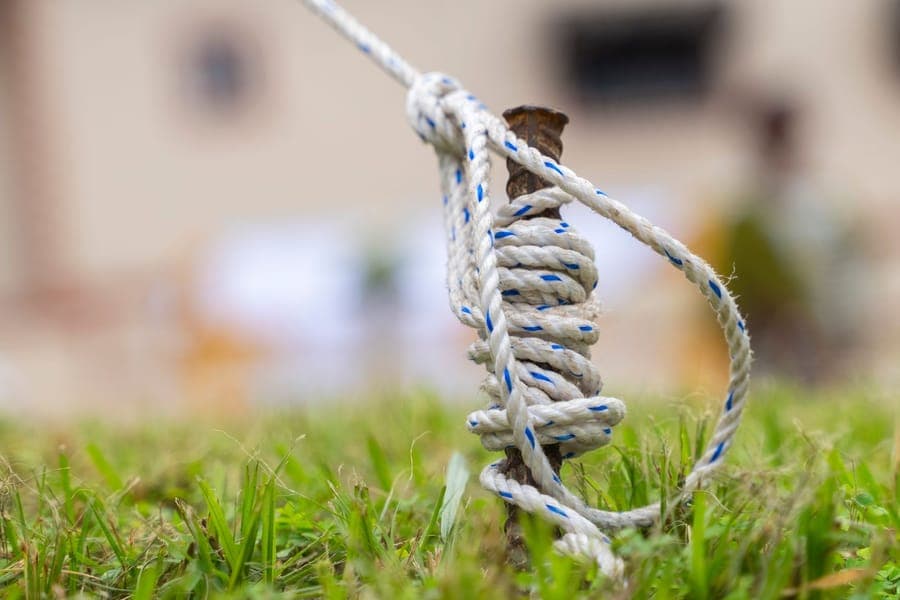
Inflatable Tie-Down Strap and Stake Kit
Various
Buy the kit so every anchor point has a strap, because the failure is almost never the strap you fitted. It is the two corners you skipped.
- Contents
- Straps, stakes, tensioners
- Anchor points
- Four minimum per inflatable
- Adjustment
- Cam or ratchet tensioner
- Reusable
- Yes
Good
- Enough hardware to do every corner rather than the front two
- Tensioners let you retighten after the fabric settles
- Works with inflatables, arches and lightweight rigid props
Less good
- Over-tensioning deforms the inflatable and stresses the seams
- Kit stakes are often the same thin stock as the ones you are replacing
- Straps are a trip hazard across a path unless you flag them
- Holding power8.0
- Ground versatility7.0
- Durability7.6
- Setup effort8.2
- Value8.6
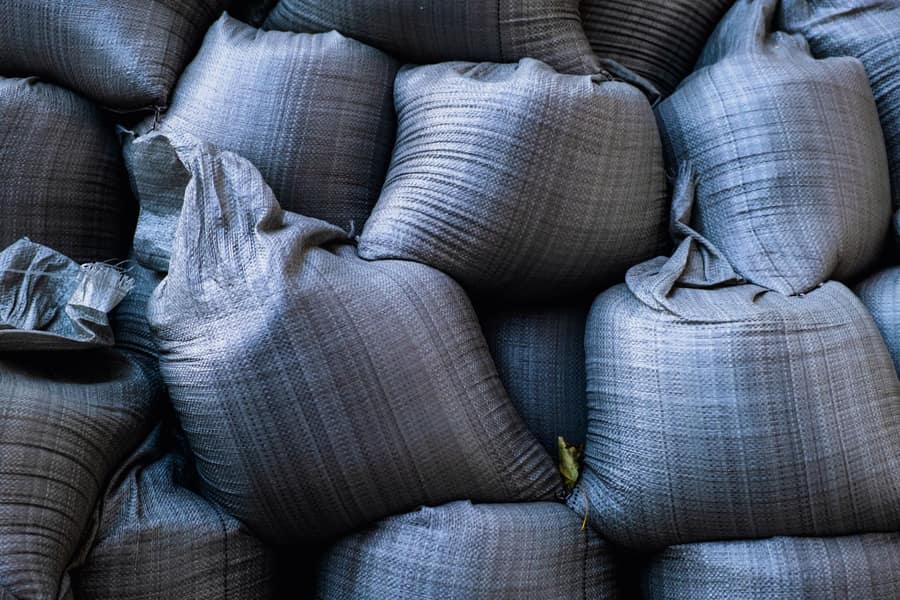
Sandbag Anchor Weights
Various
The answer on any surface you cannot drive a stake into. Double up per anchor point on a driveway, because a bag that slides is a bag that did nothing.
- Type
- Sand or water-fill anchor bag
- Surface
- Concrete, pavers, decking, rooftop
- Attachment
- Grommet or loop to a tether
- Storage
- Empties flat
Good
- Works where no stake will go
- Empties flat for storage instead of taking a tote
- Stackable per anchor point for larger displays
Less good
- Needs doubling up on larger inflatables or in real wind
- Sand has to come from somewhere and go somewhere
- Water fill is useless once it freezes
- Holding power7.8
- Ground versatility9.4
- Durability8.0
- Setup effort7.4
- Value8.4
Through the season
- Re-check after the first heavy rain. Wet ground lets anchors creep. This is the single most valuable maintenance moment.
- Retension guy lines every couple of weeks. They stretch.
- Lower it before forecast high wind. No anchoring system makes twelve feet of frame safe in a real storm, and lowering it takes minutes.
- Watch the base for standing water. Move it or improve drainage rather than letting the electronics sit in a puddle for a month.
When the season ends, the disassembly order matters as much as the assembly did — how to store a 12-foot skeleton covers that, including the head, which is the part that gets broken in November rather than October.
Frequently asked questions
How do you anchor a 12-foot skeleton?
Corkscrew ground anchors at every base point, plus at least three guy lines from the upper torso to separate anchors spaced evenly around the figure. Base anchors stop it sliding; guy lines stop it toppling, and toppling is the failure you are preventing.
Do I need two people to set up a 12-foot skeleton?
Yes. Assemble it lying down, then lift with one person walking the base and one walking the body up. A single person lifting twelve feet of sectional frame is how the frame gets bent.
Can a 12-foot skeleton stand on a driveway?
Only with heavy weights and only in fair weather. Anchors need soil. On a hard surface, double up sandbags at every point, tether to the bags rather than resting on them, and take it down before any real wind.
Should I take my giant skeleton down in high wind?
Yes. No anchoring system makes twelve feet of rigid frame safe in a storm. Lowering it takes a few minutes and it is the difference between owning it next year and replacing it.
About the author
Mike M.
Mike M. is the hands-on owner behind Iron Mako Media, which publishes Haunt & Hedge. The site covers the gear that builds a yard haunt, for the person who already decorates and adds one bigger piece a year.
We do not run a test lab and we do not claim to have physically tested products we have not. Read how we choose picks.