Planning
DIY Outdoor Halloween Decorations That Actually Work
Homemade props beat bought ones on scale and lose on mechanism. These nine projects all sit on the winning side of that line.

Disclosure: we earn a commission from qualifying purchases made through links on this page, at no extra cost to you. It does not change what we recommend — here is how we choose.
The short answer
The homemade outdoor decorations worth your weekend are the ones made of material and shape rather than mechanism: foam tombstones, a cooler-and-ducting fog chiller, a chicken-wire-and-cloth ghost, a pallet or PVC graveyard fence, and groundbreakers. Build those. Buy anything with a motor, a blower or a heating element.
Most DIY Halloween advice online is a craft project photographed in good light. What follows is sorted differently - by effect per hour of work in an actual yard, at night, from the sidewalk, in weather. That ordering changes the answers quite a lot. The flashiest build is rarely the one that makes the display.
One structural point first, because it decides everything else: a homemade prop wins when its value is its size, its shape or its specificity to your yard. It loses when its value is engineering. DIY versus store-bought is the long version of that argument. Every project below is on the winning side of it.
How these are ranked
- Effect from the sidewalk at night. A yard haunt is viewed from thirty feet in the dark. Detail you can only see at arm's length is wasted work.
- Hours to first finished unit. A project that takes a full Saturday before anything is usable loses to one that produces a finished prop in an hour.
- Material cost against the bought equivalent. If building it costs more than buying it, it is on the wrong list.
- Weather survival. Outdoors in October means rain, UV and wind. Cardboard and hot glue are indoor materials.
- Storage. A prop that cannot be flattened, stacked or disassembled will quietly stop coming out after year two.
Nothing here needs a workshop. A craft knife, a heat gun or an old hair dryer, a drill, spray paint and a staple gun covers every project on this page.
1. Foam tombstones (the best first project)
Rigid foam insulation board, cut with a craft knife, edges melted back with a heat source, then painted. This is the canonical DIY Halloween project for a reason: a sheet of insulation board yields several tombstones that are far larger and thicker than the bought ones, which are thin because shipping volume costs money.
- Materials: rigid foam board, craft knife, heat gun or hair dryer, a cheap gray base coat, black and white for washes, and a stake or rebar per stone.
- The technique that matters: round the edges and gouge the face before painting. A flat-faced rectangle reads as foam no matter how well you paint it; a chipped, weathered edge reads as stone from the sidewalk.
- Paint order: mid-gray base, black wash into the recesses, dry-brushed light gray on the high points. Three coats, no artistry required.
- Anchoring: a wooden stake stapled to the back, or rebar through two drilled holes. Foam has no mass, so it will travel in wind if you do not stake it.
Honest limitation: foam board dents if anything leans on it, and a dented tombstone looks like damaged foam rather than damaged stone. If you have small children or a dog with opinions, the molded plastic ones survive better. Setting up a graveyard scene covers the layout either way, and securing tombstones covers the stakes.
2. A fog chiller from a cooler and ducting
The single highest-value build on this page, because there is no cheap bought equivalent. Standard fog is warm and rises; cooling it on the way out is what makes it hug the ground. A hard cooler, a length of flexible ducting, a bag of ice and a cut hole at each end is the whole machine.
- Cut an inlet near the top of one end, sized to your fog machine's nozzle, and an outlet low at the other end. Fog falls as it cools, so the outlet goes at the bottom.
- Run ducting through the inside in a long loop so the fog spends as much time as possible in contact with cold air.
- Pack ice around the ducting, not in the airflow path. Water in the path is how you get spitting.
- Raise the inlet end slightly so meltwater drains to the outlet end rather than pooling against the duct.
Caveat worth stating plainly: a chiller makes fog hug the ground, it does not make the fog machine bigger. If your machine is underpowered the chiller will not rescue it. How a fog chiller works covers the physics, and making fog stay low covers the placement that matters as much as the hardware.
3. A chicken-wire and cloth ghost
Cheap, large, and it moves on its own in any breeze - which is the thing that bought props mostly cannot do without a motor. Form a rough torso and head from chicken wire or a cheap tomato cage, drape gauze cloth over it, and light it from below.
- Materials: chicken wire or a tomato cage, creepy cloth or cheesecloth, zip ties, and one light source per figure.
- Scale up, not down. A seven-foot ghost costs almost the same as a five-foot one and reads from twice the distance.
- Light it from below and behind. Front-lit cloth looks like a sheet. Under-lit cloth looks like it is glowing from inside.
- Leave the bottom open. The hem lifting in wind is most of the effect; weighting it down kills the illusion.
Gauze cloth is the material that does the work here and it is absurdly cheap for the coverage. Buy more than you think you need - it also hides fences, drapes porches and covers the cheap plastic bases of bought props, which is the quiet second job it does in every yard.
4. A pallet or PVC graveyard fence
Scale is what separates a yard that is decorated from a yard that reads as a scene, and nothing adds scale per dollar like a fence. Pallet wood painted black, or PVC pipe with finials, both work. Build it in sections no wider than your storage space.
- Pallet version: free wood, heavier, better texture, needs a saw and paint. Lasts years if you seal the cut ends.
- PVC version: lighter, faster, cheap, and it is obviously plastic in daylight - which matters less than you think for something seen at night at thirty feet.
- Build in sections. Three to four feet wide, hinged or pinned together. A one-piece fence is a storage problem you solve by throwing it away.
- Spray paint matte black, then dry-brush gray. Gloss black reads as plastic under any light.
If you want the look without the weekend, bought panel fencing exists and stores flat. The DIY version wins on height and on fitting your actual yard dimensions, which is a real advantage when the bought panels are always four inches too short to meet your path.
5. Groundbreakers from a cheap skeleton
A bagged plastic skeleton, cut at the waist, torso staked into a mound of soil with the hands clawing out. Add dirt, add a few leaves, light it low and orange. This is the highest-impact-per-dollar prop in the entire yard-haunt vocabulary and it takes about twenty minutes.
The detail that sells it: build an actual mound of displaced soil around the emergence point. A skeleton standing waist-deep in flat lawn looks like a skeleton standing in a hole. A skeleton surrounded by a ring of turned earth looks like it got out.
6. Lighting a scene with bulbs you already own
Not strictly a build, but it is the step that makes every other project on this page work, and it is the cheapest upgrade in the yard. Swap colored PAR38 floods into existing outdoor fixtures and the whole yard changes color for the price of a few bulbs.
- Light from low and to the side. Downlighting flattens props; uplighting makes them loom.
- Pick two colors, not five. A yard lit in two colors reads as designed. Five reads as a clearance bin.
- Keep light off the house wall. Spill onto siding is what makes a yard look lit rather than atmospheric.
- Add one UV fixture. Anything white - bones, gauze, foam - jumps out under blacklight, and it makes cheap props look deliberate.
Choosing the colors goes further on this, and setting up blacklight covers the UV side, which is the trick that makes homemade props look like they cost money.
7. A floating ghost from projection material
If you already own a projector, stretching translucent projection material between two points in open air gets you a figure that appears to float with nothing visibly behind it. The material is the whole trick; the rest is a frame of PVC or two poles and some tension.
Keep it out of direct wind - a tensioned sheet is a sail, and it will either tear or take your frame down. Behind a porch rail or under an overhang is where this works. Window projection versus yard projection covers which surface to aim at first.
8. Webbing a whole facade
Large nylon yard web stretched across a porch, a hedge or a whole house front. Technically a bought product, but it only works as a DIY technique: how you stretch it decides whether it reads as a web or as a bag of white string stapled to a wall.
- Find your anchor points first, then stretch to them. Pull the web out to full tension before attaching anything.
- Use three or more anchor points per span. Two points makes a hammock, not a web.
- Tease the strands apart with your fingers after it is up. Untouched web looks like netting.
- Add a couple of oversized spiders near the edges, not in the middle. Center-weighted webs sag.
Hanging a spider web properly is the detailed version, including how to attach to siding and brick without leaving holes.
9. Dressing the ground
Free, takes an hour, and it is the difference between props sitting on a lawn and props existing in a place. Dry leaves, timber offcuts, a wheelbarrow of bark, a few broken pallet boards leaning where they should not be. Nothing to buy and no skill required.
This is the step experienced yard haunters would keep if they had to give up everything else. Bought props look bought partly because they sit on mown grass with a clean plastic base visible. Cover the bases, break up the ground plane, and a yard full of cheap props starts reading as a scene.
The materials worth buying
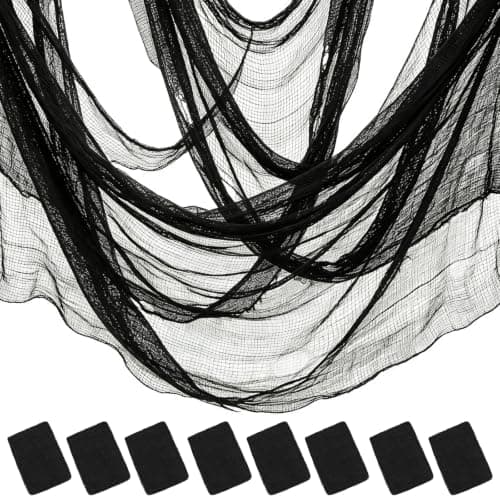
Creepy Cloth Gauze Fabric, 8 Pack, 72 x 30 in
Various
Gauze is the cheapest square footage in Halloween. Drape it over a bookshelf, a doorway or a table and the whole room changes without a single fixing.
- Type
- Open-weave dyed gauze, sold in lengths
- Length
- Typically 30 to 80 in per piece, multiple pieces
- Mounting
- Drapes, or two pieces of tape
- Power
- None
Good
- Covers more area per dollar than anything else indoors
- Takes colored light beautifully — a purple bulb behind it does most of the work
- Tears deliberately, so ragged edges are a feature rather than damage
Less good
- Flammable. Keep it away from candles, bulbs and any heat source
- Snags on everything, including the shelf you drape it over
- Looks like a dust sheet in full daylight; it needs to be lit to work
- Visual impact7.8
- Build quality5.6
- Damage risk9.2
- Setup effort9.6
- Storage footprint9.6
#ad How we are funded - price as of November 4, 2026
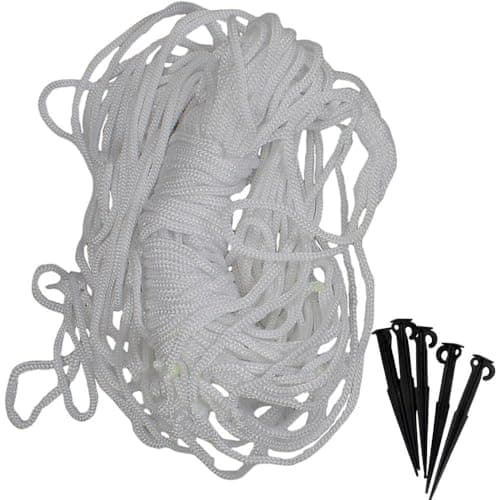
Mega Yard Web, 23 x 18 ft Nylon Web
Various
Roughly 23 by 18 feet of triangular rope web with a gutter bracket at the apex and stakes at the base. Nothing else turns the whole front of a house into one piece for this little effort.
- Size
- About 23.3 x 18.7 ft, triangular
- Material
- Polyester blend rope
- Included
- 1 gutter bracket, 5 ground stakes
- Lighting
- Glows under blacklight (manufacturer stated)
Good
- Scales to the whole facade, which no single prop at this effort level does
- Rope rather than stretch cotton, so it survives rain instead of sagging into string
- The blacklight response gives you a second, completely different look after dark
Less good
- The apex bracket has to go on a gutter, so the top end still means a ladder
- A 23-foot web is a sail — it loads the gutter and the stakes in a real wind
- Stock rotates hard in October; the exact pack is not always on one retailer
- Street presence8.8
- Build quality7.6
- Weather tolerance7.2
- Setup effort6.4
- Storage footprint8.8
#ad How we are funded - price as of November 4, 2026
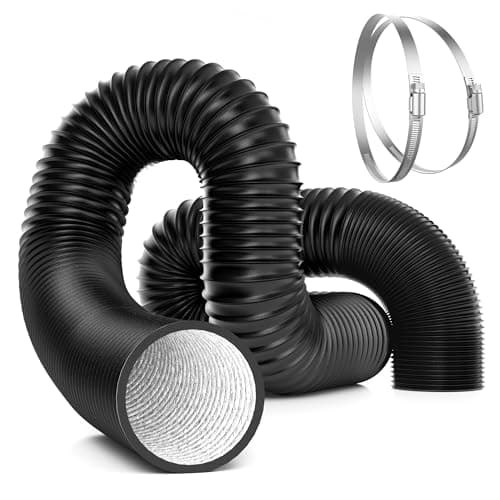
6 in x 25 ft Flexible Aluminum Ducting with Clamps
VIVOSUN
A cooler, a length of duct and a bag of ice is the classic homemade chiller, and the duct is the part people get wrong. Size it to the machine's nozzle, not to what is cheapest.
- Type
- Flexible ducting
- Sizing
- Match the fogger's nozzle diameter
- Pairs with
- A hard cooler and ice
- Cost
- The cheapest route to low-lying fog
Good
- The lowest-cost path to low-lying fog by a wide margin
- Parts are reusable and easy to replace
- You can size the cooler to your actual yard
Less good
- It is a build rather than a purchase, so budget an afternoon
- Undersized duct chokes output and backs heat into the machine
- No warranty on anything you assembled yourself
- Fog density7.6
- Stays low8.4
- Run time7.4
- Setup effort5.0
- Consumable cost8.8
#ad How we are funded - price as of November 4, 2026
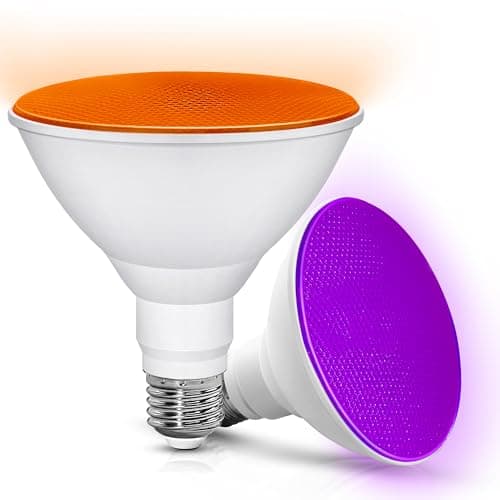
PAR38 Orange and Purple LED Flood Bulbs, 15W
Various
If the house already has outdoor floodlight fixtures, colored PAR38 bulbs are the cheapest color change on this site. No app, no controller, no cord run.
- Fitting
- Standard E26 PAR38
- Use
- Existing outdoor flood fixtures
- Rating
- Buy wet or damp rated to match the fixture
- Control
- The switch that is already there
Good
- No new wiring, no new controller, no new cord
- Cheapest color-change option available
- Nothing extra to store, because they stay in the fixture or in a small box
Less good
- Fixed colors, so no scenes and no fading
- Only works if the fixtures point somewhere useful
- Cheap colored LEDs vary a lot in actual output
- Brightness7.4
- Color quality6.8
- Weather rating8.0
- Control4.5
- Value9.6
#ad How we are funded - price as of November 4, 2026
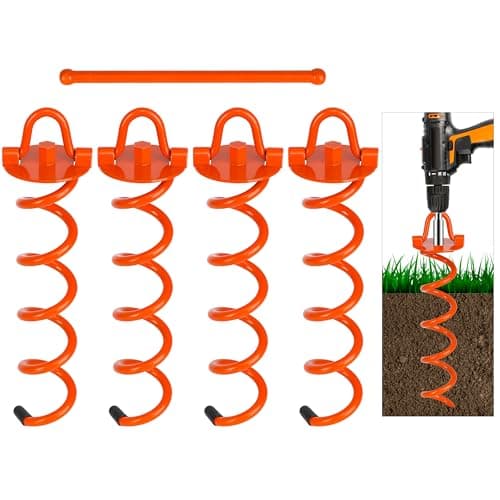
12 in Spiral Ground Anchors, 4 Pack
FEED GARDEN
The single highest-value upgrade in this whole category: the thin U-stakes in the box pull straight out of wet ground, and a corkscrew does not.
- Type
- Spiral or corkscrew ground anchor
- Common length
- 10 to 15 in
- Best ground
- Turf and soil, not gravel or hardstanding
- Installation
- Hand turned, no driving
Good
- Holds in saturated soil where a straight stake lifts
- Screws in by hand, so no mallet and no bent stakes
- Reusable season after season
Less good
- Useless on concrete, pavers or frozen ground, where you need weights instead
- Takes longer to install than driving a U-stake
- Leaves a visible plug hole in a manicured lawn
- Holding power9.2
- Ground versatility6.4
- Durability8.8
- Setup effort8.0
- Value9.0
#ad How we are funded - price as of November 4, 2026
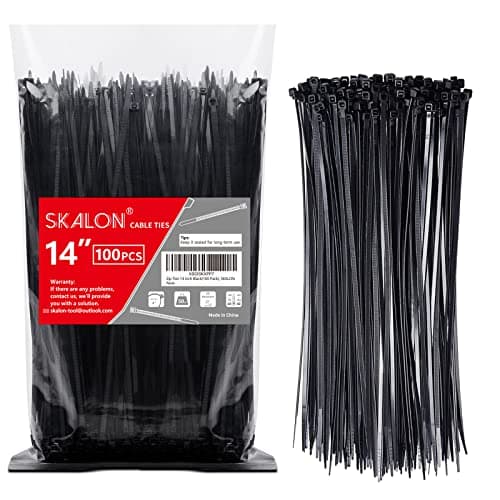
14 in Black Zip Ties, 100 Pack, 50 lb Tensile, UV Resistant
SKALON
Every outfit in this lane is sold with ties too short or too weak to hold it, and this is the fix - UV-rated so they do not go brittle halfway through October.
- Length
- 14 in
- Tensile strength
- 50 lb (listed)
- Quantity
- 100 per pack
- Weather
- UV resistant, black nylon (listed)
Good
- 14 inches wraps a giant skeleton's forearm or spine with enough tail left to pull tight
- UV-rated black nylon survives a month outdoors - clear indoor ties go brittle and snap
- Invisible at night against a dark fabric, unlike the white ties that come in the bag
Less good
- Single use - you cut them off, so a season of adjusting burns through the pack
- 50 lb is right for fabric and wrong for anything structural; do not use these to hold the prop up
- Cut ends are sharp and will snag the fabric you just attached if you leave the tail long
- Street presence5.0
- Build quality8.4
- Weather tolerance8.8
- Setup effort9.2
- Storage footprint9.6
#ad How we are funded - price as of November 4, 2026
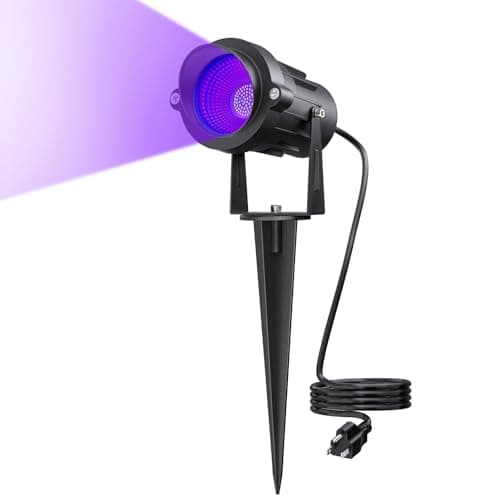
18W UV Blacklight Spotlight, IP65
Onforu
Not a color, an effect. UV makes white bone, gauze and paint fluoresce, which is the one lighting trick that makes a cheap skeleton look expensive.
- Power
- 12W
- Wavelength
- About 395 to 400 nm
- Rating
- IP65, aluminum housing with glass lens
- Beam
- Around 60 degrees with an adjustable head
Good
- Transforms white plastic skeletons and gauze for very little money
- Metal housing and glass lens, not the usual plastic shell
- Adjustable head lets you place the unit for concealment, not aim
Less good
- Does nothing at all to props that are not white or fluorescent
- Needs proper darkness — porch light ruins it
- Narrow useful range, so it must be close to what it lights
- Effect strength8.4
- Build quality8.4
- Weather tolerance8.4
- Ease of setup8.6
- Control6.0
#ad How we are funded - price as of November 4, 2026
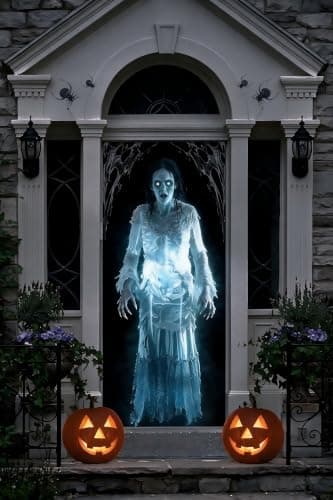
Hollusion Projection Material, 5 x 9 ft
Various
The material on its own, for people who want the apparition in a doorway or an archway rather than a window. This is the closest the category gets to an actual hologram.
- Form
- Translucent projection panel, 5 x 9 ft, double sided
- Effect
- Figures appear suspended with no visible screen
- Needs
- A projector and suitable content
- Placement
- Doorway, archway, gap between trees, porch opening
Good
- Frees the effect from the window, which is where everyone else puts it
- Genuinely reads as floating when it is lit and hung correctly
- Cuts to whatever opening you actually have
Less good
- Hanging it invisibly is the hard part and takes trial and error
- Any stray light on the material kills the illusion instantly
- Outdoors it moves in wind, which breaks the effect
- Illusion quality9.4
- Brightness6.6
- Weather tolerance5.8
- Ease of setup5.4
- Value7.4
#ad How we are funded - price as of November 4, 2026
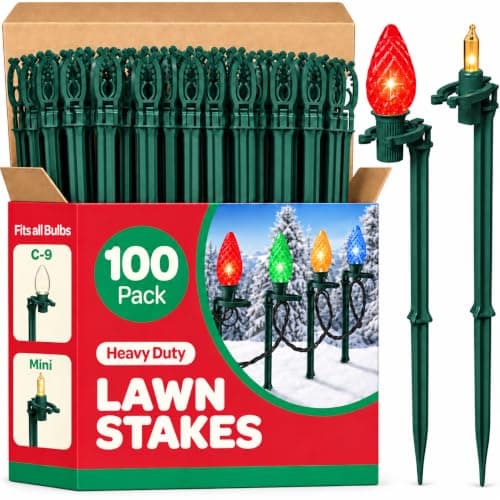
Outdoor Light Yard Stakes, Set of 100
Various
The unglamorous purchase that makes a display look professional. Cords pinned along a bed edge disappear; cords lying across a lawn do not.
- Type
- Ground stakes and clip hooks
- Use
- Pin cord along bed edges and fence lines
- Quantity
- Buy more than you think, one every few feet
- Season
- Reusable
Good
- Hides cord runs without burying anything
- Stops the mower and the leaf blower finding the cord
- Costs almost nothing per foot of tidy
Less good
- Plastic stakes snap in hard or frozen ground
- Not a substitute for a ramp where cord crosses a path
- You will lose half of them in the grass every year
- Safety value7.0
- Weather rating7.4
- Ease of use9.4
- Reliability7.0
- Value9.4
#ad How we are funded - price as of November 4, 2026
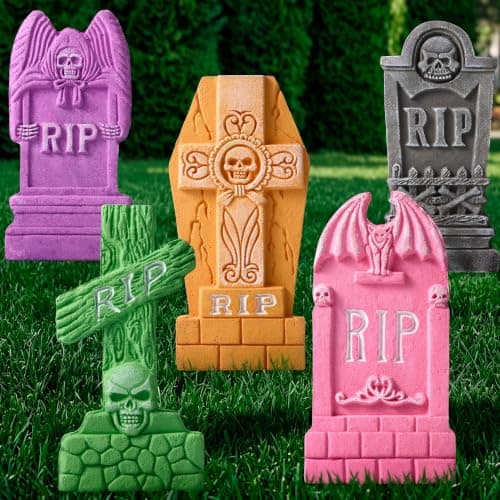
17" Foam RIP Graveyard Tombstones, 5 Pack
JOYIN
Molded foam with carved depth and twelve stakes for five stones, which is the ratio that decides whether a graveyard is still standing after the first windy night.
- Type
- Molded foam headstones, 5 per set
- Height
- 17 in per stone (listed)
- Staking
- 12 metal stakes supplied
- Power
- None
Good
- Carved relief reads as stone under a low light instead of flattening out
- More than two stakes per stone, so they can be cross-staked against wind
- Cheap enough to buy two sets and build density, which is what the look needs
Less good
- 17 inches is short — from a sidewalk these disappear into an unmown lawn
- Foam chips at the edges once it has been staked and pulled a few seasons
- Supplied stakes are thin wire; they bend in compacted or stony ground
- Street presence6.8
- Build quality7.6
- Weather tolerance7.4
- Setup effort9.2
- Storage footprint8.8
#ad How we are funded - price as of November 4, 2026
Three things to stop trying to build
| Project | Why DIY loses |
|---|---|
| A fog machine | A heating element and a pump. Improvising this is a fire and burn risk for no saving |
| An animatronic | Motors, cams, linkages and a controller, engineered and safety-tested at a price you cannot match |
| Mains wiring and distribution | Cords, connectors and GFCI are cheap, rated and listed. Nothing homemade belongs on the mains side |
Homemade props and bought electrics is the right division of labor, not a compromise. Yard haunt electrical safety is the non-negotiable reading before you run power to any of this, and hiding extension cords covers getting it there without a trip hazard.
Weather, wind and storage
- Seal every cut edge on foam and on pallet wood. Water gets in at the cut, not through the paint.
- Stake everything, including the light things. Foam has no mass. It is the props with no weight that end up in a neighbor's yard, and anything tall and rigid needs the full method in anchoring against high winds.
- Assume rain, not drizzle. Anything that cannot take a soaking needs an overhang. Weatherproofing decorations covers the rest.
- Design for flat storage from the start. Sectional fences, stacking tombstones, deflatable ghosts.
- Photograph the finished display before teardown. Next October you will not remember how it went together.
One last point on sequencing. Build in September, not October. Paint needs dry weather and dry weather is not something October owes you, and a half-painted tombstone in a damp garage is how these projects die. When to put decorations up covers the display timing; the building happens a month before that.
Frequently asked questions
What are the best DIY outdoor Halloween decorations to start with?
Foam tombstones and a groundbreaker skeleton. Both take under an hour each, cost very little, read clearly from the sidewalk at night, and need no skills beyond a craft knife and spray paint.
Is it cheaper to make Halloween decorations than to buy them?
For anything whose value is size and shape, yes, and often by a lot - a sheet of foam board makes several tombstones much larger than the bought ones. For anything with a motor, a blower or a heating element, no. Buying wins there on both cost and safety.
How do you make homemade Halloween decorations survive rain?
Seal every cut edge, use outdoor-rated paint, keep cardboard and hot glue indoors, and give anything fabric or paper an overhang. Stake even the lightweight props, because foam and cloth have no mass to hold them down.
What materials do you need for DIY outdoor Halloween decorations?
Rigid foam board, gauze or creepy cloth, chicken wire, pallet wood or PVC, zip ties, spray paint in matte black and gray, and ground stakes. A craft knife, a heat source, a drill and a staple gun cover the tools.
Can you build your own fog chiller?
Yes, and it is the best-value build on this list because there is no cheap bought equivalent. A hard cooler, flexible ducting looped inside, ice packed around the duct, inlet high and outlet low. It makes fog hug the ground but it does not make an underpowered machine stronger.
How do you make cheap Halloween decorations look expensive?
Light them from low and to the side in two colors only, add one UV fixture so anything white glows, and dress the ground around them with leaves and bark so no plastic base is visible. Those three steps do more than any amount of extra props.
About the author
Mike M.
Mike M. is the hands-on owner behind Iron Mako Media, which publishes Haunt & Hedge. The site covers the gear that builds a yard haunt, for the person who already decorates and adds one bigger piece a year.
Every pick here is chosen from manufacturer specifications, manuals, safety standards and verified buyer data. Read how we choose picks.