Power, Timers & Setup
How to Keep Halloween Decorations From Killing Grass
Grass does not mind being stood on. It minds being covered. Almost every dead patch in November comes from the same mistake.
Disclosure: we earn a commission from qualifying purchases made through links on this page, at no extra cost to you. It does not change what we recommend — here is how we choose.
The short answer
Grass dies under Halloween decorations because it is covered, not because it is weighed down. Anything that blocks light completely — a deflated inflatable, a tarp, a flat prop lying on turf — starts yellowing the grass beneath it in about four days and kills it within one to two weeks. Staked and legged props do almost no damage. The fix is to keep ground cover moving and never leave an inflatable deflated on the lawn during the day.
This is the most avoidable problem in a yard haunt, and it is avoidable because the cause is so specific. It is not the weight of the prop, it is not the stakes, and it is not the month of foot traffic. It is light. Turf that cannot photosynthesise starts breaking down its own reserves within days, and the window between yellow and dead is shorter than most people expect.
The four-day rule
Treat four days as the limit for anything sitting flat on grass. Inside four days you get yellowing that recovers in a week or two. Past it, you are into thinning and bare soil, and by the second week you are looking at a patch that needs reseeding in spring.
| What is on the lawn | Damage level | What to do |
|---|---|---|
| Staked props, tombstones, fencing | Negligible | Nothing; pull the stakes in November |
| Legged props, anything on feet | Negligible | Shift a few inches occasionally |
| Deflated inflatable left on grass | Severe within a week | Never leave it down in daylight |
| Tarp or ground sheet | Severe | Move it every two or three days |
| Flat prop lying face up | Moderate to severe | Stand it up or move it |
| Cord lying across turf | Mild | Pin it along a bed edge instead |
| Sandbags on grass | Moderate | Put a paver under them, or move them |
The inflatable row is where nearly all real damage comes from. An inflatable that is up in the evening and down overnight is covering the lawn through the dark hours, when the grass is not photosynthesising anyway — which is close to harmless. An inflatable deflated all day across the weekend is a dead oval by the following Friday.
Run inflatables on a timer, not on a whim
A timer or smart plug solves the lawn problem, the wear problem and the wind problem at once, which makes it the highest-return accessory in a yard display. Inflated from dusk until late evening and deflated overnight means the fabric wears for a few hours a day rather than twenty-four, the blower runs a fraction of the hours, the prop is not standing in overnight wind, and the lawn spends daylight uncovered.
If the inflatable has to come down during the day for weather, lift the skirt off the grass or fold it onto a path rather than leaving it spread flat on turf. Timers and smart plugs for Halloween covers the hardware, and how long Halloween inflatables last covers why this matters to the prop as well as to the grass.
What to use on and over a lawn
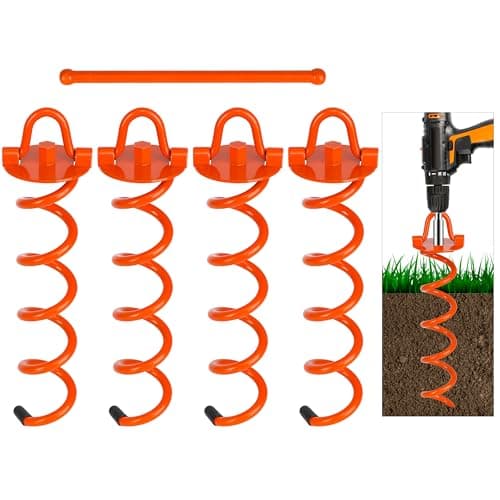
12 in Spiral Ground Anchors, 4 Pack
FEED GARDEN
The single highest-value upgrade in this whole category: the thin U-stakes in the box pull straight out of wet ground, and a corkscrew does not.
- Type
- Spiral or corkscrew ground anchor
- Common length
- 10 to 15 in
- Best ground
- Turf and soil, not gravel or hardstanding
- Installation
- Hand turned, no driving
Good
- Holds in saturated soil where a straight stake lifts
- Screws in by hand, so no mallet and no bent stakes
- Reusable season after season
Less good
- Useless on concrete, pavers or frozen ground, where you need weights instead
- Takes longer to install than driving a U-stake
- Leaves a visible plug hole in a manicured lawn
- Holding power9.2
- Ground versatility6.4
- Durability8.8
- Setup effort8.0
- Value9.0
#ad How we are funded - price as of November 4, 2026
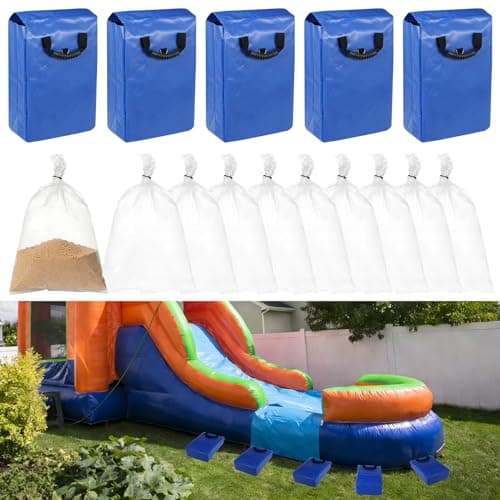
Waterproof Sandbag Anchor Weights, 5 Pack, 50 lb
Various
The answer on any surface you cannot drive a stake into. Double up per anchor point on a driveway, because a bag that slides is a bag that did nothing.
- Type
- Sand or water-fill anchor bag
- Surface
- Concrete, pavers, decking, rooftop
- Attachment
- Grommet or loop to a tether
- Storage
- Empties flat
Good
- Works where no stake will go
- Empties flat for storage instead of taking a tote
- Stackable per anchor point for larger displays
Less good
- Needs doubling up on larger inflatables or in real wind
- Sand has to come from somewhere and go somewhere
- Water fill is useless once it freezes
- Holding power7.8
- Ground versatility9.4
- Durability8.0
- Setup effort7.4
- Value8.4
#ad How we are funded - price as of November 4, 2026
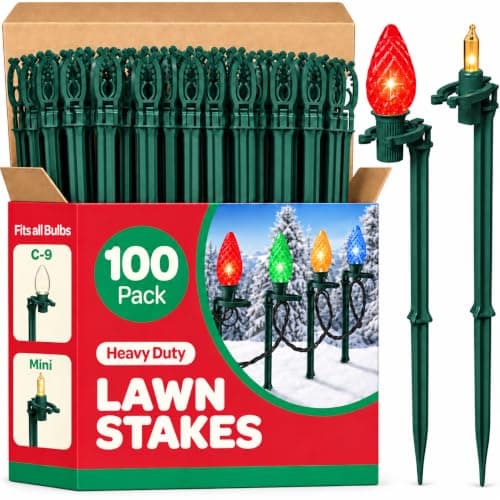
Outdoor Light Yard Stakes, Set of 100
Various
The unglamorous purchase that makes a display look professional. Cords pinned along a bed edge disappear; cords lying across a lawn do not.
- Type
- Ground stakes and clip hooks
- Use
- Pin cord along bed edges and fence lines
- Quantity
- Buy more than you think, one every few feet
- Season
- Reusable
Good
- Hides cord runs without burying anything
- Stops the mower and the leaf blower finding the cord
- Costs almost nothing per foot of tidy
Less good
- Plastic stakes snap in hard or frozen ground
- Not a substitute for a ramp where cord crosses a path
- You will lose half of them in the grass every year
- Safety value7.0
- Weather rating7.4
- Ease of use9.4
- Reliability7.0
- Value9.4
#ad How we are funded - price as of November 4, 2026
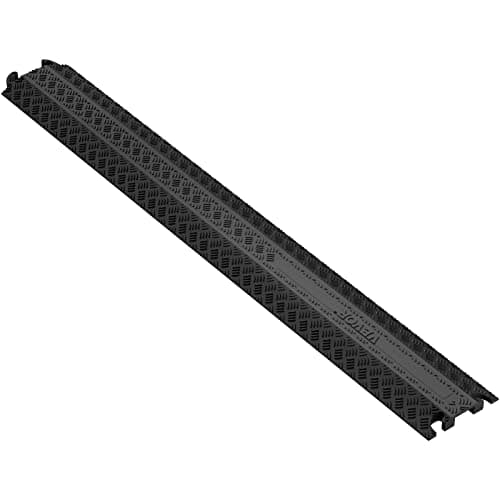
Drop-Over Cable Cover Ramp
VEVOR
Anywhere a cord crosses a path or a driveway, a ramp is the difference between a tidy display and a trip claim.
- Type
- Cable protector ramp
- Use
- Walkways, driveways, decking
- Capacity
- Check the channel size against your cord
- Visibility
- High-visibility versions exist, so use them
Good
- Removes the single most likely injury on a busy Halloween night
- Keeps the cord out of standing water on a driveway
- Reusable and stores flat
Less good
- Still a visible obstacle if it is not a high-visibility color
- Short sections mean joints, and joints shift
- Channel size is often too small for 12-gauge cord
- Safety value9.2
- Weather rating8.4
- Ease of use8.6
- Reliability8.4
- Value8.2
#ad How we are funded - price as of November 4, 2026
Anchors that come back out
Anchoring is a smaller lawn issue than ground cover, but the choices still matter — partly for the grass and partly because an anchor you cannot retrieve is an anchor your mower will find in May.
- Corkscrew anchors are the best of both worlds: they hold far better than thin stakes in wet ground and they unscrew cleanly, leaving one small hole.
- Thin U-stakes leave almost no mark and also pull straight out of saturated turf, which is why they fail exactly when it matters.
- Rebar holds anything and must be cut flush or capped — an exposed rebar end at shin height in a dark yard is a genuine hazard, not a cosmetic one.
- Sandbags damage grass by covering it. Put a paver underneath, or shift them every few days.
- Count what you put in. Write the number down. Anything left in the lawn becomes a mower repair.
Anchoring Halloween inflatables against wind and securing Halloween tombstones cover the holding side of this properly. The relevant point here is simply that the anchor which holds best is also the one that leaves the least behind.
Keep cords off the grass
A cord lying across a lawn for a month leaves a visible yellow line, and it is also the thing people trip over and the thing a mower catches on the first cut of spring if it was ever forgotten. Both problems have the same solution: route cords along edges rather than across open turf.
- Follow the perimeter. Bed edges, fence lines, path edges, the base of a wall. Longer runs, zero lawn damage, and it looks better.
- Pin with landscape stakes. A stake every few feet keeps the cord tight to the edge where it disappears into shadow.
- Ramp anything crossing a path. A drop-over cable cover where a cord crosses a walkway or driveway, every time.
- Keep joints off wet ground. Up on a brick and inside a weatherproof connector box — both a safety and a reliability issue.
Hiding extension cords in a yard is the full treatment, and yard haunt electrical safety covers the GFCI and gauge side, which matters more than the lawn does.
Rotate the display year to year
If the graveyard is in the same corner every October, that corner takes the same stress every October, and lawns do not fully recover from annual compaction in the same spots. Shifting the whole layout a few feet, or swapping which side of the path the heavy scene sits on, costs nothing and spreads the wear. It also makes the display look different to neighbors who have seen it three years running — see yard haunt layout ideas.
Fixing the patches you already have
Yellow is not dead. Grass that has been covered for under a week is usually just blanched, and it greens up on its own within one to three weeks once it has light and a little water. Resist the urge to do anything to it — no fertiliser onto stressed turf, no digging it over.
Genuinely dead patches — bare soil, no crowns left — need reseeding, and timing depends on your grass type and climate. Cool-season lawns take overseeding well in early autumn, which usually falls before the display goes up rather than after it; that is a reason to move the display rather than to reseed under it. For spring repair, rake the patch lightly, seed, and keep it damp until it establishes. Either way, the cheaper fix is next October: pull the anchors promptly, keep ground cover moving, and nothing needs repairing at all. When to put up Halloween decorations covers staging the setup so the lawn spends fewer days covered.
Frequently asked questions
How do you keep Halloween decorations from killing grass?
Stop anything from covering the turf for more than about four days. Staked and legged props do almost no damage; deflated inflatables, tarps and flat props lying on grass do all of it. Run inflatables on a timer so they are only down overnight, and move any ground cover every few days.
How long can a decoration sit on grass before it damages it?
About four days. Inside that window you get yellowing that recovers in a week or two. Past it you are into thinning and bare soil, and by the second week the patch will usually need reseeding.
Will a deflated Halloween inflatable kill my lawn?
Yes, quickly, if it stays down during daylight. A deflated inflatable blocks light completely across a large area. Deflated overnight and inflated in the evening is close to harmless, because the grass is not photosynthesising in the dark anyway.
Do Halloween stakes and anchors damage a lawn?
Barely. A corkscrew anchor leaves one small hole and unscrews cleanly, which makes it the best choice for holding power and for the grass. The real risk is leaving one behind — count what you put in, and pull everything the week the display comes down.
Will yellow grass under Halloween decorations grow back?
Usually yes. Grass covered for under a week is blanched rather than dead and greens up within one to three weeks once it has light and water. Do not fertilise stressed turf. Genuinely bare patches need reseeding, which is better timed to your grass type than to Halloween.
About the author
Mike M.
Mike M. is the hands-on owner behind Iron Mako Media, which publishes Haunt & Hedge. The site covers the gear that builds a yard haunt, for the person who already decorates and adds one bigger piece a year.
Every pick here is chosen from manufacturer specifications, manuals, safety standards and verified buyer data. Read how we choose picks.