Fog & Atmosphere
Halloween Foggers Explained
Fogger, hazer, smoke machine, low-lying machine. Four different products, one word used for all of them, and a lot of disappointed yards.

Disclosure: we earn a commission from qualifying purchases made through links on this page, at no extra cost to you. It does not change what we recommend — here is how we choose.
The short answer
A Halloween fogger is a fog machine: a heated block that flashes glycol-based fluid into a dense white cloud. The word covers four genuinely different products though — a standard fogger makes a thick cloud that rises, a hazer makes a thin atmospheric mist that hangs, a low-lying machine chills the output so it stays on the ground, and a dry ice unit produces the thickest ground fog of all. Buying the wrong one is the most common mistake in this category.
Nearly every complaint about a Halloween fogger comes down to a mismatch between the effect someone pictured and the machine they bought. People imagine fog creeping across a lawn around tombstones, buy a standard fogger because that is what the Halloween aisle sells, and get a cloud that climbs ten feet and vanishes into the night. The machine is working perfectly. It is simply not the machine that makes the effect in the photograph.
The four types
| Type | Output | Behavior | Best for |
|---|---|---|---|
| Standard fogger | Dense white cloud | Warm, so it rises and disperses | Filling a space, backlit beams, doorways |
| Hazer | Thin even mist | Hangs for a long time, barely visible alone | Making light beams visible indoors |
| Low-lying fog machine | Dense chilled cloud | Sinks and crawls along the ground | Graveyards, around props, ground effects |
| Dry ice fogger | Very dense cold fog | Hugs the ground, thickest effect available | A short, spectacular ground effect |
| Chiller added to a fogger | Chilled standard output | Sinks, though less reliably than a purpose-built unit | Getting ground fog from a machine you own |
The important column is behavior. Warm fog rises because it is warmer than the air around it; chilled fog sinks because it is colder and denser. That single physical fact is the whole difference between a cloud and a creeping ground layer, and no amount of fluid will make a standard machine do the second thing.
Which one you probably want
For a graveyard or fog around props
A low-lying machine, or a standard machine with a chiller. This is the effect most people are actually picturing when they search for a Halloween fogger. The best low-lying fog machines covers the purpose-built units, and low-lying vs standard fog machine covers the choice between buying one and chilling what you have.
For a party, a porch or a doorway
A standard fogger, and a smaller one than you expect. Filling an enclosed space is what this type does best, and a 400W machine handles a room comfortably. The best fog machines for a Halloween party covers the indoor end of the range.
For making light beams visible
A hazer, not a fogger. Haze is nearly invisible on its own and exists to give light something to travel through, which is why it is what venues use. For a yard haunt with spotlights and a projector, a light haze does more for the look of the whole display than a thick cloud does.
For one spectacular ground effect
A dry ice unit, with the caveat that it runs for as long as the ice lasts and then stops. It produces the thickest ground fog available and it is genuinely different from anything a glycol machine does, but it is an event effect rather than something you leave running all evening.
A machine of each kind
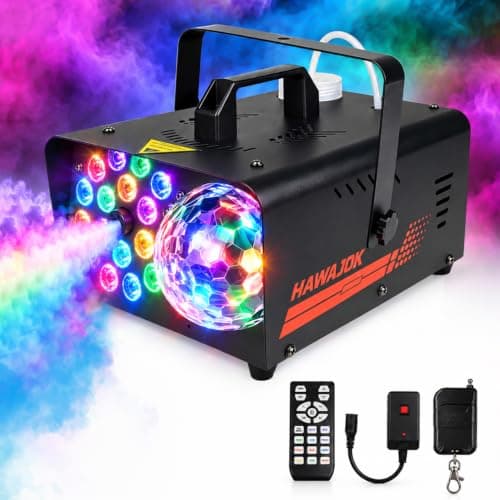
1000W Fog Machine with Wireless Remote and LED Effects
HAWAJOK
Fine as a first machine, and honest about what it is: a heated fogger whose output rises unless you chill it or run it into a cold night.
- Type
- Heated fog machine
- Control
- Wired and wireless remote on most units
- Fluid
- Water-based fog fluid
- Duty cycle
- Short bursts with reheat pauses
Good
- Cheap entry into fog without committing to a chilled setup
- Remote included on almost every unit in this tier
- Enough output for a porch or a small front yard
Less good
- Fog rises unless chilled
- Short duty cycle, so it will be reheating when you want it running
- Seasonal-tier build, and a couple of years is realistic
- Fog density7.0
- Stays low3.6
- Run time5.6
- Setup effort9.2
- Consumable cost8.0
#ad How we are funded - price as of November 4, 2026
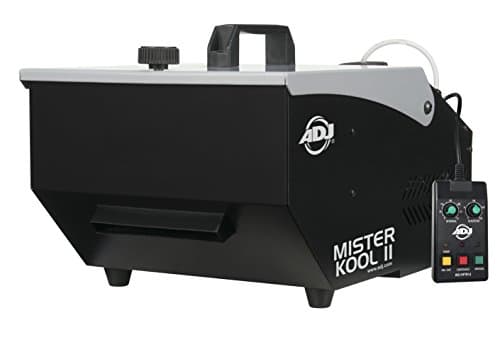
Mister Kool II Low-Lying Fog Machine
ADJ
Makes genuinely low-lying fog from regular ice and water-based fluid, with no dry ice and no CO2 tank, which is why it is the default recommendation for a home yard haunt.
- Cooling
- Regular ice
- Fluid
- Water-based fog juice
- Heat-up
- About 3 minutes
- Consumables
- Ice and fluid, no dry ice
Good
- Ice cooling means no dry-ice sourcing problem on October 31
- Short heat-up, so it is ready when the first visitors arrive
- Fog genuinely hugs the ground rather than rising
Less good
- You are buying and melting ice all evening
- Output is modest next to a dry-ice machine
- Needs a level spot, because a tilted unit dumps meltwater
- Fog density7.8
- Stays low9.0
- Run time7.0
- Setup effort8.4
- Consumable cost7.2
#ad How we are funded - price as of November 4, 2026
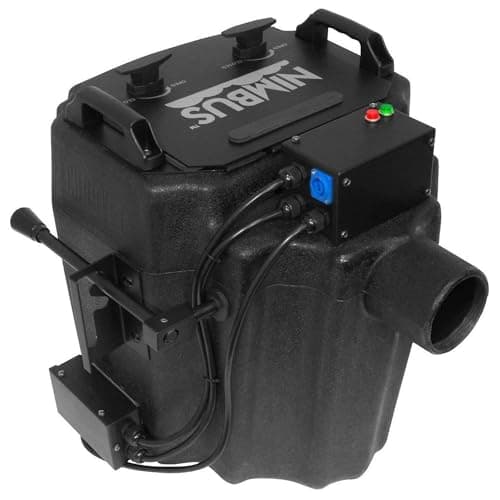
Nimbus Dry Ice Fog Machine
Chauvet DJ
Dry-ice fog is denser and lower than anything an ice-cooled machine produces, and the Nimbus is the mainstream way to get it. At about forty pounds, plan how you will move it.
- Cooling
- Dry ice
- Weight
- About 40 lb
- Continuous output
- Up to roughly 4 minutes
- Consumables
- Dry ice, sourced on the day
Good
- Thickest, lowest fog available without professional gear
- Dry-ice fog does not rise the way heated fog eventually does
- Built to a professional standard rather than a seasonal one
Less good
- Dry ice has to be bought the same day and handled safely
- Forty pounds is a two-hand carry, and a cart is a real consideration
- Bursts of a few minutes, not continuous all-evening output
- Fog density9.6
- Stays low9.6
- Run time6.0
- Setup effort5.4
- Consumable cost5.0
#ad How we are funded - price as of November 4, 2026
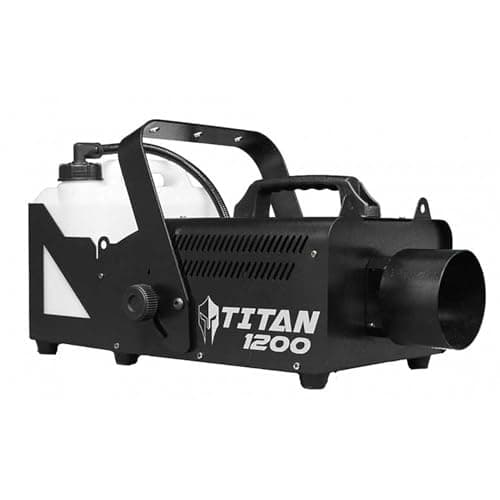
Titan 1200 Fog Machine
Froggy's Fog
Rated at 20,000 CFM, which is enough to fill roughly 2,500 square feet in about a minute. This is the machine for a whole-yard haze, not for a low graveyard creep.
- Output
- 20,000 CFM
- Coverage
- About 2,500 sq ft in roughly a minute
- Type
- Standard heated fogger
- Fluid
- Water-based fog fluid
Good
- Output that genuinely fills a large open yard
- Fast enough to re-fog between groups of visitors
- Built for haunt duty rather than a one-night party
Less good
- Heated fog rises, so this is not a low-lying machine on its own
- Serious output means serious fluid consumption
- Overkill for a small front yard, where it just looks like smoke
- Fog density9.4
- Stays low4.5
- Run time8.0
- Setup effort8.0
- Consumable cost6.0
#ad How we are funded - price as of November 4, 2026
What the wattage number does and does not tell you
Wattage is the headline specification on every box and it describes the heating element, not the output. It is a rough proxy for how much fog per minute a machine can sustain and for how quickly it recovers between bursts, and it tells you nothing at all about density, hang time or whether the fog will sit on the ground.
Bigger is also not automatically better. An oversized machine indoors produces a white-out in under a minute and then needs ventilating. What size fog machine do I need works through matching output to space, and how long a fog machine takes to warm up covers the reheat behavior that wattage actually predicts.
The fluid is part of the machine
Two machines with identical specifications produce noticeably different fog on different fluids, and this is where a lot of unexplained disappointment lives. High-density fluid gives a thicker, longer-lasting cloud outdoors. Low-lying fluid is formulated to chill well and is what a chiller setup wants. Standard Halloween fluid is the right general-purpose choice and the wrong one if you specifically want ground fog.
Matching fluid to machine and to effect is covered in the best fog fluid, and bog fog vs swamp juice compares the two high-density outdoor fluids head to head. Low-lying fog fluid vs regular answers the question people ask most often, which is whether the fluid alone will make fog stay down. It will not; the chilling does that.
Everything outdoors needs weather protection
Whichever type you end up with, it is an electrical appliance with a heating element sitting in a yard in late October. A vented box rather than a sealed cover, raised off wet ground, with the outlet end protected, is what keeps a fog machine alive for more than one season. How to protect a fog machine from rain covers the enclosure, and where to put a fog machine covers siting it so the fog goes where you want it.
Frequently asked questions
What is a Halloween fogger?
A fog machine — a heated block that flashes glycol-based fluid into a dense white cloud. The word is used loosely for four different products: standard foggers, hazers, low-lying machines and dry ice units, which produce quite different effects.
What is the difference between a fogger and a hazer?
A fogger produces a thick visible cloud. A hazer produces a thin even mist that is nearly invisible on its own and exists to make light beams show up. For a yard with spotlights and a projector, haze often improves the look more than fog does.
Why does my fog machine fog float up instead of staying low?
Because the fog leaves the machine warm, and warm fog rises. Keeping it on the ground requires chilling it — either a purpose-built low-lying machine, a chiller added to a standard machine, or a dry ice unit. Fluid alone will not do it.
Does a higher wattage fogger make better fog?
Higher wattage means more fog per minute and faster recovery between bursts. It says nothing about density, how long the fog hangs, or whether it stays low, and an oversized machine indoors will white out a room in under a minute.
Which type of fogger is best for a Halloween graveyard?
A low-lying machine, or a standard machine with a chiller. Ground fog creeping between tombstones is a chilled-fog effect, and it is the single most common thing people buy the wrong machine for.
About the author
Mike M.
Mike M. is the hands-on owner behind Iron Mako Media, which publishes Haunt & Hedge. The site covers the gear that builds a yard haunt, for the person who already decorates and adds one bigger piece a year.
Every pick here is chosen from manufacturer specifications, manuals, safety standards and verified buyer data. Read how we choose picks.